The One Card Tarot Journal is my best overall pick for readers who want guided prompts, while The Weiser Tarot Journal stands out for broader practice and Tarot Journal: Daily Reading Tracker Notebook for repeatable daily logs. The main choice is between a notebook that teaches through structure and one that leaves room for personal interpretation. Prompt-led pages can help new readers get started, but trackers and open notebooks may suit readers who already have a routine or want to record longer reflections. Size, binding, and page layout also shape whether a journal feels easy to use at home or during readings. Read on for the full breakdown and help matching a notebook to your tarot habits.

Turn your quiet moments into listening time
- Thousands of audiobooks, podcasts and originals
- Listen on your phone, tablet or Echo — also offline
- Cancel anytime
Key Takeaways
- Prompt support is the clearest point of difference: The One Card Tarot Journal gives single-card readers a guided entry point, while open-format notebooks ask readers to design their own practice.
- Daily trackers favor consistency over depth: The tracker-focused titles are better suited to recording recurring readings than writing long interpretations or personal essays.
- Decorative features are not a substitute for usable structure: The Witchy Cauldron journal adds stickers, but buyers should still check whether its page layout supports their actual reading routine.
- Compact formats trade writing room for portability: The Star and Moon notebooks share a small footprint, while larger or A5 formats may be easier for detailed notes and spreads.
- The lineup spans very different commitment levels: Guided journals can reduce blank-page hesitation; simple notebooks offer more freedom but require readers to create their own prompts and tracking system.
| The One Card Tarot Journal: 150 Prompts for Single-Card Tarot Wisdom |  | Best for Focused Reflection | Prompt count: 150 | Reading format: Single-card tarot | Primary use: Reflecting on tarot wisdom through one-card draws | VIEW LATEST PRICE | See Our Full Breakdown |
| The Weiser Tarot Journal: Guidance and Practice |  | Best for All-Deck Practice | Journal pages: 208 specially designed pages | Illustrations: 1,920 full-color Tarot illustrations | Compatibility: For use with any Tarot deck | VIEW LATEST PRICE | See Our Full Breakdown |
| Witchy Cauldron Tarot Journal with Stickers |  | Best for Beginner Daily Planning | Format: Spiral-bound journal | Pages: 206 | Paper: Thick, bleed-proof | VIEW LATEST PRICE | See Our Full Breakdown |
| The Star Tarot Card Journal Notebook, 5.5 x 8.3 in |  | Best Compact Card-Themed Notebook | Design: The Star tarot card | Dimensions: 5.5 x 8.3 inches | Product type: Journal notebook | VIEW LATEST PRICE | See Our Full Breakdown |
| Tarot Journal: Tarot Tracker Notebook |  | Best for Multi-Card Tracking | Primary use: Recording daily Tarot readings | Card tracking capacity: Up to 10 cards | Writing use: Reading notes and daily writing | VIEW LATEST PRICE | See Our Full Breakdown |
| Tarot Card Journal: Daily Reading Tracker Notebook | 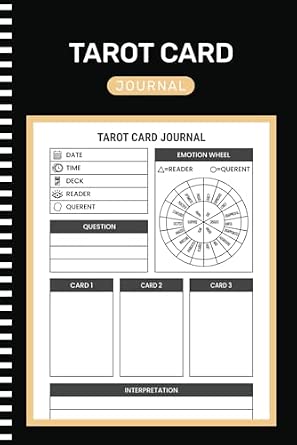 | Best for a Simple Daily Log | Format: Notebook | Purpose: Daily tarot reading tracker | Pages: 105 | VIEW LATEST PRICE | See Our Full Breakdown |
| The Moon Tarot Spiral-Bound Notebook, 5.5 × 8.3 Inches |  | Best Compact Tarot Notebook | Brand: Guymn | Design: The Moon tarot | Size: 5.5 × 8.3 inches | VIEW LATEST PRICE | See Our Full Breakdown |
| Tarot Journal: A Daily Reading Tracker and Notebook |  | Best for Structured Three-Card Readings | Format: Journal/notebook | Reading layout: Three-card draw, question, and interpretation | Cover design: Cat on the World | VIEW LATEST PRICE | See Our Full Breakdown |
| The High Priestess Tarot Card Notebook: Black and Gold, College-Ruled |  | Best for Flexible Writing and Sketching | Page count: 120 pages | Paper ruling: College-ruled | Design: The High Priestess tarot card | VIEW LATEST PRICE | See Our Full Breakdown |
| Gothic Overthinker Tarot Spiral Notebook, 6 x 8.2 Inches |  | Best for a Sturdy, Gothic-Themed Desk Notebook | Brand: OINDADE | Size: 6 × 8.2 inches | Item dimensions: 8.8 × 5.4 inches | VIEW LATEST PRICE | See Our Full Breakdown |
| The Tarot Journal |  | Best for an Underspecified, Open-Ended Journal | Product type: Tarot journal | Title: The Tarot Journal | ASIN: 1441334572 | VIEW LATEST PRICE | See Our Full Breakdown |
| Tarot Card Journal, 6 x 9 in, 105 Pages |  | Best Compact, Clearly Specified Pick | Format: 6 x 9 inches | Page count: 105 pages | Use: Tarot card notes and reflections | VIEW LATEST PRICE | See Our Full Breakdown |
| A5 Tarot Reading and Reflection Journal |  | Best for Structured Reading Records | Brand: snootion | Format: Notebook | Calendar type: Non-dated | VIEW LATEST PRICE | See Our Full Breakdown |
| tarot card journal notebook | Page count | Format |
|---|---|---|
| The One Card Tarot Journal: 15 | — | — |
| The Weiser Tarot Journal: Guid | — | — |
| Witchy Cauldron Tarot Journal | — | Spiral-bound journal |
| The Star Tarot Card Journal No | Not specified | — |
| Tarot Journal: Tarot Tracker N | Not specified | — |
| Tarot Card Journal: Daily Read | — | Notebook |
| The Moon Tarot Spiral-Bound No | Description: 80 pages (160 sides); title: 164 pages | — |
| Tarot Journal: A Daily Reading | Not specified | Journal/notebook |
| The High Priestess Tarot Card | 120 pages | Notebook |
| Gothic Overthinker Tarot Spira | — | — |
| The Tarot Journal | Not provided | Not provided |
| Tarot Card Journal | 105 pages | 6 x 9 inches |
| A5 Tarot Reading and Reflectio | 106 pages | Notebook |
More Details on Our Top Picks
The One Card Tarot Journal: 150 Prompts for Single-Card Tarot Wisdom
One-card readings are the focus here, with 150 prompts to give each draw a clear starting point. That makes this a strong fit for readers who want to build a steady reflection habit without having to document a full spread every day. Compared with The Weiser Tarot Journal: Guidance and Practice, which offers 208 designed pages and illustrations for recording readings more broadly, this journal is more defined by its prompt-led, single-card approach. That focus can make it easier to begin, but it gives less room for readers who routinely work with multi-card spreads. The provided details do not specify page count, binding, or space per prompt, so buyers who need a particular writing layout may want more information before choosing it. Its main tradeoff is purposeful simplicity over broad reading coverage.
Pros:- Provides 150 prompts to help structure reflection
- Centers on a simple single-card reading format
- Well suited to building a repeatable one-card journaling habit
Cons:- Single-card focus may not suit readers who record full spreads
- Page count and writing layout are not specified
Best for: Tarot readers who want guided prompts for a regular one-card draw and prefer focused reflection over spread tracking.
Not ideal for: Readers who need dedicated layouts for multi-card spreads or want confirmed details about page count and writing space.
- Prompt count:150
- Reading format:Single-card tarot
- Primary use:Reflecting on tarot wisdom through one-card draws
- Product type:Tarot journal
- Guidance format:Prompts
- Deck compatibility:Not specified
Our verdict“Choose this journal if you want prompt-led reflection on one card at a time rather than a broad tracker for complex spreads.”
The Weiser Tarot Journal: Guidance and Practice
Broad deck compatibility is a practical advantage: this guided journal is designed for use with any Tarot deck, rather than being tied to a particular card set. Its 208 specially designed journal pages give readers a structured place to practice and record readings, while full-color Tarot illustrations add visual reference. Compared with The One Card Tarot Journal, which concentrates on 150 prompts for single-card draws, this pick appears better suited to varied practice and ongoing reading records. The tradeoff is that its wider scope may feel less direct for someone who only wants short, one-card reflections. The listed illustration count is 1,920, but the supplied details do not explain how those images are arranged across the pages, so buyers seeking a specific worksheet style should check the page format.
Pros:- Compatible with any Tarot deck
- Includes 208 specially designed journal pages
- Features 1,920 full-color Tarot illustrations
- Supports both reading practice and record keeping
Cons:- May offer more scope than readers seeking only quick single-card reflections need
- The supplied details do not describe the specific page layouts
Best for: Readers who use different Tarot decks and want a guided journal with substantial page space for ongoing practice and reading records.
Not ideal for: Readers who want a narrowly focused one-card prompt book or need a confirmed description of the page layouts before buying.
- Journal pages:208 specially designed pages
- Illustrations:1,920 full-color Tarot illustrations
- Compatibility:For use with any Tarot deck
- Collection:The Weiser Tarot Collection
- Primary use:Practicing and recording Tarot readings
- Product type:Guided Tarot journal
Our verdict“Pick this for flexible, illustrated Tarot practice across decks; choose The One Card Tarot Journal instead for a more focused prompt-based routine.”
Witchy Cauldron Tarot Journal with Stickers
This is the most planner-oriented option in the group: moon phases, astrology, card meanings, and stickers bring daily context and decoration into one journal. The spiral binding supports convenient page turning, and the listed thick, bleed-proof paper may suit readers who write frequently or use more than one pen style. Compared with The Weiser Tarot Journal: Guidance and Practice, which emphasizes guided recording and broad deck compatibility, this journal is more explicitly aimed at beginners and daily planning. That makes it approachable, but experienced readers looking for open-ended space to document complex spreads may find its beginner-and-planner emphasis limiting. The description does not specify a card-tracking capacity or individual page layouts, so it is harder to judge how well it handles detailed spread records.
Pros:- Combines card meanings, astrology, and moon phases
- Spiral binding supports convenient page turning
- Thick, bleed-proof paper is suited to regular writing
- Includes stickers for visual planning and personalization
Cons:- Beginner and daily-planning emphasis may feel restrictive for advanced reading records
- Card-tracking capacity and page layouts are not specified
Best for: Beginning Tarot readers who want daily planning prompts alongside card meanings, moon phases, astrology, and a spiral-bound format.
Not ideal for: Experienced readers who prioritize flexible space for complex spreads over beginner guidance and planner-style extras.
- Format:Spiral-bound journal
- Pages:206
- Paper:Thick, bleed-proof
- Features:Moon phases, astrology, card meanings, and stickers
- Intended use:Daily Tarot planning
- Intended skill level:Beginners
Our verdict“Choose this for a beginner-friendly daily Tarot planner with extras; choose The Weiser Tarot Journal for a broader practice-and-recording focus.”
The Star Tarot Card Journal Notebook, 5.5 x 8.3 in
Compact dimensions make this 5.5 x 8.3-inch notebook the clearest portability pick in this batch, while The Star tarot card design gives it a specific visual identity. Unlike The One Card Tarot Journal, which supplies 150 prompts and a defined reading format, this notebook’s description does not promise guided questions or Tarot-specific tracking. That leaves more room for a buyer to decide how to use it, but also means the core journaling structure is unclear. It may work as a portable place for personal notes, reflections, or readings, yet the supplied information does not state page count, paper type, or binding. Readers who need a built-in system should choose a more structured option; those who mainly want a small, card-themed notebook may prefer its simpler format.
Pros:- Features The Star tarot card design
- Compact 5.5 x 8.3-inch dimensions suit portable use
- Simple notebook format leaves the writing approach open
Cons:- No prompts or reading-tracking features are specified
- Page count, paper type, and binding are not provided
Best for: Readers who want a small, portable notebook featuring The Star card for informal Tarot notes or personal reflections.
Not ideal for: Buyers who need guided prompts, confirmed page and paper details, or a documented system for tracking readings.
- Design:The Star tarot card
- Dimensions:5.5 x 8.3 inches
- Product type:Journal notebook
- Prompts:Not specified
- Page count:Not specified
- Binding:Not specified
Our verdict“Choose this for portable, Star-themed notes, but opt for The One Card Tarot Journal if you want built-in prompts for readings.”
Tarot Journal: Tarot Tracker Notebook
Tracking up to 10 cards gives this notebook a clear role for readers who want to record more than a single draw. Compared with The One Card Tarot Journal, whose 150 prompts center on one-card reflection, this tracker is better aligned with documenting broader readings and daily notes. The description also identifies writing and reading records as its purpose, though it does not specify prompts or a prescribed layout. That flexibility may suit readers who already know what they want to record, but buyers looking for teaching material or guided interpretation may prefer The Weiser Tarot Journal: Guidance and Practice, which lists specially designed pages and full-color illustrations. Page count, dimensions, paper, and binding are not provided, so practical details for frequent or portable use remain uncertain.
Pros:- Supports recording readings of up to 10 cards
- Designed for daily reading notes and writing
- Offers a broader card-count focus than a one-card prompt journal
Cons:- No prompts or instructional materials are specified
- Page count, dimensions, paper, and binding are not specified
Best for: Tarot readers who regularly record daily readings involving several cards and want capacity for up to 10 cards per reading.
Not ideal for: Beginners seeking card meanings or guided prompts, and buyers who need confirmed details about layout, paper, size, or binding.
- Primary use:Recording daily Tarot readings
- Card tracking capacity:Up to 10 cards
- Writing use:Reading notes and daily writing
- Product type:Tarot tracker notebook
- Prompt format:Not specified
- Page count:Not specified
Our verdict“Choose this if recording multi-card daily readings matters more than guided instruction or clearly documented notebook details.”
Tarot Card Journal: Daily Reading Tracker Notebook
This notebook’s strength is its clear daily-tracking purpose: unlike The High Priestess Tarot Card Notebook, which is a general college-ruled notebook, this one is specifically framed for recording tarot readings. Its 6 × 9-inch format gives entries more room than the smaller The Moon Tarot Spiral-Bound Notebook, while remaining compact enough to carry alongside a deck. The tradeoff is that the supplied details do not describe prompts or a structured reading layout, so buyers seeking dedicated spaces for questions, card positions, or interpretations may prefer Tarot Journal: A Daily Reading Tracker and Notebook. At 105 pages, it is a straightforward choice for maintaining a reading record, but frequent readers may fill it sooner than a larger or more substantial journal.
Pros:- Designed specifically for tracking daily tarot readings
- 6 × 9-inch size balances writing room with portability
- Notebook format leaves the reading record open-ended
Cons:- 105 pages may not last long for readers who write after every draw
- No specific prompts or reading-layout details are provided
Best for: Readers who want a portable, purpose-labelled notebook for keeping a regular record of daily tarot readings.
Not ideal for: Readers who want guided prompts, a specified three-card layout, or a longer-term journal with more pages.
- Format:Notebook
- Purpose:Daily tarot reading tracker
- Pages:105
- Dimensions:6 × 9 inches
- Reading layout:Not specified
- Binding:Not specified
Our verdict“Choose this for a simple daily tarot record in a portable 6 × 9-inch notebook, but pick a structured tracker if you want guided entry fields.”
The Moon Tarot Spiral-Bound Notebook, 5.5 × 8.3 Inches
For readers who want to take tarot notes away from their desk, compact 5.5 × 8.3-inch sizing and a spiral binding give this notebook a distinctly portable role. The coil can make everyday writing easier than in a standard notebook, while the The Moon tarot design adds a tarot connection without suggesting a dedicated reading tracker. Compared with Tarot Card Journal: Daily Reading Tracker Notebook, this is more adaptable for study, work, and general journaling, but less clearly built around recording readings. There is also a page-count mismatch: the title says 164 pages, while the details say 80 pages and 160 sides. Paper quality and binding material are not specified, so buyers who need confirmed materials or reliable capacity may prefer a better-documented option.
Pros:- Compact dimensions are suited to carrying in a bag
- Spiral binding supports everyday note-taking
- The Moon tarot-inspired cover gives it a clear visual theme
- Can serve for study, work, and general journaling as well as tarot notes
Cons:- Page count is inconsistent between the title and product details
- Paper quality and binding material are not specified
- No dedicated reading prompts or tracker layout are described
Best for: Tarot students and readers who want a small spiral notebook for carrying general notes, study notes, or occasional reading reflections.
Not ideal for: Buyers who need a confirmed page count, specified paper quality, or a purpose-built tarot reading tracker.
- Brand:Guymn
- Design:The Moon tarot
- Size:5.5 × 8.3 inches
- Page count:Description: 80 pages (160 sides); title: 164 pages
- Binding:Spiral-bound
- Cover:Soft cover
- Pattern:Printed
- Unit count:1
Our verdict“Pick this for portable, general-purpose tarot-themed notes, but skip it if a dependable page count or guided reading format matters.”
Tarot Journal: A Daily Reading Tracker and Notebook
The defining advantage here is a specified three-card reading layout with room for the question and interpretation. That makes it more useful for readers who want to compare card positions or preserve the reasoning behind a spread than Tarot Card Journal: Daily Reading Tracker Notebook, whose supplied details describe daily tracking without naming a layout. The cat-on-the-World cover gives this journal a playful tarot identity, while its notebook format keeps it focused on recording readings rather than offering a broader set of study features. The available description does not state page count, dimensions, ruling, or binding, which makes it harder to judge how long it will last or how it will feel to write in. Buyers who prioritize known notebook specifications may prefer The High Priestess Tarot Card Notebook.
Pros:- Provides a named layout for three-card draws
- Includes space for questions and interpretations
- Designed for recording daily readings
- Cat-on-the-World cover offers a distinctive tarot-themed design
Cons:- Page count and dimensions are not provided
- Paper ruling and binding are not specified
- The described layout may be less suited to readers who mainly want freeform notes or sketches
Best for: Readers who regularly do three-card draws and want a place to record the question, cards, and interpretation together.
Not ideal for: Buyers who need confirmed page count, dimensions, paper ruling, or a more general-purpose notebook for notes and sketching.
- Format:Journal/notebook
- Reading layout:Three-card draw, question, and interpretation
- Cover design:Cat on the World
- Page count:Not specified
- Dimensions:Not specified
- Binding:Not specified
Our verdict“Choose this if you want a dedicated place to document three-card readings, and look elsewhere if confirmed size and capacity are priorities.”
The High Priestess Tarot Card Notebook: Black and Gold, College-Ruled
This is the most straightforward choice here for buyers who want a general-purpose notebook with a tarot-card cover, rather than a reading tracker with a prescribed method. Its 120 college-ruled pages suit written notes and journaling, while the description also allows for sketching. Compared with Tarot Journal: A Daily Reading Tracker and Notebook, it offers fewer tarot-specific structures, but the known page count and ruling make its basic writing setup easier to judge. The black-and-gold High Priestess design gives it a more formal look than the cat-on-the-World tracker, without changing how the pages function. The main compromise is that no prompts, card-position fields, dimensions, or binding details are listed, so dedicated spread recorders may find it too open-ended.
Pros:- 120 pages provide a defined amount of writing space
- College ruling suits regular written notes
- Description includes journaling and sketching as uses
- Black-and-gold High Priestess design has a distinctive tarot theme
Cons:- No guided prompts or reading-tracker layout are specified
- Dimensions and binding are not provided
- College ruling may constrain readers who prefer blank pages for larger sketches
Best for: Tarot readers who want a college-ruled notebook for freeform reflections, study notes, and occasional sketching.
Not ideal for: Readers who want guided tarot prompts or preformatted spaces for tracking cards, questions, and spreads.
- Page count:120 pages
- Paper ruling:College-ruled
- Design:The High Priestess tarot card
- Color:Black and gold
- Format:Notebook
- Uses:Journaling, note-taking, or sketching
Our verdict“Choose this for ruled, flexible tarot-themed notes, but opt for a tracker journal if you want structured reading records.”
Gothic Overthinker Tarot Spiral Notebook, 6 x 8.2 Inches
This notebook stands apart from the reading trackers through its hardcover-style build and 164 lined pages, making it better suited to regular writing than a compact, lightly specified option such as The Moon Tarot Spiral-Bound Notebook. Its spiral binding opens flat and folds back, a practical fit for writing beside a tarot spread or keeping it open on a desk. The skull-and-floral design also leans gothic rather than traditional card imagery, so it works best for readers who want an atmospheric notebook rather than a recognizable tarot card on the cover. At 6 × 8.2 inches, it is still a relatively small writing surface; compared with the 6 × 9-inch Tarot Card Journal: Daily Reading Tracker Notebook, it gives up some listed width and does not include a stated tarot-specific layout.
Pros:- 164 pages offer more stated capacity than the 105-page daily tracker
- Spiral binding opens flat and folds back
- Lined pages suit writing for journaling, school, or work
- Hardcover is described as supporting everyday use
Cons:- 6 × 8.2-inch listed size may feel restrictive for long entries or larger layouts
- No tarot-specific prompts or reading-tracker format are described
- The gothic skull design may not suit readers seeking classic tarot imagery
Best for: Readers who want a lined, spiral notebook for frequent tarot reflections and everyday notes, with a gothic skull-and-floral look.
Not ideal for: Buyers who want a larger page area, a clearly tarot-card-focused cover, or preformatted fields for reading logs.
- Brand:OINDADE
- Size:6 × 8.2 inches
- Item dimensions:8.8 × 5.4 inches
- Pages:164
- Sheets:82
- Cover material:Paper
- Binding:Spiral
- Ruling:Lined
- Theme and color:Skull theme; Overthinker color
Our verdict“Pick this for a higher-capacity, lined gothic notebook that opens flat, but choose a dedicated tracker for structured tarot readings.”
The Tarot Journal
The Tarot Journal is the least specified choice in this group, which makes it difficult to judge its fit for a particular reading routine. Unlike A5 Tarot Reading and Reflection Journal, whose listed sections guide readers through questions, spreads, and takeaways, this entry provides no confirmed details about its layout, size, or page count. That uncertainty may suit someone who wants a tarot-focused notebook without choosing based on a preset tracking system, but I can’t verify how much room it gives for card meanings or reflections. Compared with the dated-or-undated structure some readers seek from a tracker, its main distinction is simply its tarot-journal identity. The tradeoff is limited buying information: choose it only if the title is enough to prompt further product-page checking.
Pros:- Tarot-specific title signals a reading and reflection focus
- Does not claim a particular tracking method that may not match every reader
- Could suit free-form journaling if the actual interior supports it
Cons:- No confirmed dimensions, page count, or binding details are provided
- The available information does not establish whether it includes prompts or structured reading fields
- Hard to compare its writing capacity with the 105-page Tarot Card Journal
Best for: Tarot readers who want a journal identified for tarot and are willing to check the listing for layout and size details before buying
Not ideal for: Readers who need a known page count, compact dimensions, or dedicated prompts and sections to organize each reading
- Product type:Tarot journal
- Title:The Tarot Journal
- ASIN:1441334572
- Format:Not provided
- Page count:Not provided
- Dimensions:Not provided
Our verdict“Pick this only if you want a tarot-named journal and can verify its interior details before purchase.”
Tarot Card Journal, 6 x 9 in, 105 Pages
Tarot Card Journal, 6 x 9 in, 105 Pages gives buyers a clear size and page count, a useful advantage over The Tarot Journal, for which no physical details are supplied. At 6 x 9 inches, it offers a defined footprint for carrying or keeping beside a deck, while 105 pages set a clear limit on how long it can support regular entries. The description confirms space for tarot notes and reflections but does not identify prompts or dedicated fields for spreads, dates, or card positions. That leaves more uncertainty about how structured the writing experience will feel than with the A5 Tarot Reading and Reflection Journal, which specifies reading sections. This is the more straightforward choice for readers who mainly want a compact place to write, but not for those who need a guided tracker.
Pros:- 6 x 9 inch format has a clearly stated, portable size
- 105 pages make the notebook’s writing capacity easy to gauge
- Description specifically identifies tarot notes and reflections as its purpose
Cons:- No dedicated prompts or reading-log fields are specified
- A 105-page notebook may need replacing for frequent, long-form entries
- Paper weight, cover, and binding details are not provided
Best for: Readers who want a compact tarot notebook with a stated page count for handwritten notes and reflections
Not ideal for: Readers who want guided prompts, labeled spread-tracking fields, or a larger writing area for extended interpretations
- Format:6 x 9 inches
- Page count:105 pages
- Use:Tarot card notes and reflections
- Product type:Journal
- ASIN:B0CDZ75WF9
- Paper weight:Not provided
- Binding:Not provided
Our verdict“Choose this for a compact, plainly described notebook for tarot notes, but look elsewhere for a guided reading log.”
A5 Tarot Reading and Reflection Journal
A5 Tarot Reading and Reflection Journal is the most guided option in this trio: its non-dated layout records the question, moon phase, spread, interpretation, emotional response, action plan, and takeaways. That structure can help readers return to earlier readings and notice patterns, unlike the more open-ended Tarot Card Journal, 6 x 9 in, 105 Pages, whose description only confirms space for notes and reflections. The A5 size and 106 pages keep it relatively compact, while 100 gsm paper, a waterproof plastic cover, and twin-wire spiral binding add practical protection and make the notebook easier to handle. The tradeoff is less room than a larger journal may offer for expansive card-by-card analysis, and its finite page count may feel restrictive for frequent readers. Its specific fields are useful only if you want that much structure.
Pros:- Dedicated fields connect reading details with interpretation and follow-up
- Non-dated format lets readers write at their own pace
- 100 gsm paper, waterproof plastic cover, and twin-wire spiral binding are specified
- A5 size provides a compact format for keeping with a tarot deck
Cons:- A5 pages provide less writing area than a full-size journal
- 106 pages may not last long for frequent readers
- The structured sections may feel restrictive to readers who prefer open-ended writing
Best for: Readers who want a reusable, non-dated log for recording tarot or oracle questions, spreads, interpretations, feelings, and follow-up actions
Not ideal for: Readers who prefer free-form pages, need generous space for detailed card-by-card notes, or expect a journal to last through many frequent readings
- Brand:snootion
- Format:Notebook
- Calendar type:Non-dated
- Size:A5 (8.46 x 5.9 inches)
- Page count:106 pages
- Paper weight:100 gsm
- Cover and binding:Waterproof plastic cover; twin-wire spiral binding
- Color:Purple
- Target audience:Adults
Our verdict“Choose this if you want a compact, sectioned log for tarot and oracle readings rather than an open-ended notebook.”

How We Picked
I compared these 13 tarot card journal notebooks by how directly each appears suited to recording readings, interpreting cards, or building a regular reflection habit. The main criteria were the usefulness of prompts or tracking structure, apparent writing space and format, binding and portability cues, and how easily a reader could adapt the notebook to a personal tarot practice. Titles and stated features help distinguish journals with a defined method from general notebooks with tarot-themed covers, but a themed design alone did not earn a higher position.
The ranking favors practical value for journaling: guided, clearly purposeful formats place ahead of options whose main appeal is visual style or a generic notebook format. I also considered tradeoffs, since a highly structured tracker may limit freeform writing, while an open notebook can leave beginners without a starting point. The list includes picks for different habits rather than treating one layout as right for everyone; buyers should check the specific page contents and dimensions before choosing.
Factors to Consider When Choosing Tarot Card Journal Notebooks
The right tarot journal is the one you will actually use after a reading, not simply the one with the most thematic cover. I suggest deciding how you want to capture a reading first, then matching the layout and format to that routine.
Choose prompts, trackers, or open pages
Before choosing a cover, decide whether you want help interpreting cards, a repeatable log, or room to write freely. Prompts can give beginners a route into reflection and reduce the pressure of a blank page, but they may feel repetitive once your own questions become more specific. Trackers make it easier to spot recurring cards or themes over time, though a compact log may not leave space for the story behind a reading. Open pages allow sketches, spread layouts, and longer notes, but you will need to create your own headings or tracking method. A common mismatch is buying a tracker when what you really want is a diary; check whether entries invite explanation or just record basic details.
Match the page layout to your readings
Think about what you write down after a reading: card names, positions, questions, interpretations, actions, or later outcomes. A simple daily pull may need only a date and a few lines, while multi-card spreads can require space to map positions and connect meanings. If you prefer drawing cards or adding symbols, blank or lightly guided pages may serve you better than tightly repeated forms. Do not assume that a journal labeled for tarot provides a layout for every spread; inspect page previews or product details where available. The tradeoff is straightforward: more structure can make entries consistent, while more open space better accommodates changing practices.
Pick a size you will carry and write in
A compact notebook is easier to bring to a reading space or keep beside a deck, but small pages can constrain handwriting and spread diagrams. Larger formats usually offer more room for layered interpretations, yet may be less convenient to carry or store with a deck. Consider where you will write, whether you use a full-size pen, and whether your entries tend to be a few lines or several paragraphs. Page count also matters alongside size: a slim journal may suit a short-term practice, while a more substantial notebook can support longer tracking. Avoid choosing by dimensions alone; usable writing area and your typical entry length matter just as much.
Treat binding and paper as practical features
Binding affects how comfortably a journal sits open while you handle cards or write with one hand. Spiral formats can lie flatter and may suit a desk or reading table, though the coil can make the notebook less tidy to pack. A bound journal can feel more book-like, but check whether it opens wide enough for your writing position. Paper details matter if you use markers, fountain pens, or colored pencils; when paper weight is not specified, avoid assuming it will resist show-through or bleed. If decorating pages is part of your practice, test a small area first or choose writing tools that are less likely to mark the reverse side.
Decide how much guidance you want to outgrow
A guided journal can be a strong starting point, but its prompts may not fit every reading style or spiritual framework. Readers who already have a personal method may prefer a flexible notebook where they can keep their own questions, spreads, and interpretations together. Consider whether you want a journal to teach a routine, preserve a record, or simply provide a dedicated place for notes. Buying a highly specific format for a temporary goal can leave you with pages that feel less useful later. If your practice is changing, favor adaptable layouts; if consistency is your main aim, a repeated entry structure may be worth the narrower format.
Frequently Asked Questions
Should I choose a guided tarot journal or a blank notebook?
Choose a guided journal if you want prompts or a repeatable entry pattern to help you begin reflecting. A blank or open-format notebook suits readers who already know what they want to record, or who use varied spreads that do not fit a fixed template. The One Card Tarot Journal is the most clearly prompt-led option in this lineup, while simpler notebook-style choices leave more of the structure to you. If you are unsure, list what you want to remember after a reading before buying. That makes it easier to see whether prompts will help or get in the way.
Can a daily tracker work for multi-card tarot spreads?
It can, but only if its entry space accommodates card positions, interpretations, and connections between cards. A tracker built around brief daily records may capture dates and recurring themes without giving enough room for a complex spread. Check page examples or descriptions rather than relying on the word “journal,” which can refer to very different layouts. If you often use larger spreads, an open notebook or a journal with generous writing areas may be easier to adapt. You can also use a tracker for a short summary and keep detailed interpretations elsewhere.
Is a smaller tarot journal a good choice for recording readings on the go?
A compact format can be convenient to carry alongside a deck and is well suited to short notes or single-card reflections. The tradeoff is less space for handwriting, sketches, and spread diagrams, which may make detailed entries feel cramped. The Star and Moon notebooks are both listed at 5.5 by 8.3 inches, so their size makes portability a more relevant comparison than a presumed difference in writing room. Think about whether you usually write at a table or during a reading away from home. If you mostly journal at home, a larger page may be the more comfortable choice.
What should I check before buying a tarot journal as a gift?
First consider the recipient’s experience and habits: a beginner may appreciate prompts, while an established reader may prefer flexible pages. Check whether the notebook is actually designed for recording interpretations or is primarily a themed notebook, since the title or cover alone may not tell you the page layout. Size and binding can also affect how useful it feels beside a deck or on a desk. Decorative extras such as stickers may appeal to someone who personalizes their entries, but they matter less to a reader focused on written tracking. When you cannot confirm the interior pages, choose a format that leaves room for the recipient’s own method.
Do I need a dedicated tarot journal, or can I use a regular notebook?
A regular notebook can work well if you are comfortable creating your own entry headings and keeping your records organized. A dedicated tarot journal may save setup time by offering prompts or a consistent tracker, and a themed notebook can make the practice feel distinct from everyday notes. The choice depends less on the label and more on whether the interior helps you remember the parts of a reading that matter to you. If you want to compare readings over time, use the same basic fields each entry, even in a plain notebook. If you want guidance or a ready-made structure, a purpose-built journal is the easier starting point.
Conclusion
Best overall: I recommend The One Card Tarot Journal for its clear prompt-led focus and approachable single-card practice. Best value: For readers who want a straightforward place to record daily pulls without needing a highly specialized method, a tracker-style notebook is the more practical direction; compare the daily tracker options by their page layout before choosing. Best premium: The Weiser Tarot Journal is my pick for readers seeking a more developed practice-oriented journal rather than a basic notebook. Best for beginners: The One Card Tarot Journal gives new readers a defined starting point, while those who want a more open learning process can choose The Weiser Tarot Journal. Best for specific needs: Choose the Witchy Cauldron journal if decorative extras are part of your routine, or a compact Star or Moon notebook if portability matters most. If you already have a reliable method, an open-format journal may suit you better than prompts or trackers; prioritize the page layout you will keep using.