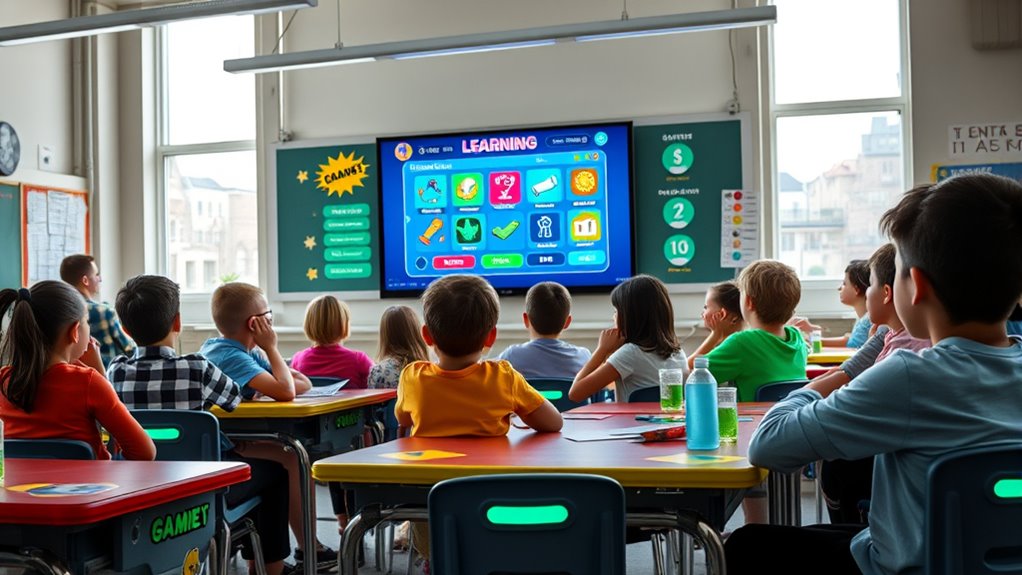

Gamifying your learning goals involves adding game-like elements such as badges, points, and progress tracking to make education more engaging. You can use rewards to reinforce positive behaviors and create challenges that appeal to different learning styles. Incorporating leaderboards or collaborative tasks boosts motivation and participation. This approach transforms passive effort into an enjoyable journey, helping you stay focused and enthusiastic to achieve more—exploring these strategies further will help you unlock their full potential.
Key Takeaways
- Incorporate game elements like badges, points, and leaderboards to make learning goals engaging and motivating.
- Use visual progress trackers to provide immediate feedback and a sense of achievement.
- Design challenges that balance difficulty and skill level to maintain interest and prevent frustration.
- Personalize rewards and tasks to cater to individual learning styles and foster ownership of progress.
- Create compelling narratives or themes to enhance motivation and connect learning goals to learners’ interests.
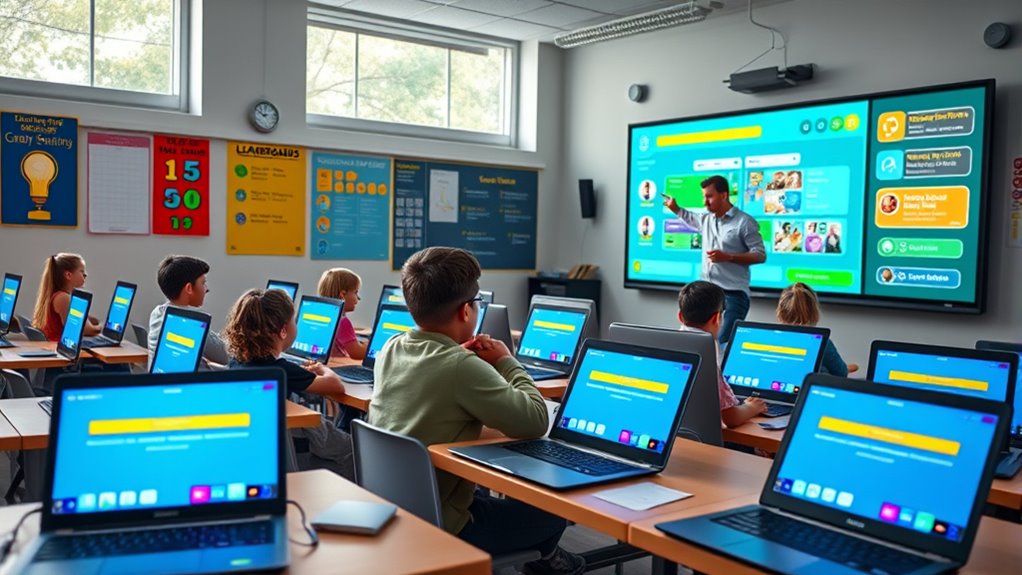
Have you ever wondered how to make learning more engaging and motivating? One of the most effective ways to do this is by implementing reward systems and engagement strategies that turn ordinary lessons into exciting challenges. When you gamify learning goals, you’re tapping into the natural human desire for achievement and recognition. By designing activities that resemble games, you create an environment where learners feel compelled to participate actively and stay committed. Reward systems are at the core of this approach—they provide tangible or intangible incentives that reinforce positive behaviors and accomplishments. For example, earning points for completing tasks, unseal badges for mastering skills, or receiving praise for effort can considerably boost motivation. These rewards serve as immediate feedback, encouraging learners to continue pushing forward, especially when the goals are clear and attainable.
Engagement strategies come into play as you craft a compelling narrative or challenge that resonates with your learners’ interests. Incorporating elements like leaderboards, progress tracking, or timed challenges can make the learning process feel more like a game than a chore. When learners see their progress visually, it fosters a sense of achievement and motivates them to improve further. This approach not only increases participation but also helps sustain focus over longer periods. The key is to balance challenge with skill level—if tasks are too easy, learners may get bored; if they’re too difficult, frustration can set in. Using a variety of reward systems, such as unlocking new content or earning privileges, keeps the experience fresh and encourages continued effort.
You can also personalize these engagement strategies to suit different learning styles and preferences. For example, some learners might thrive on competitive elements like leaderboards, while others prefer collaborative challenges or creative tasks that offer recognition in different ways. The goal is to create an environment where learners feel motivated to take ownership of their progress, with rewards acting as milestones along their journey. When you integrate reward systems thoughtfully, you transform passive learning into an active, enjoyable experience. This not only enhances retention but also fosters a growth mindset, where learners view challenges as opportunities rather than obstacles. Fundamentally, gamifying learning goals with well-designed engagement strategies keeps learners excited, invested, and eager to achieve more.

Reward Learning with Badges: Spark Student Achievement
As an affiliate, we earn on qualifying purchases.
As an affiliate, we earn on qualifying purchases.
Frequently Asked Questions
How Can Gamification Improve Student Motivation Long-Term?
Gamification boosts your motivation by leveraging reward systems and engagement strategies that make learning more enjoyable. When you earn points, badges, or gain access to levels, you stay focused and eager to progress long-term. These elements create a sense of achievement and challenge, encouraging you to continue. By making goals fun and interactive, gamification helps you develop a sustained interest and intrinsic motivation, ultimately improving your learning outcomes over time.
What Are Common Pitfalls When Implementing Game Elements?
You should watch out for overcomplicating design, which can confuse students and hinder engagement. Neglecting accessibility is another common pitfall, as not all students can participate equally if features aren’t inclusive. Keep game elements simple and intuitive, and make sure they accommodate diverse needs. Avoid adding too many features at once—clarity and inclusivity help maintain motivation and prevent frustration, making your gamification effective long-term.
How Do I Measure the Effectiveness of Gamified Learning?
You can’t improve what you don’t measure, so start with game analytics and engagement metrics. Track how often learners participate, complete tasks, and their progress over time. Use quizzes, surveys, and activity logs to gather data. Compare these insights to your initial goals to see if engagement rises and learning outcomes improve. Adjust your game elements based on this feedback, ensuring your gamification efforts truly enhance learning effectiveness.
Can Gamification Be Adapted for Adult Learners?
Yes, you can definitely adapt gamification for adult learners. Focus on adult engagement by incorporating relevant, real-world challenges that motivate them. Use game elements like rewards and progress tracking to boost learning retention. Keep activities practical and aligned with their goals. By tailoring the experience to their needs, you’ll enhance participation and guarantee they retain knowledge effectively. This approach makes learning more appealing and impactful for adults.
What Tools or Platforms Are Recommended for Gamifying Education?
You should explore educational platforms like Kahoot!, Quizizz, and Classcraft, which offer built-in gamification tools to engage learners. These platforms make it easy to create interactive quizzes, challenges, and reward systems that motivate participants. Additionally, tools like Edpuzzle and Socrative enhance engagement through multimedia and real-time feedback. Use these gamification tools to transform your teaching methods and make learning more dynamic and rewarding for adult learners.

Fundraising Thermometer Chart Goal Tracker | Dry Erase Goal Setting Wall Mounted Thermometer | Giant Sales Goal Board with Pull-Through Ribbon Progress Tracker (46” x 12”) by ORCA
STURDY RIBBON: Our ribbon is kept together using high quality glue and nylon. You won’t have to deal…
As an affiliate, we earn on qualifying purchases.
As an affiliate, we earn on qualifying purchases.
Conclusion
By turning your learning goals into a game, you transform the journey into an exciting adventure where every milestone is a shining beacon guiding your way. Like a skilled navigator, you’ll navigate challenges with confidence, fueled by the thrill of progress. Remember, this gamified path isn’t just about ticking boxes—it’s about igniting a passionate fire within, making your educational voyage a mesmerizing story where you’re the hero conquering mountains of knowledge with every step forward.
Reward Learning with Badges: Spark Student Achievement
As an affiliate, we earn on qualifying purchases.
As an affiliate, we earn on qualifying purchases.

Ultimate Puzzle Challenge!: 125+ Brain Games for Kids, Mazes, Brain Teasers, Word Searches, Crossword Puzzles, Sudoku, Logic Puzzles and More, Kids Activity Book (Highlights Jumbo Books & Pads)
As an affiliate, we earn on qualifying purchases.
As an affiliate, we earn on qualifying purchases.