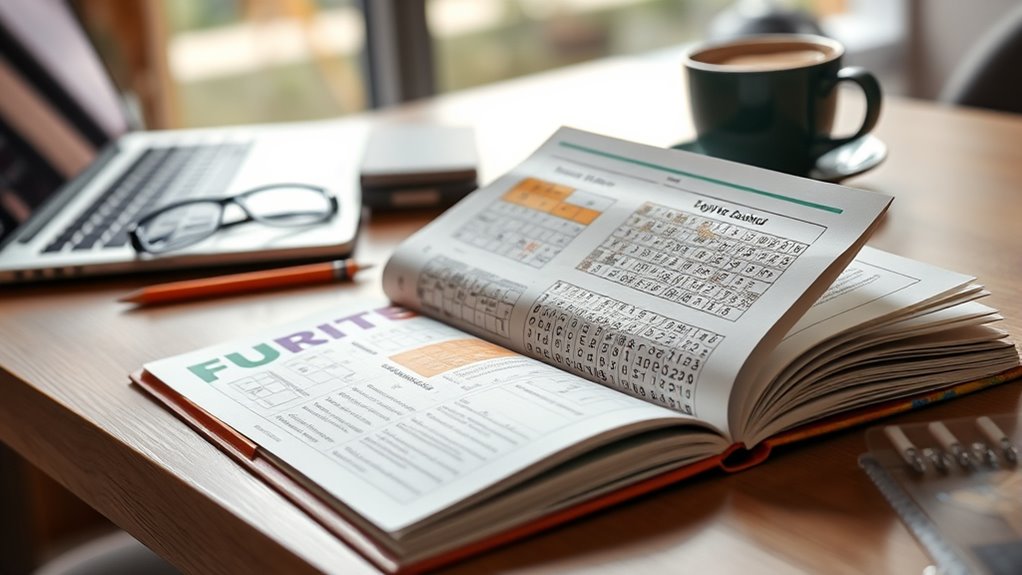
Brain-training puzzle books range from quick daily challenges to focused logic workouts, and the best overall choice in this lineup is The Big Puzzle Book for Adults 2027 for its year-round mix of puzzles. For a more targeted challenge, Will Shortz Presents Brain-Training KenKen centers on numerical logic, while Large Print Variety Puzzle Book for Adults & Seniors offers a broad selection in an accessible format. The main tradeoff is between variety and depth: a mixed collection can keep sessions fresh, while a single puzzle type gives you more practice with one skill. Print size, difficulty, solutions, and the time needed for each puzzle also shape the fit. Read on for a ranked breakdown and help matching a book to your goals.

Turn your quiet moments into listening time
- Thousands of audiobooks, podcasts and originals
- Listen on your phone, tablet or Echo — also offline
- Cancel anytime
Key Takeaways
- The Big Puzzle Book for Adults 2027 leads for breadth and a daily-use structure, while specialist books such as KenKen and nonograms focus practice on one puzzle style.
- Large-print options stand out for legibility, but they may be less convenient to carry than a standard-format book.
- The lineup spans short sessions and longer logic challenges; choosing by the time you actually have may matter more than choosing by the largest puzzle count.
- Solution access is a useful distinction: books that include answers can support independent practice and make unfamiliar puzzle types easier to learn.
- Mindfulness-focused titles emphasize a calmer puzzle experience, while Mensa and tactical-thinking titles lean toward more explicitly challenging mental workouts.
| How to Think: Tactical Thinking Puzzles |  | Best for Big-Picture Thinking | Format: Book | Content: Tactical thinking puzzles | Stated purpose: Brain training | VIEW ON AMAZON | See Our Full Breakdown |
| The New York Times Large-Print Brain-Training Crosswords: 120 Large-Print Puzzles from the Pages of the New York Times |  | Best for Large-Print Crossword Fans | Format: Book | Puzzle type: Crosswords | Puzzle count: 120 | VIEW ON AMAZON | See Our Full Breakdown |
| Nonogram Puzzle Book: 80 Brain-Training Grids with Solutions |  | Best for Visual Logic Practice | Puzzle type: Nonograms | Puzzle count: 80 | Difficulty: Medium to hard | VIEW ON AMAZON | See Our Full Breakdown |
| The Big Puzzle Book for Adults 2027: 365 Daily Puzzles |  | Best for a Daily Mixed-Puzzle Routine | Publication year: 2027 | Puzzle count: 365 | Suggested daily time: 10 minutes | VIEW ON AMAZON | See Our Full Breakdown |
| 2026 Jumbo Word Fill-In Puzzles for Seniors |  | Best for Seniors Who Prefer Jumbo Print | Publication year: 2026 | Puzzle type: Word fill-in puzzles | Print format: Jumbo print | VIEW ON AMAZON | See Our Full Breakdown |
| Large Print Variety Puzzle Book for Adults & Seniors: 140 Puzzles Including Word Search, Sudoku, Crosswords, Fill-Ins, Mazes & Spot the Difference |  | Best for Large-Print Variety | Puzzle count: 140 | Puzzle types: Word search, Sudoku, crosswords, fill-ins, mazes, and spot the difference | Print: Large print | VIEW ON AMAZON | See Our Full Breakdown |
| Brain Boost: 365 Brain Games for Adults |  | Best for Daily Puzzle Variety | Puzzle count: 365 | Puzzle types: Crosswords, word searches, logic puzzles, and Sudoku | Intended audience: Adults | VIEW ON AMAZON | See Our Full Breakdown |
| Will Shortz Presents Brain-Training KenKen: 100 Challenging Logic Puzzles |  | Best for KenKen Logic Practice | Puzzle count: 100 | Puzzle type: KenKen logic puzzles | Difficulty description: Challenging | VIEW ON AMAZON | See Our Full Breakdown |
| The Mindfulness Puzzle Book 2 |  | Best for Mindfulness-Themed Puzzling | Series title: The Mindfulness Puzzle Book | Series volume: 2 | Theme: Mindfulness | VIEW ON AMAZON | See Our Full Breakdown |
| The Big Logic Grid Puzzle Book for Adults: 100+ Brain-Training Puzzles with Solutions |  | Best for Logic Grids with Answer Checking | Puzzle count: 100+ | Puzzle type: Logic-grid puzzles | Solutions: Included | VIEW ON AMAZON | See Our Full Breakdown |
| Mensa 10-Minute Brain Teasers: Brain-Training Tips, Logic Tests, and Puzzles to Exercise Your Mind |  | Best for Short, Structured Sessions | Format: Book | Puzzle session length: 10 minutes | Puzzle types: Brain teasers and logic tests | VIEW ON AMAZON | See Our Full Breakdown |
| The Mindfulness Puzzle Book 4: Relaxing Puzzles to De-stress and Unwind |  | Best for Calm, Low-Pressure Puzzle Time | Format: Puzzle book | Series: The Mindfulness Puzzle Book | Volume: 4 | VIEW ON AMAZON | See Our Full Breakdown |
| braintraining puzzle book | Puzzle count | Format | Stated purpose | Solutions |
|---|---|---|---|---|
| How to Think: Tactical Thinkin | Not specified | Book | Brain training | — |
| The New York Times Large-Print | 120 | Book | Brain training | — |
| Nonogram Puzzle Book: 80 Brain | 80 | — | Brain training | Complete visual solutions |
| The Big Puzzle Book for Adults | 365 | — | Daily brain training | — |
| 2026 Jumbo Word Fill-In Puzzle | Not specified | — | Brain-training activity | — |
| Large Print Variety Puzzle Boo | 140 | Puzzle book | — | Not specified |
| Brain Boost: 365 Brain Games f | 365 | Puzzle book; specific physical format not provided | — | Not specified |
| Will Shortz Presents Brain-Tra | 100 | Puzzle book | — | Not specified |
| The Mindfulness Puzzle Book 2 | Not specified | — | — | Not specified |
| The Big Logic Grid Puzzle Book | 100+ | Puzzle book | — | Included |
| Mensa 10-Minute Brain Teasers: | — | Book | — | — |
| The Mindfulness Puzzle Book 4: | — | Puzzle book | De-stress and unwind | — |
More Details on Our Top Picks
How to Think: Tactical Thinking Puzzles
Tactical thinking sets this book apart from collections built around a familiar puzzle format. Its puzzles are intended to prompt readers to look beyond an immediate clue and consider how pieces of a problem fit together. Compared with The Big Puzzle Book for Adults 2027, which rotates through several named puzzle types for daily variety, this title centers its appeal on a particular thinking aim rather than a broad mix. That focus may suit readers who want a more directed mental workout, but the available description does not specify puzzle count, difficulty, or solutions, making it harder to judge how much structure or support it offers. I’d choose it for an interest in strategic problem-solving, not for readers who need large print or a clearly quantified puzzle plan.
Pros:- Puzzles are designed to encourage tactical thinking
- Focuses on seeing the bigger picture
- Offers a different emphasis from crossword-only or word-fill-in books
Cons:- Puzzle count and difficulty are not specified in the available product details
- Solutions or answer support are not mentioned
- The description does not identify a range of puzzle formats
Best for: Adults who want puzzles framed around tactical reasoning and seeing connections beyond the immediate problem
Not ideal for: Readers who need a stated puzzle count, clear difficulty range, answer key details, or several distinct puzzle formats
- Format:Book
- Content:Tactical thinking puzzles
- Stated purpose:Brain training
- Thinking focus:Tactical thinking
- Approach:Encourages big-picture thinking
- Puzzle count:Not specified
Our verdict“Choose this for a focused tactical-thinking theme, but pick a book with explicit puzzle counts and solutions if structure matters more.”
The New York Times Large-Print Brain-Training Crosswords: 120 Large-Print Puzzles from the Pages of the New York Times
Large print is the practical advantage here: easier-to-read clues and grids can make longer crossword sessions more comfortable. With 120 puzzles, the book also offers a defined supply of material, unlike How to Think: Tactical Thinking Puzzles, whose puzzle count is not stated. The tradeoff is a narrow format: every activity is a crossword, so it offers less variety than The Big Puzzle Book for Adults 2027, which includes several puzzle types. The description does not mention solutions or extra guidance, so I would not choose it if checking answers is a priority. This is the most direct fit for readers who already enjoy crosswords and want a large-print collection, rather than a varied brain-training routine.
Pros:- Large-print format supports easier reading while solving
- Includes 120 crossword puzzles
- Provides a focused option for readers who prefer crosswords
- Puzzles are identified as coming from The New York Times
Cons:- Limited to crossword puzzles rather than offering format variety
- Solutions are not mentioned in the available details
- No difficulty range or additional training features are specified
Best for: Crossword enthusiasts who prefer larger, easier-to-read print and want a collection with a stated puzzle count
Not ideal for: Readers seeking varied puzzle types, explicit solution support, or a broader tactical and logic-focused workout
- Format:Book
- Puzzle type:Crosswords
- Puzzle count:120
- Print format:Large print
- Source:Puzzles from the pages of The New York Times
- Stated purpose:Brain training
Our verdict“Pick this for a substantial large-print crossword collection, but choose The Big Puzzle Book for Adults 2027 if you want puzzle variety.”
Nonogram Puzzle Book: 80 Brain-Training Grids with Solutions
Nonograms combine deduction with visual pattern-building, making this a more specialized choice than the crossword collection in The New York Times Large-Print Brain-Training Crosswords. Its 80 grids are described as medium to hard, so the book suits readers who want a sustained challenge rather than a gentle introduction. Complete visual solutions give solvers a way to check how each grid resolves, a useful advantage over books in this lineup whose descriptions do not mention answer support. The tradeoff is that the format stays with nonograms; readers wanting quick variety across word and number puzzles will find The Big Puzzle Book for Adults 2027 broader. I’d choose this for visual-logic practice, while beginners should be comfortable with some trial-and-error and a fairly demanding difficulty range.
Pros:- Includes 80 nonogram grids
- Complete visual solutions let readers check completed puzzles
- Medium-to-hard difficulty offers a substantial challenge
- Provides a visual-logic alternative to crosswords and word puzzles
Cons:- Difficulty is medium to hard, which may frustrate beginners
- Focuses on nonograms rather than a mix of puzzle types
- The description does not specify print size
Best for: Adults and teens who already enjoy grid-based deduction and want medium-to-hard visual logic puzzles with solutions
Not ideal for: New puzzle solvers seeking an easy starting level or readers who want multiple puzzle formats in one book
- Puzzle type:Nonograms
- Puzzle count:80
- Difficulty:Medium to hard
- Solutions:Complete visual solutions
- Intended audience:Adults and teens
- Stated purpose:Brain training
Our verdict“Choose this for challenging visual deduction with answer support; choose a mixed-format collection if variety matters more.”
The Big Puzzle Book for Adults 2027: 365 Daily Puzzles
One puzzle a day across five formats gives this book the clearest routine-building pitch in the group. Its 365 activities and suggested 10-minute sessions make it easier to turn brain training into a small daily habit, while Sudoku, crosswords, word searches, fill-ins, and codewords prevent the repetition of a single-format title such as The New York Times Large-Print Brain-Training Crosswords. The breadth comes with a tradeoff: readers seeking concentrated practice in one area, like the medium-to-hard nonograms in Nonogram Puzzle Book, may prefer that more focused challenge. The description also does not mention solutions or difficulty levels, so the daily structure is clearer than the level of support. I’d pick it for variety and consistency, not specialized training.
Pros:- Provides 365 puzzles for a daily year-long routine
- Includes five distinct puzzle types
- Suggested 10-minute sessions make it easier to fit into a regular day
- Offers more format variety than crossword- or nonogram-only options
Cons:- Solutions are not mentioned in the available product details
- No difficulty range or progression is specified
- Readers focused on mastering one puzzle format may find the mix less targeted
Best for: Adults who want a short, varied brain-training activity each day and prefer a clear year-long structure
Not ideal for: Solvers who want a single puzzle type, stated solutions, or a specified difficulty progression
- Publication year:2027
- Puzzle count:365
- Suggested daily time:10 minutes
- Puzzle types:Sudoku, crosswords, word searches, fill-ins, and codewords
- Intended audience:Adults
- Stated purpose:Daily brain training
Our verdict“Choose this for a varied, short daily routine, but favor a focused puzzle book if you want concentrated practice or stated solutions.”
2026 Jumbo Word Fill-In Puzzles for Seniors
Jumbo print and word fill-ins give this book a clear audience and a less number-heavy route into puzzle solving. Compared with The New York Times Large-Print Brain-Training Crosswords, it uses a different word-based format, while the crossword book offers a much clearer stated puzzle count: the available details here do not say how many fill-ins are included. Its senior-focused presentation may suit readers who find standard print uncomfortable, but the description provides no difficulty range, solutions, or mix of activities. That makes it less informative as a structured training program than The Big Puzzle Book for Adults 2027, which specifies both a daily schedule and five puzzle types. I’d choose this when legibility and fill-in puzzles are the priority, not when a defined challenge level or broad variety is needed.
Pros:- Jumbo print is designed for easier reading
- Word fill-ins offer a distinct alternative to crossword grids
- Intended specifically for seniors
- Presented as a brain-training activity
Cons:- Puzzle count is not specified in the available details
- Solutions and difficulty level are not mentioned
- The described content is limited to word fill-in puzzles
Best for: Seniors who want jumbo-print word fill-in puzzles and prefer a word-based activity over crosswords or number puzzles
Not ideal for: Readers who want a stated puzzle count, answer key details, multiple puzzle formats, or a specified difficulty range
- Publication year:2026
- Puzzle type:Word fill-in puzzles
- Print format:Jumbo print
- Intended audience:Seniors
- Stated purpose:Brain-training activity
- Puzzle count:Not specified
Our verdict“Pick this for senior-oriented jumbo-print fill-ins, but choose a mixed-format or better-specified book if variety and answer support matter.”
Large Print Variety Puzzle Book for Adults & Seniors: 140 Puzzles Including Word Search, Sudoku, Crosswords, Fill-Ins, Mazes & Spot the Difference
I’d choose this book for accessible variety: its 140 puzzles span word search, Sudoku, crosswords, fill-ins, mazes, and spot-the-difference activities. That mix lets readers switch between word, number, visual, and logic challenges instead of working through one puzzle format for the whole book. The large-print design is a specific advantage for adults and seniors who find standard-sized puzzle text tiring to read. Compared with Brain Boost: 365 Brain Games for Adults, this title offers fewer puzzles but makes readability and an explicitly varied set of formats its clearest selling points. The tradeoff is limited detail about difficulty, puzzle layout, and solutions, so I wouldn’t pick it for a carefully graded program or a solver who needs answer-checking information before buying.
Pros:- Large print supports more comfortable reading.
- Six named puzzle types offer variety across word, number, visual, and logic tasks.
- 140 puzzles provide a defined collection size.
- Designed for adults and seniors.
Cons:- Difficulty levels are not specified.
- No information is provided about solutions or answer checking.
- The description gives little detail about puzzle layouts or progression.
Best for: Adults and seniors who want readable text and a mix of familiar puzzle types in one book.
Not ideal for: Experienced solvers seeking detailed difficulty guidance or confirmed solutions, since those details are not provided.
- Puzzle count:140
- Puzzle types:Word search, Sudoku, crosswords, fill-ins, mazes, and spot the difference
- Print:Large print
- Intended audience:Adults and seniors
- Format:Puzzle book
- Solutions:Not specified
Our verdict“Choose this over Brain Boost if large, readable print and several familiar puzzle formats matter more than having a stated 365-game collection.”
Brain Boost: 365 Brain Games for Adults
The standout here is 365 brain games, paired with familiar formats such as crosswords, word searches, logic puzzles, and Sudoku. That large stated count makes this a natural fit for readers who want a regular puzzle habit and prefer changing challenge types rather than sticking with a single specialty. Compared with The Big Logic Grid Puzzle Book for Adults, Brain Boost offers broader named variety, while the logic-grid title is more focused and explicitly includes solutions. The tradeoff is that the available details say nothing about difficulty progression, page layout, or whether answers are included. I’d select it for breadth and a daily-use premise, but not for someone who needs a specific challenge level or a clearly documented way to check completed puzzles.
Pros:- 365 games support a sustained, regular puzzle routine.
- Includes crosswords, word searches, logic puzzles, and Sudoku.
- Offers more stated game formats than the focused KenKen and logic-grid books.
- Designed for adult puzzlers.
Cons:- Difficulty levels are not described.
- Solutions are not mentioned.
- Book size and format details are not provided.
Best for: Adults building a frequent puzzle routine who enjoy rotating among word, number, and logic games.
Not ideal for: Buyers who need stated difficulty levels, confirmed solutions, or details about print and page format.
- Puzzle count:365
- Puzzle types:Crosswords, word searches, logic puzzles, and Sudoku
- Intended audience:Adults
- Format:Puzzle book; specific physical format not provided
- Difficulty levels:Not specified
- Solutions:Not specified
Our verdict“Pick Brain Boost for a large, mixed-format collection, but choose The Big Logic Grid Puzzle Book if a focused logic challenge with stated solutions matters more.”
Will Shortz Presents Brain-Training KenKen: 100 Challenging Logic Puzzles
This is the most focused choice in the group: 100 KenKen puzzles concentrate on one logic-puzzle format rather than alternating among word games, mazes, and number puzzles. That specialization suits solvers who already enjoy KenKen or want to spend a session developing a consistent kind of problem-solving approach. Compared with Brain Boost: 365 Brain Games for Adults, it gives up breadth and a much larger stated puzzle count for a clearly named challenge. The description calls the puzzles challenging, but does not explain how difficulty changes across the book or whether solutions are included. I’d favor the Big Logic Grid Puzzle Book if answer checking is a priority; choose this one when KenKen itself is the reason for buying.
Pros:- Provides 100 puzzles in a clearly identified format.
- Concentrates on KenKen logic rather than splitting attention among puzzle types.
- Described as challenging, making its intended puzzle-solving focus clear.
- Presented by Will Shortz.
Cons:- A single puzzle format offers less variety than Brain Boost or the large-print variety book.
- Solutions are not specified in the supplied product details.
- The difficulty progression and physical format are not described.
Best for: Adults who specifically enjoy KenKen and want a dedicated set of logic puzzles.
Not ideal for: Puzzle readers seeking multiple formats, stated solutions, or a described range of difficulty.
- Puzzle count:100
- Puzzle type:KenKen logic puzzles
- Difficulty description:Challenging
- Presenter:Will Shortz
- Format:Puzzle book
- Solutions:Not specified
Our verdict“Choose this for concentrated KenKen practice; choose Brain Boost instead if you want a broader mix of brain games.”
The Mindfulness Puzzle Book 2
This title’s clearest distinction is its mindfulness theme, rather than a disclosed puzzle count or a named set of formats. That may appeal to readers looking for a puzzle book framed around a calmer, more reflective activity instead of a straightforward collection of KenKen or logic-grid challenges. The available description, however, provides no further information about its puzzles, difficulty, solutions, or how the mindfulness theme shapes the activities. Compared with The Mindfulness Puzzle Book 4: Relaxing Puzzles to De-stress and Unwind, this listing gives even less detail about the intended experience, so I can’t make a reliable comparison of their contents. I’d treat this as a cautious pick for readers specifically drawn to the theme, not for buyers who need to know the puzzle formats or scope before choosing.
Pros:- A mindfulness theme distinguishes it from the lineup’s explicitly logic-focused books.
- May suit readers looking for a themed alternative to standard puzzle collections.
- Identified as the second book in the series.
Cons:- The puzzle formats are not specified.
- Puzzle count and difficulty are not provided.
- Solutions and the practical role of the mindfulness theme are not described.
Best for: Readers specifically seeking a mindfulness-themed puzzle book who are comfortable with limited product detail.
Not ideal for: Buyers who want a stated puzzle count, named puzzle types, difficulty information, or confirmed solutions.
- Series title:The Mindfulness Puzzle Book
- Series volume:2
- Theme:Mindfulness
- Puzzle count:Not specified
- Puzzle types:Not specified
- Solutions:Not specified
Our verdict“Consider this only if the mindfulness theme is your main reason for choosing a book and unspecified puzzle details are acceptable.”
The Big Logic Grid Puzzle Book for Adults: 100+ Brain-Training Puzzles with Solutions
For buyers who want a clearly defined logic challenge and a way to check their work, this book has two useful specifics: 100+ logic-grid puzzles and included solutions. Answer checking can make solo solving more practical, particularly when a puzzle’s clues lead to a point where progress stalls. Compared with Will Shortz Presents Brain-Training KenKen, this is the stronger fit for anyone who values stated solutions, while KenKen offers a distinct, single-format number-logic challenge. This book is also more focused than Brain Boost: 365 Brain Games for Adults, which names several different puzzle types. Its main tradeoff is that the description gives no difficulty range or page-format details, and logic grids alone may feel repetitive to readers who prefer varied activities.
Pros:- Includes more than 100 logic-grid puzzles.
- Solutions are included for answer checking.
- Clearly aimed at adult puzzle solvers.
- Offers a more focused logic format than Brain Boost’s mixed collection.
Cons:- Logic grids are the only puzzle type specified, which may limit variety.
- Difficulty levels and progression are not described.
- Print size and physical format details are not provided.
Best for: Adult solvers who enjoy logic-grid deduction and want solutions available to check their answers.
Not ideal for: Readers who want varied puzzle formats, large-print details, or a stated progression from easier to harder puzzles.
- Puzzle count:100+
- Puzzle type:Logic-grid puzzles
- Solutions:Included
- Intended audience:Adults
- Publication year:2026
- Format:Puzzle book
Our verdict“Choose this over the KenKen collection if you want logic-grid puzzles with stated solutions for checking your work.”
Mensa 10-Minute Brain Teasers: Brain-Training Tips, Logic Tests, and Puzzles to Exercise Your Mind
Short 10-minute activities make this a practical choice for readers who want a defined brain-training session rather than a long puzzle marathon. The mix of logic tests, brain teasers, and training tips gives it more variety than a single-format book such as Will Shortz Presents Brain-Training KenKen, which focuses on one puzzle style. That range may help keep brief sessions fresh, though readers who prefer to build skill in one format may find the variety less focused. The Mensa association and connection to its Brilliant Brain Workouts give the collection a clear brain-game identity, but the available details do not specify puzzle counts or difficulty levels. Compared with Brain Boost: 365 Brain Games for Adults, this title’s strongest draw is its concise session format, not a stated year-long daily schedule.
Pros:- Short 10-minute puzzles suit breaks and quick daily sessions.
- Combines brain-training tips, logic tests, and brain teasers.
- Offers more puzzle-style variety than a single-format collection.
Cons:- The available product details do not state how many puzzles are included.
- No difficulty range or progression is specified.
- Readers focused on one puzzle type may prefer a more specialized book.
Best for: Busy adults who want varied brain teasers and logic tests that fit into short breaks.
Not ideal for: Puzzle solvers seeking a specified number of puzzles, a clear difficulty progression, or one dedicated format such as crosswords or KenKen.
- Format:Book
- Puzzle session length:10 minutes
- Puzzle types:Brain teasers and logic tests
- Additional content:Brain-training tips
- Series association:Mensa’s Brilliant Brain Workouts
- ASIN:1510740996
Our verdict“Choose this for varied, short brain-training sessions; pick a dedicated logic or crossword collection if you want a more focused challenge.”
The Mindfulness Puzzle Book 4: Relaxing Puzzles to De-stress and Unwind
This book puts relaxation ahead of hard-edged challenge, making it distinct from titles such as The Big Logic Grid Puzzle Book for Adults, which foregrounds brain-training logic puzzles. Its stated aim is to pair puzzles with a calmer, de-stressing activity, so it may suit readers who want a gentle mental pause after a busy day rather than a demanding workout. That mood-led approach is also the main limitation: the available description does not identify specific puzzle types, difficulty levels, or puzzle counts, so buyers cannot tell whether the activities match their preferred format or offer enough challenge. Compared with The Mindfulness Puzzle Book 2, this is another entry in the same series, but the supplied details do not establish how its contents differ. I’d choose it for its soothing intent, not for a particular puzzle format.
Pros:- Puzzles are presented as a calming activity for de-stressing.
- Fits readers interested in mindfulness and mental wellness.
- Designed for unwinding after a busy day.
Cons:- The available details do not identify the puzzle types.
- No difficulty range or puzzle count is provided.
- The supplied information does not explain how this volume differs from The Mindfulness Puzzle Book 2.
Best for: Readers who enjoy gentle puzzle breaks and want an activity framed around mindfulness and unwinding.
Not ideal for: Buyers who need a known puzzle format, a stated difficulty level, or a clearly described quantity of puzzles before choosing.
- Format:Puzzle book
- Series:The Mindfulness Puzzle Book
- Volume:4
- Stated purpose:De-stress and unwind
- Puzzle approach:Relaxing puzzles
- ASIN:1472145445
Our verdict“Pick this for a relaxation-first puzzle break, but choose a clearly specified logic or variety book if puzzle format and challenge level matter most.”

How We Picked
I compared the 12 books on how well their puzzle format serves a clear use: building a daily habit, practicing one type of reasoning, getting variety, reading comfortably, or relaxing with a structured activity. I also looked at the stated puzzle count, whether solutions are included, the range of puzzle styles, and whether the book appears suited to short or more involved sessions. Those details affect whether a title is easy to pick up regularly or better reserved for a specific interest.
The ranking favors books that offer a strong balance of usability and choice for a broad range of readers. The Big Puzzle Book for Adults 2027 ranks first for its daily format and range; focused titles follow where their narrower scope serves a distinct goal. Large-print collections, single-format logic books, and relaxation-oriented books rank according to their particular audience rather than being treated as interchangeable. These books offer puzzle practice and entertainment, not a promise of measurable cognitive improvement.
| braintraining puzzle book | Format | Stated purpose | Solutions | Intended audience |
|---|---|---|---|---|
| How to Think: Tactical Thinkin | Book | Brain training | — | — |
| The New York Times Large-Print | Book | Brain training | — | — |
| Nonogram Puzzle Book: 80 Brain | — | Brain training | Complete visual solutions | Adults and teens |
| The Big Puzzle Book for Adults | — | Daily brain training | — | Adults |
| 2026 Jumbo Word Fill-In Puzzle | — | Brain-training activity | — | Seniors |
| Large Print Variety Puzzle Boo | Puzzle book | — | Not specified | Adults and seniors |
| Brain Boost: 365 Brain Games f | Puzzle book; specific physical format not provided | — | Not specified | Adults |
| Will Shortz Presents Brain-Tra | Puzzle book | — | Not specified | — |
| The Mindfulness Puzzle Book 2 | — | — | Not specified | — |
| The Big Logic Grid Puzzle Book | Puzzle book | — | Included | Adults |
| Mensa 10-Minute Brain Teasers: | Book | — | — | — |
| The Mindfulness Puzzle Book 4: | Puzzle book | De-stress and unwind | — | — |
Factors to Consider When Choosing Braintraining Puzzle Books
To choose well, match the book to the way you want to solve: a little every day, one demanding puzzle at a time, or a mix that prevents repetition. Beyond the title and puzzle count, I would check how the book handles difficulty, answer access, print comfort, and the kind of mental effort you enjoy.
Choose Variety or Repeated Practice
A variety book gives you options when your interest changes from day to day, but it also means less space for any one puzzle type. A specialist title can help you get familiar with a particular format through repeated practice, though that focus may wear thin if you do not already enjoy it. Avoid treating a large number of puzzles as proof of greater value: check whether the formats are ones you will actually solve. If you are buying for more than one person, a mixed collection is often easier to share. If you want to build confidence in a specific kind of reasoning, a focused book may suit you better.
Match Difficulty to Your Starting Point
A book that is too easy can become repetitive, while one that starts beyond your current comfort level may be abandoned. Look for clues in the title and description, such as beginner-friendly framing, challenging logic puzzles, or a range of levels. A mixed-difficulty book can help you progress without switching books, but a specialist collection may offer a steadier challenge. Do not assume that a puzzle’s familiar name tells you how hard it will be; rule sets and grid size can change the workload. If you are unsure, choose a title with solutions so you can learn the format rather than getting stuck indefinitely.
Plan Around Session Length
Daily collections and quick brain teasers can fit a short break, whereas larger logic grids or unfamiliar formats may call for more uninterrupted attention. A puzzle count does not tell you how long each activity takes, so consider whether you prefer finishing one puzzle at a sitting or returning to it later. For commuting or waiting rooms, portability can matter as much as puzzle variety. At home, a larger book may be easier to read and handle. A realistic routine is more useful than choosing a book with the longest advertised supply of puzzles.
Check Print Comfort Before Buying
Large print can make grids, clues, and answer choices easier to read, especially during longer sessions or for readers who prefer bigger text. The tradeoff may be a bulkier book that is less convenient to pack. Standard print can save space but may feel cramped when puzzle layouts require writing. Pay attention to the format named in the listing, not just the cover’s general audience wording. If a book is intended for seniors, that label alone does not tell you whether its print size or puzzle mix matches a particular reader’s needs.
Decide How Much You Need Solutions
Answer keys help when you are learning a new puzzle format, checking a completed grid, or solving without another person nearby. They are less central if you already know the puzzle type and prefer to work unaided. Check whether answers are provided for every puzzle and whether they are easy to find without accidentally seeing them while you work. A book with solutions can be a better self-guided learning choice, even if it offers fewer puzzle styles. For shared solving, clear answer access can also prevent disagreements over a finished puzzle.
Pick the Kind of Challenge You Enjoy
Not every brain-training book feels like a test. Number puzzles, word puzzles, visual grids, and logic problems ask for different kinds of attention, so choose a format you find satisfying rather than one that sounds most demanding. Some readers want a brisk challenge; others prefer a calmer activity that gives them a reason to pause. Mindfulness-oriented puzzle books may appeal when atmosphere matters alongside the activity, while competition-style or logic-focused books suit readers looking for firmer problems. A book you enjoy returning to is a more practical choice than one selected only for its ambitious framing.
Frequently Asked Questions
Is a mixed puzzle book a better first choice than a book devoted to one puzzle type?
A mixed book is a sensible starting point if you are still finding out which formats you enjoy. It lets you sample different activities without committing to a full collection of one style. A specialist book is a stronger fit if you already know you like crosswords, KenKen, nonograms, or logic grids and want repeated practice. Consider how often you want to switch tasks: variety helps some readers stay engaged, while others prefer a consistent format. If the choice is a gift, variety is usually a safer bet when the recipient’s puzzle preferences are unknown.
Do puzzle books provide proven cognitive benefits?
Puzzle books provide structured mental activities, but a book’s brain-training label alone does not prove that solving its puzzles will improve general cognitive ability. The books in this roundup are best chosen for the kinds of challenges, routines, and enjoyment they offer. If your goal is to keep a regular hobby, look for a format you will return to rather than relying on bold claims. You can also rotate word, number, and logic puzzles if you prefer different kinds of problem-solving. Treat any promised benefit cautiously unless it is backed by clear evidence specific to that claim.
Should I prioritize large print or puzzle variety?
Start with comfort if small text or dense grids make puzzles tiring to read; legibility can affect whether you use the book at all. If print size is not a concern, variety may offer more ways to keep a routine fresh. Also think about where you will solve: a larger format can be comfortable at home but inconvenient to carry. A broad collection in large print can address both preferences, though its page size may still feel bulky. When buying for someone else, do not assume that age alone determines whether large print is needed.
Are solutions important if I already solve puzzles regularly?
They may be less necessary if you know the format and enjoy working through problems without checking answers. Solutions still help you confirm a result or understand a rule you have not encountered before. For a specialist logic book, answer access can make it easier to keep going when a puzzle stalls. Check whether the answers are clearly organized and correspond to the puzzle numbering. If you prefer solving collaboratively, an answer key can settle a disagreement without ending the session early.
How can I choose between a challenging book and a relaxing one?
Think about what you want the activity to feel like when you open the book. A challenging logic or tactical-thinking collection is a better match if you enjoy concentration and working through a problem that may take time. A mindfulness-oriented title may suit readers who want puzzles as a calmer part of a break. Neither style is automatically better; the right choice depends on whether effort or a more relaxed pace is the main draw. If you want both, a variety collection can provide different levels of intensity, though it may not offer the same focus as a dedicated title.
Conclusion
For most readers seeking a book they can return to throughout the year, The Big Puzzle Book for Adults 2027 is my best overall pick for its daily format and broad puzzle mix. Large Print Variety Puzzle Book for Adults & Seniors is the best value-style choice for readers who want multiple formats in an accessible layout, while The New York Times Large-Print Brain-Training Crosswords suits crossword fans who want a focused collection. For beginners, I would start with a mixed-format book or Mensa 10-Minute Brain Teasers if short challenges feel more approachable. Choose Will Shortz Presents Brain-Training KenKen or The Big Logic Grid Puzzle Book for Adults for focused logic practice, and a Mindfulness Puzzle Book for a calmer activity. The best fit comes down to whether you want variety, one specific challenge, comfortable print, or a more relaxed solving pace.