The best overall soil test kit for lawns in this roundup is the MySoil Test Kit PRO Pack, which pairs lab analysis with recommendations for a more detailed picture than a color-change test. For a simpler mail-in option, the standard MySoil Soil Test Kit covers core nutrients and pH, while the 200-test kit stands out for homeowners who want repeated checks across a large lawn. The main choice is between lab analysis and quick at-home testing, followed by how many samples you need and whether ammonia or plant-focused guidance matters. Each approach trades convenience, detail, and repeat-testing capacity differently. Read on for the full breakdown and a guide to choosing a kit that fits your lawn-care plan.

Turn your quiet moments into listening time
- Thousands of audiobooks, podcasts and originals
- Listen on your phone, tablet or Echo — also offline
- Cancel anytime
Key Takeaways
- Mail-in analysis and at-home tests serve different jobs: MySoil kits provide lab-based results and recommendations, while the reagent kits prioritize immediate readings and repeat checks.
- The PRO Pack is the detail-first pick: it is better suited to buyers who want a broader soil-and-plant analysis than a basic pH, nitrogen, phosphorus, and potassium screen.
- Test count changes the best fit: the 200-test kit suits frequent or multi-area testing, while 2-pack and 12-pack MySoil options make more sense when separate lawn zones need lab analysis.
- Not all test panels match: most kits focus on pH and N-P-K, while the 140-test option also lists ammonia, a distinction that may matter for targeted troubleshooting.
- Brand names do not guarantee identical kits: the two Rapitest listings and several generic 40-test kits need comparison by included tests, instructions, and intended use rather than name alone.
| MySoil Test Kit PRO Pack, Complete Soil and Plant Nutrient Analysis with Recommendations |  | Best Overall for Lab-Based Lawn Guidance | Test kits: 2 | Soil probe length: 8 inches | Analysis time: 6–8 days | VIEW ON AMAZON | See Our Full Breakdown |
| MySoil Soil Test Kit – Complete Nutrient and pH Analysis with Recommendations |  | Best Single-Kit Lab Test | Packs: 1 | Measurements: 13 nutrient levels and pH | Results turnaround: 6–8 days | VIEW ON AMAZON | See Our Full Breakdown |
| Soil Test Kit for pH, Nitrogen, Phosphorus, and Potassium, 200 Tests |  | Best for Frequent At-Home Checks | Brand: AESCULIX | Model: T01 | Maximum tests: Up to 200 | VIEW ON AMAZON | See Our Full Breakdown |
| Rapitest Soil Test Kit for Gardens and Lawns |  | Best for Straightforward Lawn Checks | Brand: Luster Leaf | Model: 1602 | Total tests: 20 | VIEW ON AMAZON | See Our Full Breakdown |
| MySoil Soil Test Kit, 2 Pack |  | Best Two-Sample Mail-In Kit | Pack size: 2 single-use kits | Measurements: 13 plant-available nutrient levels, including nitrogen and pH | Results turnaround: 6–8 days | VIEW ON AMAZON | See Our Full Breakdown |
| MySoil Soil Test Kit, 12 Pack |  | Best for Lab-Backed Lawn Plans | Brand: MySoil | Pack count: 12 single-use kits | Analysis: 13 plant-available nutrient levels, including nitrogen and pH | VIEW ON AMAZON | See Our Full Breakdown |
| AAwipes Soil Test Kit for 4-in-1 pH, Nitrogen, Phosphorus, Potassium Levels – 40 Tests for Garden, Lawn, Yard & Plant Care |  | Best for Beginners | Tests included: 40 | Parameters tested: pH, nitrogen, phosphorus, and potassium | Test type: Chemical test strips | VIEW ON AMAZON | See Our Full Breakdown |
| Soil Test Kit, 140 Tests for pH, Nitrogen, Phosphorus, Potassium, and Ammonia |  | Best for Frequent Monitoring | Test parameters: pH, ammonia, nitrogen, phosphorus, and potassium | Total tests: About 140 | Tests per parameter: About 40 each for pH, ammonia, phosphorus, and potassium; about 20 for nitrogen | VIEW ON AMAZON | See Our Full Breakdown |
| Soil Test Kit for pH, Nitrogen, Phosphorus, and Potassium – 40 Tests |  | Best for Balanced Four-Parameter Checks | Parameters: pH, nitrogen, phosphorus, and potassium | Number of tests: 40 | Tests per parameter: 10 | VIEW ON AMAZON | See Our Full Breakdown |
| Rapitest Soil Test Kit for Gardens, Vegetables, Flowers, and Lawns |  | Best for Plant-Specific pH Reference | Brand: Luster Leaf | Model: 1601 | Tests included: 40 total: 10 each for pH, nitrogen, phosphorus, and potash | VIEW ON AMAZON | See Our Full Breakdown |
| Soil Test Kit for 4 Parameters – 40 Tests, Professional Gardening Soil Nutrient Testing | 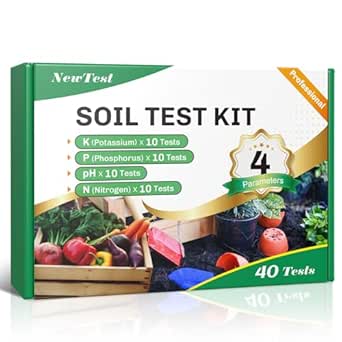 | Best for Repeat Lawn Checks | Parameters: pH, nitrogen, phosphorus, potassium | Total tests: 40 | Tests per parameter: 10 | VIEW ON AMAZON | See Our Full Breakdown |
| LaMotte Model EL Turf and Garden Soil Test Kit |  | Best for Lawn Learning and Instruction | Parameters: Nitrogen, phosphorus, potassium, soil pH | Nitrogen tests: 15 | Phosphorus tests: 15 | VIEW ON AMAZON | See Our Full Breakdown |
More Details on Our Top Picks
MySoil Test Kit PRO Pack, Complete Soil and Plant Nutrient Analysis with Recommendations
For lawn owners who want more than a quick pH check, the MySoil Test Kit PRO Pack pairs lab analysis with tailored fertilizer recommendations. It measures soil nutrients and pH, then returns results in 6–8 days, making it a better fit for planned lawn care than an immediate diagnosis. The included probe and two kits also make it easier to collect samples for separate lawn areas or repeat a test later. Compared with the single-pack MySoil Soil Test Kit, this version offers another sample kit and a soil probe, while both rely on mail-in testing and a similar wait. The tradeoff is that it costs more than basic at-home kits and cannot provide on-site results. I’d choose it for deliberate, recommendation-led lawn adjustments, not same-day troubleshooting.
Pros:- Lab analysis covers soil nutrients and pH
- Provides tailored fertilizer recommendations
- Includes two test kits and an 8-inch soil probe
- Instructions and prepaid mailing envelopes are included
Cons:- Results take 6–8 days after mailing
- More costly than simple at-home color or strip tests
- Not suited to immediate, on-site testing
Best for: Lawn owners who want lab-based nutrient and pH results, fertilizer guidance, and two sample kits for separate areas or a follow-up test.
Not ideal for: Gardeners who need immediate results or want to test many lawn zones frequently without mailing samples.
- Test kits:2
- Soil probe length:8 inches
- Analysis time:6–8 days
- Analysis:Soil nutrients and pH
- Recommendations:Tailored fertilizer recommendations
- Included:2 soil test kits, soil probe, instructions, prepaid mailing envelopes
Our verdict“Choose the PRO Pack if you want lab-backed lawn guidance and two samples; skip it if speed matters more than detailed recommendations.”
MySoil Soil Test Kit – Complete Nutrient and pH Analysis with Recommendations
The single-kit MySoil Soil Test Kit suits lawn owners who want a detailed lab result without buying a two-pack. It analyzes 13 nutrient levels and pH and supplies fertilizer recommendations for organic and non-organic options, which can help turn a test result into a practical lawn-care plan. Compared with the MySoil Test Kit PRO Pack, this package is simpler: it provides one mail-in test rather than two kits and a soil probe. That makes it a sensible pick for checking one lawn area, but less useful if you want to compare front and back lawns or keep a second test for later. Results take 6–8 days, so it favors scheduled soil planning over urgent correction. Buyers seeking repeated quick checks should look at an at-home kit such as Rapitest instead.
Pros:- Measures 13 nutrient levels and pH
- Offers organic and non-organic fertilizer recommendations
- Mail-in materials and instructions are included
- Works with varied soil types and growing conditions
Cons:- Only one pack is included
- Results take 6–8 days
- Requires mailing the sample rather than testing on site
Best for: Homeowners testing one lawn area who want broad nutrient and pH analysis plus fertilizer suggestions without a multi-kit pack.
Not ideal for: People comparing several lawn zones, needing a repeat sample, or wanting results without a mail-in wait.
- Packs:1
- Measurements:13 nutrient levels and pH
- Results turnaround:6–8 days
- Recommendations:Organic and non-organic fertilizer recommendations
- Testing method:Mail-in lab testing
- Manufacturer:Predictive Nutrient Solutions, Inc.
Our verdict“Pick this single-kit option for one detailed lawn assessment; choose the MySoil PRO Pack if you need two samples or a probe.”
Soil Test Kit for pH, Nitrogen, Phosphorus, and Potassium, 200 Tests
For lawn owners who want repeated checks without mailing samples, this strip-based kit covers pH, nitrogen, phosphorus, and potassium, with up to 200 tests. Its storage case, sample tubes, scoop, pipettes, and guides give it a more complete sampling setup than a strips-only package might suggest. Results come from matching colors to charts, though, and the product describes them as gardening reference rather than professional lab analysis. That puts it in a different category from the MySoil Soil Test Kit, which analyzes 13 nutrient levels and returns tailored recommendations after lab processing. This kit is better for frequent, approximate checks across a lawn or garden; it is weaker when you need detailed nutrient interpretation. The strips also need careful storage, and no liquid reagents, powder, or tablets are included.
Pros:- Offers up to 200 tests for repeated monitoring
- Checks pH, nitrogen, phosphorus, and potassium
- Includes sampling tools, tubes, guides, and a storage case
- Suitable for lawns, pots, gardens, and fields
Cons:- Color-chart readings are for gardening reference, not professional lab analysis
- No liquid reagents, powder, or tablets are included
- Strips need prompt sealing and cool, dry, dark storage
Best for: Hands-on lawn and garden owners who want to make frequent reference checks of pH and three major nutrients at home.
Not ideal for: Buyers who need lab-grade analysis, fertilizer prescriptions, or a kit with included liquid, powder, or tablet reagents.
- Brand:AESCULIX
- Model:T01
- Maximum tests:Up to 200
- Test strips:150 total; 3 packs of 50
- Measurements:pH, nitrogen, phosphorus, and potassium
- Result range:pH 4.0–9.0
- Included tools:Storage case, test-tube rack, sample tubes, comparator tubes, soil scoop, Pasteur pipettes, brush, instructions, quick-start guide
- Reagents:No liquid reagents, powder, or tablets included
Our verdict“Choose this for frequent, approximate home checks; choose MySoil when lab analysis and tailored lawn treatment advice matter more.”
Rapitest Soil Test Kit for Gardens and Lawns
The Rapitest Soil Test Kit is a practical choice for checking the four basics that often guide lawn-care decisions: pH, nitrogen, phosphorus, and potash. Its capsule-and-color-comparator method gives at-home users a clear way to match a sample, while the included plant preference guide can help put pH results into context. With 20 tests total, it works well for a small number of lawn zones or a mix of lawn and garden samples, but only five tests are available for each measure. That is a tighter limit than the high-count strip-based AESCULIX kit, which supports far more repeated checks, though Rapitest uses capsules rather than strips. It also offers less nutrient detail and no lab-style recommendations compared with MySoil. I’d pick it for basic, occasional checks, not extensive lawn mapping.
Pros:- Tests pH, nitrogen, phosphorus, and potash
- Capsule system and color comparator support at-home interpretation
- Includes guidance on pH preferences for over 400 plants
- Useful for occasional checks across lawn and garden samples
Cons:- Only five tests are provided for each measure
- Covers fewer nutrient details than MySoil lab kits
- Does not provide lab-based tailored fertilizer recommendations
Best for: Homeowners who want an accessible way to check core soil measures across a few lawn or garden areas.
Not ideal for: People testing many zones repeatedly or seeking broad nutrient analysis and tailored fertilizer recommendations.
- Brand:Luster Leaf
- Model:1602
- Total tests:20
- Tests per measure:5 each for pH, nitrogen, phosphorus, and potash
- Testing method:Capsule system with color comparator
- Included guidance:Instructions and pH preferences for over 400 plants
Our verdict“Choose Rapitest for occasional basic lawn checks with plant guidance; choose AESCULIX for many more reference tests or MySoil for lab detail.”
MySoil Soil Test Kit, 2 Pack
This MySoil 2 Pack is aimed at lawn owners who want lab results for two samples and useful direction on what to apply, how much, and when. Each single-use kit measures 13 plant-available nutrient levels, including nitrogen and pH, with results in 6–8 days. That makes it more informative for treatment planning than the capsule-based Rapitest Soil Test Kit, but Rapitest can provide at-home checks without waiting for mail-in processing. Compared with the MySoil Test Kit PRO Pack, this package also supplies two kits, while the PRO listing specifies an included soil probe. The tradeoff is the wait and single-use format: you cannot reuse a kit for ongoing monitoring. I’d use the pair to compare two lawn areas or test before and after a planned soil amendment, rather than for quick routine checks.
Pros:- Two single-use kits support testing separate samples
- Measures 13 plant-available nutrient levels, including nitrogen and pH
- Provides organic and non-organic recommendations with amounts and timing
- Prepaid mailing envelopes and customer support are included
Cons:- Results take 6–8 days
- Each kit is single-use
- Mail-in testing is less convenient than an at-home color test
Best for: Lawn owners who want to compare two areas or run a baseline and follow-up lab test with tailored fertilizer guidance.
Not ideal for: People who need same-day results, reusable equipment, or frequent low-effort checks throughout the season.
- Pack size:2 single-use kits
- Measurements:13 plant-available nutrient levels, including nitrogen and pH
- Results turnaround:6–8 days
- Recommendations:Organic and non-organic fertilizer guidance, including what to apply, how much, and when
- Included:Instructions, 2 prepaid mailing envelopes, customer support
- Suitable uses:Lawns, gardens, compost, trees, vines, houseplants, soil-less media, and hydroponics
Our verdict“Choose the two-pack to compare lawn areas or schedule a follow-up lab test; pick Rapitest if you need quicker at-home checks.”
MySoil Soil Test Kit, 12 Pack
For a lawn plan built on more than a quick color match, I’d choose the MySoil Soil Test Kit, 12 Pack. Each sample goes to a professional lab for readings across 13 plant-available nutrient levels, including nitrogen and pH, followed by tailored fertilizer recommendations. That makes it a stronger fit for diagnosing a persistent lawn problem than the at-home AAwipes or Rapitest kits, which give you results without a lab mailing step but cover fewer nutrient measures.
The tradeoff is time and commitment: results take 6–8 days, and every test is single-use. Twelve prepaid mailers suit someone sampling multiple lawn zones or tracking changes over a season, but they are more than a small yard owner needs for one basic check. I’d skip it if you want same-day readings or prefer reusable testing equipment.
Pros:- Professional lab analysis covers 13 plant-available nutrient levels, including nitrogen and pH.
- Tailored fertilizer recommendations can help turn results into a lawn-care plan.
- Twelve kits support testing multiple areas or repeating tests over time.
- Prepaid mailing envelopes and customer support are included.
Cons:- Results take 6–8 days because samples must be mailed to a lab.
- Each test is single-use, so repeat sampling consumes another kit.
- The 12-pack may be more than needed for a single lawn diagnosis.
Best for: Homeowners sampling several lawn zones or monitoring turf and other growing media who want lab analysis and fertilizer guidance.
Not ideal for: People seeking an immediate, low-effort reading for one small lawn area, or buyers who do not want to mail samples and wait for results.
- Brand:MySoil
- Pack count:12 single-use kits
- Analysis:13 plant-available nutrient levels, including nitrogen and pH
- Suitable for:Lawns, turf, vegetables, flowers, compost, trees, vines, ornamental landscapes, houseplants, soil-less media, and hydroponics
- Results turnaround:6–8 days
- Included:Instructions, 12 prepaid mailing envelopes, and customer support
- Volume:130.63 cubic inches
Our verdict“Choose this pack if you want lab-based lawn guidance across multiple samples and can wait for mailed results.”
AAwipes Soil Test Kit for 4-in-1 pH, Nitrogen, Phosphorus, Potassium Levels – 40 Tests for Garden, Lawn, Yard & Plant Care
The AAwipes kit is a straightforward entry point for a lawn owner who wants to check the four familiar measures: pH, nitrogen, phosphorus, and potassium. Its chemical test strips and included accessories keep the process at home, unlike the MySoil Soil Test Kit, 12 Pack, which sends samples to a lab and returns a broader analysis after several days. That convenience suits routine checks when a quick preliminary read is more useful than a detailed diagnostic report.
Its limits matter for lawn decisions: the kit is described for preliminary home use, and the result depends on collecting soil correctly and reading the test as directed. With 40 tests, it offers more repeat checks than a small single-use lab pack, but it does not match MySoil’s lab-based nutrient depth. I’d pick it for learning the basics, not for settling a complicated turf issue.
Pros:- Checks pH, nitrogen, phosphorus, and potassium in one kit.
- Forty tests allow repeated sampling without mailing each sample away.
- Accessories and beginner-friendly instructions are included.
- Suitable for indoor and outdoor growing uses, including lawns.
Cons:- Designed for preliminary home testing rather than professional analysis.
- Test accuracy depends on collecting soil samples properly.
- Covers four parameters, fewer than the 13 nutrient levels in the MySoil 12-pack.
Best for: New lawn owners who want to learn basic soil readings at home and repeat checks across a yard or growing season.
Not ideal for: Homeowners diagnosing persistent or complex turf problems who need professional lab analysis rather than preliminary home results.
- Tests included:40
- Parameters tested:pH, nitrogen, phosphorus, and potassium
- Test type:Chemical test strips
- Suitable for:Indoor and outdoor use
- Applications:Garden, lawn, yard, and plant care
- Included:Testing accessories and instructions
Our verdict“Pick AAwipes for accessible at-home checks of four basic soil measures, not for a lab-grade lawn diagnosis.”
Soil Test Kit, 140 Tests for pH, Nitrogen, Phosphorus, Potassium, and Ammonia
If I wanted to check lawn soil repeatedly through a season, this liquid kit’s about 140 tests would be its main advantage. It covers pH, ammonia, nitrogen, phosphorus, and potassium, adding ammonia to the four-parameter scope of the AAwipes and Rapitest kits. That extra measure and the larger supply make it more suited to ongoing comparisons across lawn areas, compost, or other growing spaces than a compact one-time test set.
The count is not evenly distributed: there are about 20 nitrogen tests and about 40 for each of the other listed parameters, so nitrogen-heavy monitoring will use up that part of the kit sooner. As with AAwipes, this is an at-home method that depends on following directions; it does not provide the professional lab report and fertilizer recommendations offered by MySoil. I’d choose it for frequent home checks, not for a definitive diagnosis.
Pros:- Tests pH, ammonia, nitrogen, phosphorus, and potassium.
- About 140 tests support frequent sampling and follow-up checks.
- Usable for lawns, gardens, plants, compost, and hydroponics.
- Compact listed dimensions of 3 × 1 × 4 inches.
Cons:- About 20 nitrogen tests are supplied, fewer than the roughly 40 for other parameters.
- Correct readings depend on following the liquid-test instructions.
- Does not provide the lab analysis or tailored recommendations included with MySoil.
Best for: Gardeners and lawn owners who plan repeated home testing across multiple areas and want ammonia included alongside core soil measures.
Not ideal for: Buyers who need uniform test quantities for every parameter or want professional lab interpretation and tailored lawn recommendations.
- Test parameters:pH, ammonia, nitrogen, phosphorus, and potassium
- Total tests:About 140
- Tests per parameter:About 40 each for pH, ammonia, phosphorus, and potassium; about 20 for nitrogen
- Suitable for:Lawns, gardens, plants, compost, and hydroponics
- Dimensions:3 × 1 × 4 inches
- Item weight:3.52 ounces
- Manufacturer:Dewilde Trading Co
- Model number:DTC-00037
Our verdict“Choose this kit for frequent, varied home monitoring, especially if you want ammonia included and can work around the smaller nitrogen supply.”
Soil Test Kit for pH, Nitrogen, Phosphorus, and Potassium – 40 Tests
This kit takes a simple, evenly divided approach: 10 tests each for pH, nitrogen, phosphorus, and potassium, for 40 tests total. That balance is useful when I want to compare the same core readings across several lawn samples without one parameter running out much earlier than the others. By contrast, the 140-test liquid kit offers more total testing and adds ammonia, but its nitrogen supply is smaller than its supplies for other measures.
The colorimetric results and easy-to-follow instructions are meant to make home readings approachable for beginners, while still giving experienced gardeners a repeatable four-part check. The tradeoff is that color matching requires manual interpretation, and 10 tests per parameter may not stretch far across a large yard or frequent seasonal checks. Unlike the MySoil lab kit, it does not bring a broader nutrient panel or tailored fertilizer guidance.
Pros:- Tests pH, nitrogen, phosphorus, and potassium.
- Provides 10 tests for each parameter, keeping the supply balanced.
- Colorimetric readings and instructions support at-home use.
- Suitable for lawns, gardens, vegetables, flowers, trees, and hydroponics.
Cons:- Color results require manual matching and interpretation.
- Ten tests per parameter may be limiting for large lawns or frequent monitoring.
- Offers fewer nutrient measures and less guidance than the MySoil lab kit.
Best for: Lawn owners who want equal numbers of repeat tests for the four basic measures and are comfortable interpreting color results.
Not ideal for: People testing a large property frequently or seeking lab analysis, broader nutrient coverage, and tailored recommendations.
- Parameters:pH, nitrogen, phosphorus, and potassium
- Number of tests:40
- Tests per parameter:10
- Result method:Colorimetric
- Suitable for:Lawns, gardens, vegetables, flowers, trees, and hydroponics
- Instructions:Easy-to-follow instructions included
Our verdict“Choose this kit for balanced, repeated checks of four core lawn-soil measures if you are comfortable reading color results.”
Rapitest Soil Test Kit for Gardens, Vegetables, Flowers, and Lawns
The Rapitest 1601 earns its place for lawn owners who want a familiar capsule-and-color-comparator method plus plant-specific pH context. It tests pH, nitrogen, phosphorus, and potash, and its reference lists pH preferences for more than 400 plants. That can help when a lawn shares space with beds, trees, or other plantings; compared with the 40-test kit from B0GR4TWS4X, Rapitest adds a substantial plant reference, while both require visual color interpretation.
Its central limitation is the allocation: 10 tests per measurement means a large lawn or repeated checks can use up a parameter’s supply quickly. It is a self-guided home kit, not a substitute for MySoil’s mailed lab analysis and tailored recommendations. I’d favor Rapitest when plant references are useful; for more frequent sampling or a lab-backed diagnosis, the other options make more sense.
Pros:- Measures pH, nitrogen, phosphorus, and potash.
- Includes materials for 40 tests, with 10 for each measurement.
- Plant reference covers pH preferences for more than 400 plants.
- Capsule system, color comparators, and instructions are included.
Cons:- Each soil measurement has only 10 tests, limiting repeat sampling.
- Users must compare colors to interpret readings.
- Provides home test results rather than lab analysis and tailored recommendations.
Best for: Homeowners testing a lawn alongside diverse garden plants who want a printed pH reference to support planting decisions.
Not ideal for: People who need frequent testing across a large lawn or want professional lab results instead of manual color comparison.
- Brand:Luster Leaf
- Model:1601
- Tests included:40 total: 10 each for pH, nitrogen, phosphorus, and potash
- Testing method:Capsule system with patented color comparators
- Plant reference:Soil pH preferences for more than 400 plants
- Dimensions:5 inches wide × 5.91 inches high
- Weight:4 ounces
- Power:Batteries not required
Our verdict“Choose Rapitest if the plant-specific pH reference is valuable and a limited set of visual home tests fits your lawn plan.”
Soil Test Kit for 4 Parameters – 40 Tests, Professional Gardening Soil Nutrient Testing
For lawn owners who want to check all four standard soil measures more than once, this kit divides its 40 tests evenly: 10 each for pH, nitrogen, phosphorus, and potassium. That makes it easier to revisit a problem area or compare parts of a yard than a single-sample test, while the color charts provide a practical way to read results without sending soil away. Its beginner instructions also make it more approachable than the LaMotte Model EL, whose manuals and testing procedures may suit educators or experienced users better. The tradeoff is that interpreting color results depends on careful matching, and the 10-test allowance per parameter can run short for a large lawn with many sampling zones. Choose it for routine comparisons, not laboratory-level precision or extensive property mapping.
Pros:- Tests pH, nitrogen, phosphorus, and potassium, the core measures for basic lawn soil checks
- Forty total tests allow repeat sampling instead of relying on one reading
- Ten tests per parameter make the testing allocation easy to understand
- Beginner-oriented instructions support home use across different soil types
Cons:- Color comparison requires careful reading and can leave room for interpretation
- Ten tests per parameter may not cover extensive sampling across a large property
Best for: Lawn owners who want to compare a few yard areas or repeat all four nutrient and pH checks during a season
Not ideal for: Owners of large lawns who need many samples per area, or buyers who want results interpreted without visual color matching
- Parameters:pH, nitrogen, phosphorus, potassium
- Total tests:40
- Tests per parameter:10
- Testing method:Colorimetric testing
- Suitable for:Lawns, gardens, soil, hydroponics
- Instructions:Easy-to-follow instructions for beginners
- Model number:Soil Test Kit 4 Parameters
- UPC:718866614957
Our verdict“Pick this kit if you want repeatable, four-parameter checks around a home lawn and are comfortable interpreting color results.”
LaMotte Model EL Turf and Garden Soil Test Kit
The LaMotte Model EL is a stronger fit for lawn owners who want a guided testing process, or for classrooms and garden groups using soil results as a teaching tool. It covers nitrogen, phosphorus, potassium, and pH, then backs the tests with a Garden Guide and Soil Handbook to help users connect readings with fertilizing and liming decisions. Its test allocation also favors repeated pH checks: 30 pH tests compared with 15 each for the three nutrients. That is a useful distinction from the 40-test kit listed above, which divides its tests evenly among parameters and emphasizes straightforward beginner instructions. LaMotte provides more reference material, but its procedures may feel less immediate to someone new to soil testing, and the limited nutrient-test counts can constrain broad sampling across a large lawn.
Pros:- Measures the four core lawn soil parameters: nitrogen, phosphorus, potassium, and pH
- Provides 30 pH tests for repeated checks of soil acidity
- Garden Guide and Soil Handbook support interpretation and fertilizer or liming decisions
- Useful for gardening and soil science education as well as home lawn care
Cons:- Testing procedures may require more familiarity than the beginner-oriented 40-test kit
- Fifteen tests per nutrient can limit repeated sampling across a large lawn
Best for: Homeowners who want reference material for interpreting lawn soil results, plus educators or garden groups demonstrating soil testing
Not ideal for: Beginners seeking the simplest possible process, or large-property owners who need many nutrient tests across multiple lawn zones
- Parameters:Nitrogen, phosphorus, potassium, soil pH
- Nitrogen tests:15
- Phosphorus tests:15
- Potassium tests:15
- Soil pH tests:30
- Included guides:Garden Guide manual and LaMotte Soil Handbook
- Testing format:Rapid tests with color charts
- Intended uses:Turf, gardens, and soil science education
Our verdict“Choose LaMotte if its reference manuals and extra pH tests matter more to you than a simpler, evenly allocated testing kit.”

How We Picked
I ranked these kits by how well their testing method, panel, and sample capacity fit common lawn decisions: correcting pH, checking nutrient levels, separating problem areas, or monitoring changes after care. I gave weight to clarity of results and practical recommendations, since numbers are most useful when a homeowner can connect them to a next step. I also compared the listed test count, range of measured parameters, and whether the kit is meant for mail-in analysis or at-home testing.
The ranking favors options that offer a clear advantage for a defined lawn-care need, not simply the largest number of tests or parameters. Lab-based MySoil choices rank well for buyers who value interpreted results, while high-count reagent kits rank better for repeated sampling and hands-on control. Similar Rapitest and generic kits are differentiated by their stated scope and intended use; buyers should verify included supplies and instructions before purchase, since product names alone do not establish identical contents.
Factors to Consider When Choosing Soil Test Kit For Lawns
Picking a lawn soil kit is less about finding the most tests and more about matching the result to a decision you need to make. I would start with the lawn’s size, the number of visibly different areas, and whether you need quick screening or guidance you can use to plan amendments.
Choose a Testing Method That Fits Your Next Step
At-home reagent kits can give you a quick screening result and make repeat sampling practical, but you may need to interpret color changes and decide what action follows. Mail-in kits take longer because the sample goes to a lab, yet they can be a better fit when you want interpreted findings rather than a basic reading. Avoid treating either method as a complete diagnosis of every lawn problem: poor growth can also involve drainage, shade, compaction, or pests. If you are deciding whether to make a major amendment, a more detailed report may be more useful than a fast but narrow check. For routine monitoring, the wait for lab results may add little value if you mainly want to compare readings over time.
Sample Lawn Zones Separately
A single sample can hide meaningful differences between a sunny front lawn, a shaded side yard, and a patch that gets extra irrigation. Collect separate samples from areas that receive different care or show different symptoms, rather than combining them into one average. This makes test count relevant: a high-count kit can support repeated checks, while multi-pack mail-in kits can suit several distinct zones. Do not take all soil from one convenient spot, and avoid mixing in surface debris or recently applied fertilizer. Consistent sampling depth and location make comparisons more useful than simply buying the kit with the largest stated capacity.
Match the Test Panel to the Problem
Most lawn-focused kits in this group measure pH and the primary nutrients nitrogen, phosphorus, and potassium, but that panel does not answer every soil question. A listed ammonia test may help buyers investigating a specific nutrient concern, though it is not a substitute for understanding pH and the broader lawn conditions. Start with the issue you are trying to resolve: a pH concern calls for a reliable pH reading, while a fertilizer decision may call for nutrient information. More parameters can be useful, but only if you know how to interpret them and act on the findings. Buying a wider panel without a plan can produce extra data rather than a clearer decision.
Look Beyond the Number of Tests
Advertised test counts can refer to repeated measurements, multiple analytes, or a kit’s total capacity, so compare what the count means before choosing. A 200-test kit may be attractive for frequent monitoring, but it is not automatically a better fit for a homeowner testing one lawn once. For occasional testing across several zones, a smaller kit or a multi-pack lab option may be easier to manage. Check whether reagents, sample containers, instructions, and any return materials are included, and how those supplies need to be stored. A kit that is difficult to use consistently can waste its nominal capacity.
Pay More for Interpretation When You Need It
The case for a lab-oriented kit is strongest when the results will guide a planned soil amendment or when you are unsure how to interpret a reading. A basic reagent kit can make sense for simple screening, especially if you are comfortable following its instructions and comparing results over time. Do not assume that recommendations remove the need to use judgment: follow the kit’s sampling directions and check that advice matches the lawn area tested. Buyers with recurring issues may benefit more from actionable reporting than from a large supply of tests. If the goal is only a rough check before routine lawn care, paying for added analysis may not change what you do.
Use Results Alongside Lawn History
A soil test is a snapshot, not a complete record of how a lawn has been managed. Note recent fertilizer or lime applications, irrigation changes, and which sections were sampled so you can interpret results in context. Testing immediately after applying amendments can distort the picture, so follow the kit’s timing guidance and avoid comparing samples taken under very different conditions. Repeat tests are most useful when you keep the sampling method consistent and have a specific change to track. If symptoms persist despite readings that appear normal, look beyond soil chemistry rather than repeating the same test without changing the question.
Frequently Asked Questions
Should I choose a mail-in MySoil kit or an at-home color test for my lawn?
Choose a mail-in kit if you prefer lab analysis and recommendations over interpreting color changes yourself. An at-home kit is a better fit when you want a quicker screening process or expect to test several areas repeatedly. The tradeoff is that more testing capacity does not necessarily mean more interpretation, while a report does not arrive immediately. If you are planning a major amendment, prioritize clear, actionable results; for routine comparisons, prioritize a method you can repeat consistently. Follow each kit’s own sampling and result instructions rather than treating the two methods as interchangeable.
Do I need a separate soil sample for every part of my lawn?
Separate samples are useful when lawn areas differ in sunlight, drainage, watering, soil appearance, or growth problems. Combining those areas can average out a localized issue and make the result harder to apply. For a small, uniform lawn, one properly collected sample may be a reasonable starting point. If you use a multi-sample option, label each area clearly and keep the sampling depth consistent. Testing separate zones is often more informative than spending the same capacity on repeated samples from one spot.
Is a kit with 200 tests a better buy than a smaller kit?
Only if you have a reason to use that capacity, such as repeated testing, multiple lawn zones, or ongoing comparisons. A large stated count can be unnecessary for someone who wants one initial reading and occasional follow-up. Check how the manufacturer defines a test and whether the listed count applies to complete panels or individual measurements. Also consider storage and whether the supplies are practical to use over time. For several lawn areas but infrequent testing, a multi-pack lab kit may suit the job better than a high-count reagent set.
Can a soil test kit tell me exactly why my lawn is thin or yellow?
A kit can identify some soil-related factors, such as pH or nutrient readings, but it cannot diagnose every cause of poor turf. Shade, compaction, drainage, watering, disease, and insects can create similar symptoms. Use the test to check whether soil chemistry may be part of the problem, then compare the results with the lawn’s conditions and care history. A wider panel can add information, but it does not replace observation of the affected area. If the results do not fit the symptoms, investigate non-soil causes before adding amendments.
When should I test again after applying fertilizer or lime?
Follow the timing guidance supplied with the specific kit, since sampling instructions and methods can differ. Testing too soon after an amendment may reflect the recent application rather than the soil’s longer-term condition. Keep a record of what was applied, where it was applied, and when the sample was collected. For a useful before-and-after comparison, sample the same area in a consistent way and avoid changing several variables at once. If you are unsure whether a recent treatment affects the reading, wait and check the kit instructions before collecting another sample.
Conclusion
For most homeowners who want interpreted lab findings, I would choose the MySoil Test Kit PRO Pack as the best overall; the standard MySoil Soil Test Kit is a simpler lab-based alternative. For best value through repeat testing, the 200-test kit fits buyers who will use its capacity across time or multiple areas, while beginners who want a direct testing routine may prefer a basic pH-and-N-P-K kit with clear instructions. The best premium choice is the LaMotte Model EL Turf and Garden Soil Test Kit for buyers who want a dedicated turf-and-garden testing system and are prepared to follow its process. For specific needs, consider the 140-test kit if ammonia is part of your question, or a multi-pack MySoil option when separate lawn zones need lab analysis. Match the method and capacity to the decision you need to make, rather than choosing by test count alone.