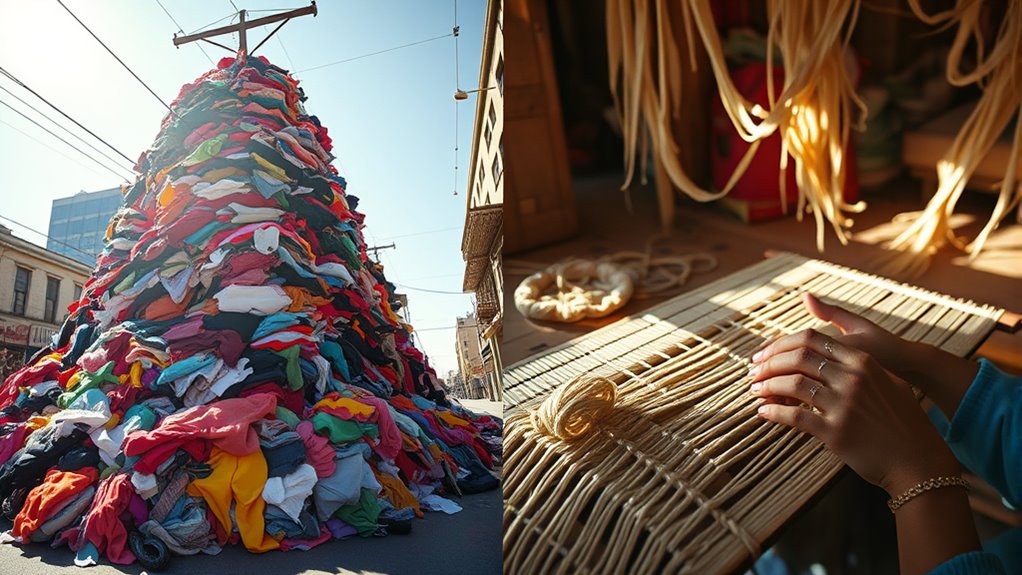

Consumerism pushes you to constantly acquire possessions, often at the expense of your well-being and the environment. In contrast, conscious creation encourages you to focus on meaningful experiences and authentic living, aligning your actions with your true values. By making mindful choices, you can break free from materialism’s cycle and find genuine fulfillment. Embracing this shift helps you build a life grounded in purpose and connection—if you want to explore how to start, there’s more to discover.
Key Takeaways
- Consumerism emphasizes acquiring possessions for status, often neglecting well-being and environmental sustainability, while conscious creation focuses on meaningful experiences and authentic self-expression.
- Consumerism drives materialism and external validation, whereas conscious creation promotes intentional choices aligned with core values and personal growth.
- Consumerist behaviors can lead to dissatisfaction and environmental harm; conscious creation encourages sustainability and fulfillment through mindful consumption.
- The cycle of constant acquiring in consumerism contrasts with conscious creation’s emphasis on living intentionally and valuing connections over possessions.
- Conscious creation empowers individuals to define self-worth through actions and relationships, reducing dependence on material possessions for happiness.

In today’s fast-paced world, consumerism drives us to constantly acquire more, often at the expense of our well-being and the environment. This relentless pursuit of possessions fuels the materialism debate, raising questions about how much happiness material goods truly bring us. You might find yourself caught in this cycle, equating success with the latest gadgets, fashionable clothes, or luxury cars. But beneath this surface, there’s a deeper issue: how do these possessions influence your sense of authenticity and identity? When you buy to impress others or to fit into societal norms, your sense of self becomes tangled in external validations. You may start to believe that your worth hinges on what you own, not who you are. This pursuit often leads to a hollow feeling because possessions can never fully satisfy your inner needs or provide a lasting sense of fulfillment. It’s a constant chase, and no matter how many things you acquire, the emptiness persists. Additionally, understanding the principles of Law of Attraction can help redirect your focus toward manifesting genuine desires rather than superficial possessions.
On the other hand, conscious creation offers a different perspective. It invites you to shift focus from accumulating goods to creating meaningful experiences, relationships, and personal growth. Instead of chasing material possessions to define your identity, you’re encouraged to explore what truly resonates with your authentic self. This approach emphasizes intentionality—choosing to invest your time, energy, and resources in ways that align with your values and passions. By doing so, you build a sense of authenticity that isn’t dependent on external validation. Your identity becomes rooted in your actions and choices, which are more sustainable and fulfilling than fleeting material possessions. It’s about cultivating a life that reflects who you genuinely are, rather than what you own.
Choosing conscious creation over consumerism doesn’t mean rejecting all possessions; rather, it’s about reevaluating what’s truly necessary and meaningful. You become more aware of the impact your consumption has on the environment and society, which often motivates you to make more sustainable choices. This mindful approach can help break the cycle of materialism, freeing you from the constant need for more stuff. When you prioritize authenticity and self-awareness, you start to see yourself beyond the material, recognizing that your value isn’t measured by your possessions but by your intentions, actions, and connections. Ultimately, this shift empowers you to live a more conscious, intentional life—one that aligns with your true self rather than societal expectations or fleeting trends.
Frequently Asked Questions
How Can Individuals Balance Material Desires With Mindful Living?
You can balance material desires with mindful living by practicing mindful consumption and ensuring your purchases align with your core values. Before buying, ask yourself if it truly adds value to your life and supports your long-term goals. Focus on quality over quantity, and prioritize experiences or sustainable products. This way, you stay true to your values while satisfying your desires, creating a harmonious balance between material wants and conscious living.
What Are Practical Steps to Shift From Consumerism to Conscious Creation?
You can shift from consumerism to conscious creation by adopting sustainable habits and practicing mindful consumption. Start by questioning your needs versus wants, choosing quality over quantity, and supporting ethical brands. Cultivate gratitude for what you already have, and invest in experiences rather than possessions. Reduce impulse buying, and dedicate time to creative pursuits that align with your values. Small, intentional steps create a meaningful progression toward a more conscious lifestyle.
How Does Consumerism Impact Mental Health and Well-Being?
Consumerism can negatively impact your mental health and well-being by fostering constant comparison and material desire. When you engage in mindful shopping, you become more aware of your true needs, reducing impulsive purchases. This shift helps you find emotional fulfillment beyond possessions, decreasing stress and anxiety. By focusing on meaningful experiences and self-awareness, you build resilience and improve your overall mental health, breaking free from the cycle of consumer-driven dissatisfaction.
Can Conscious Creation Lead to Economic Growth?
Imagine planting a seed in fertile soil—your conscious creation can indeed foster economic growth. By prioritizing sustainable innovation, you nurture resilience within the economy, making it adaptable and strong. When you focus on mindful production and consumption, you help build a thriving, balanced system. Your intentional actions can spark long-term prosperity, turning small initiatives into powerful movements that support economic resilience and growth.
What Role Do Communities Play in Promoting Conscious Creation?
Communities play a vital role in promoting conscious creation by fostering community influence and collective empowerment. When you engage with like-minded individuals, you amplify positive energy and shared intentions, making it easier to manifest meaningful change. Your community can challenge consumerist habits and support sustainable, mindful choices, inspiring everyone to participate actively. Together, you create a ripple effect that encourages more conscious creation, transforming collective mindsets and driving social and environmental progress.
Conclusion
As you navigate the crossroads of consumerism and conscious creation, remember you’re the artist painting your life’s masterpiece. Choosing mindful creation is like tending a vibrant garden, where each deliberate act blooms into lasting beauty. Let your choices be the brushstrokes that craft a meaningful story, rather than fleeting shadows of materialism. Embrace the power within you to shape a future that’s as radiant and enduring as a sunrise, illuminating your path with purpose and passion.