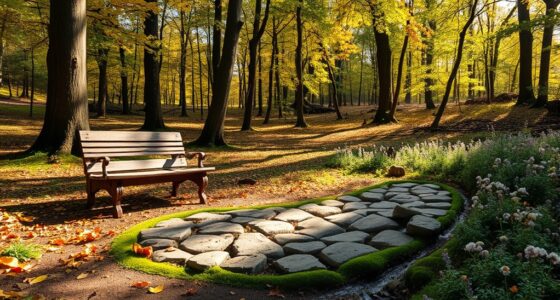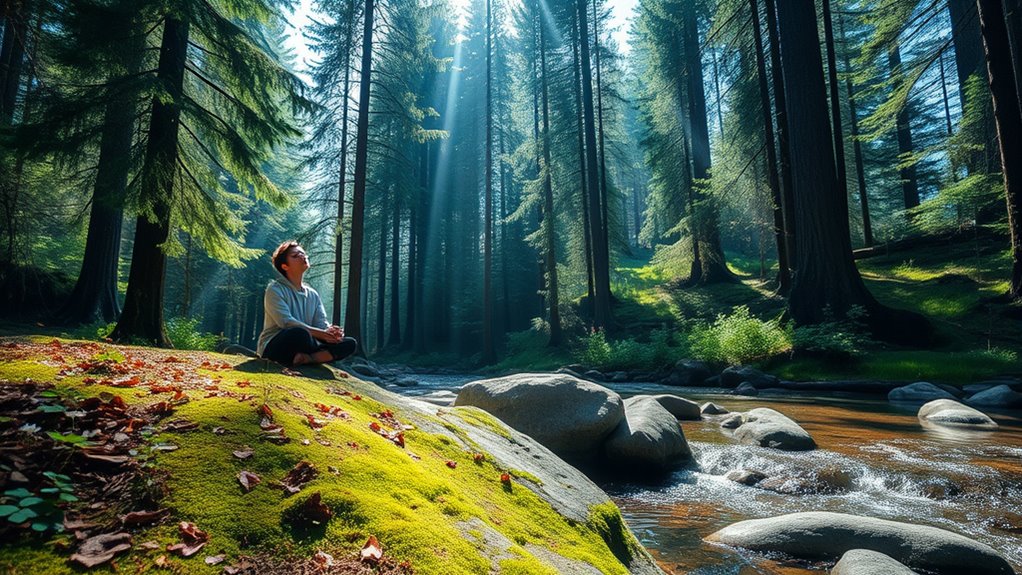

Eco-mindfulness is about being fully present in nature, noticing the small details like leaves, sounds, or water flow, which helps deepen your connection to the environment. By consciously slowing down and observing without distraction, you become more aware of how your choices affect the planet. This presence fosters a sense of responsibility and encourages sustainable habits. Keep exploring how cultivating eco-mindfulness can transform your relationship with nature and inspire you to live more consciously.
Key Takeaways
- Practicing eco-mindfulness involves paying close, distraction-free attention to natural surroundings to deepen environmental awareness.
- Noticing details like sounds, textures, and movements fosters a stronger connection to nature and promotes sustainable habits.
- Mindful presence in nature encourages reflection on personal choices and their impact on the environment.
- Cultivating awareness through observation helps recognize patterns of waste and excess, guiding responsible decision-making.
- Engaging fully with natural environments nurtures a sense of responsibility and intentionality toward environmental preservation.
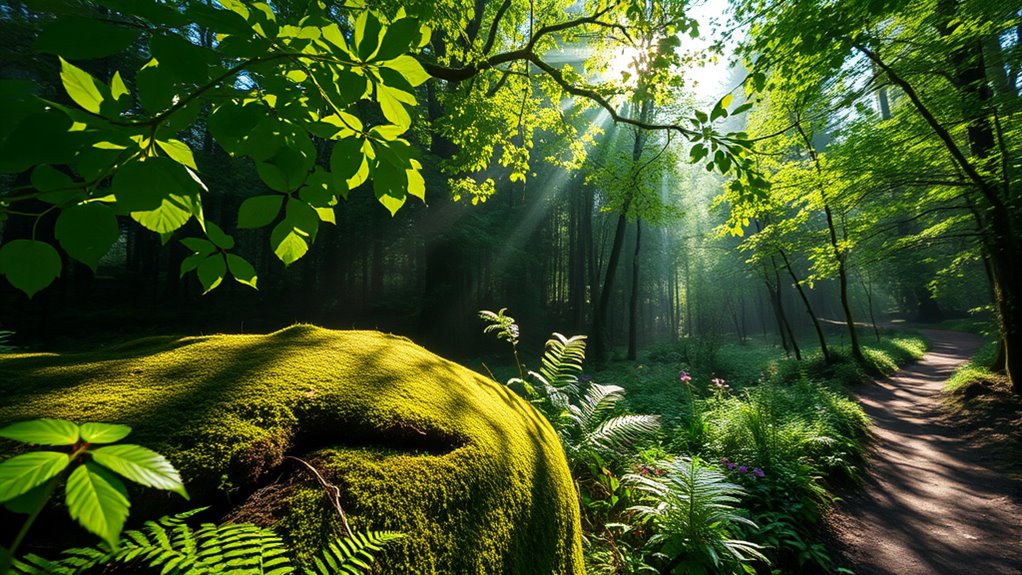
Have you ever wondered how your daily choices impact the planet? Every decision you make, from the way you handle waste to how you consume resources, contributes to the broader environment. Practicing eco-mindfulness starts with recognizing that your actions matter. One way to deepen this awareness is through mindful observation, which involves paying close attention to your surroundings without distraction or judgment. When you take the time to really notice the details of nature—the texture of leaves, the sound of birds, the flow of water—you develop a stronger connection to your environment. This connection fuels a desire to adopt sustainable practices that reduce harm and promote harmony with the Earth.
Noticing nature’s details deepens our connection and inspires sustainable, mindful choices for the planet.
Sustainable practices are more than just habits; they’re a conscious way to live that considers the long-term health of the planet. When you incorporate eco-mindfulness into your routine, you become more attuned to how your choices affect ecosystems. For example, choosing to walk or bike instead of driving minimizes your carbon footprint, and using reusable bags, bottles, and containers reduces waste. These small, deliberate actions reflect a mindful observation of how your lifestyle impacts the environment. They’re not just chores but expressions of respect for the natural world around you. As you become more aware, you start noticing opportunities for sustainable practices in everyday life—like conserving water, reducing energy use, or supporting eco-friendly products.
By practicing eco-mindfulness, you begin to see yourself as part of a larger system. This perspective encourages you to pause and reflect before making choices, asking questions like, “Is this necessary?” or “How will this affect the environment?” Instead of rushing through daily tasks blindly, you slow down and consider the consequences of your actions. This mindful observation helps you recognize patterns of waste or excess, inspiring you to make adjustments that are better for the planet. Small changes, when done consistently, can lead to significant positive impacts. For example, opting for locally sourced food reduces transportation emissions, and composting diverts waste from landfills while nourishing soil.
In addition, understanding the importance of eco-mindfulness can motivate you to seek out resources and information that support sustainable living. Ultimately, eco-mindfulness invites you to live intentionally, fostering a sense of responsibility and care. It’s about cultivating awareness of how your habits shape the world around you and choosing to act with purpose. When you embrace this mindset, sustainable practices become natural extensions of your daily life. You’ll find that the more you observe with mindfulness, the more motivated you are to protect and nurture the environment. Through presence in nature and conscious choices, you’re not just observing the world—you’re actively participating in its preservation.

The Mindful Birder's Journal: Record Your Observations of the Winged World
As an affiliate, we earn on qualifying purchases.
As an affiliate, we earn on qualifying purchases.
Frequently Asked Questions
How Can Eco-Mindfulness Be Integrated Into Daily Routines?
You can integrate eco-mindfulness into your daily routine by spending time in urban green spaces, even if just for a few minutes. Practice nature journaling to observe and reflect on your surroundings, helping you stay present. Make it a habit to notice the small details in nature around you, breathe deeply, and appreciate the environment. These simple acts foster mindfulness and strengthen your connection to nature every day.
What Are the Mental Health Benefits of Practicing Eco-Mindfulness?
Practicing eco-mindfulness enhances your mental health by strengthening your nature connection, which can considerably reduce stress levels. As you immerse yourself in natural surroundings, you’ll notice improved mood, increased focus, and a sense of calm. This mindful engagement in nature helps you disconnect from daily worries, fostering resilience and emotional balance. Regular eco-mindfulness practice ultimately boosts your overall well-being and deepens your appreciation for the environment around you.
Are There Specific Eco-Mindfulness Techniques Suitable for Beginners?
Yes, beginners can start with simple eco-mindfulness techniques like nature journaling and barefoot walking. As you explore nature journaling, you record your observations and feelings, helping you stay present. Barefoot walking allows you to connect physically with the earth, enhancing your awareness of surroundings. These techniques are easy to try and deepen your mindfulness, making it easier to incorporate eco-mindfulness into daily life.
How Does Eco-Mindfulness Differ From Traditional Mindfulness Practices?
Think of eco-mindfulness as planting a seed—it’s about nurturing your nature connection and environmental awareness. Unlike traditional mindfulness, which often focuses inward, eco-mindfulness emphasizes engaging with the environment through senses and presence. For example, you might notice the breeze or bird songs, deepening your bond with nature. This active connection fosters a sense of responsibility and appreciation that extends beyond personal well-being, enriching your mindfulness practice.
Can Eco-Mindfulness Help in Environmental Activism Efforts?
Yes, eco-mindfulness can boost your environmental activism by strengthening community engagement and inspiring policy advocacy. When you practice eco-mindfulness, you become more connected to nature, which fuels your passion for protecting it. This heightened awareness motivates you to participate in community efforts and advocate for meaningful policy changes, making your activism more impactful. It transforms concern into action, fostering a deeper commitment to environmental stewardship.

Ergonomic Meditation Cushion with Foot Rest & Carry Strap – Large Floor Cushion for Adults – Meditation Seat & Yoga Cushion for Mindfulness, Sound Healing & Reiki
ERGONOMIC MEDITATION SUPPORT – Designed to elevate hips and align the spine, this ergonomic meditation cushion reduces knee,…
As an affiliate, we earn on qualifying purchases.
As an affiliate, we earn on qualifying purchases.
Conclusion
By embracing eco-mindfulness, you reconnect with nature’s wisdom, much like the ancient sages who found clarity in the forests and rivers. When you’re truly present, you honor the Earth’s silent call for care and respect. Remember, as Thoreau once sought in Walden, true peace comes from aligning your soul with the natural world. Stay aware, stay grounded—your mindful presence can inspire harmony, just as the Earth quietly teaches us life’s deepest lessons.

Ello Syndicate 20oz Reusable Glass Water Bottle with One-Touch Leak Proof Flip Lid, Protective Non-Slip Silicone Sleeve, Carry Loop for Coffee, Tea and Water, BPA-free, Dishwasher Safe, Sand
ECO-FRIENDLY: Embrace eco-conscious hydration with the Syndicate 20oz glass bottle. Elevate your hydration experience while reducing plastic waste,…
As an affiliate, we earn on qualifying purchases.
As an affiliate, we earn on qualifying purchases.

Relaxing Nature Sounds 4 Album Set – for Meditation, Relaxation and Sleep – Nature's Perfect White Noise
Relaxation and Sleep Support: Relax your body and calm your mind with these relaxation and sleep CDs designed…
As an affiliate, we earn on qualifying purchases.
As an affiliate, we earn on qualifying purchases.