
In rituals, elemental symbolism connects you with natural forces by using tools like candles, water bowls, stones, and feathers to represent fire, water, earth, and air. These symbols help focus your energy, clarify intentions, and create a harmonious environment. Each element embodies qualities like transformation, healing, stability, or communication, amplifying your practice. If you’re curious about how to deepen your connection, you’ll discover more about working with these powerful symbols.

Get books, candles and calm essentials delivered free — and shop member deals
- Fast, free delivery on millions of items
- Access to Prime Big Deal Days deals on October 6–7
- Prime Video, Amazon Music and more included
Key Takeaways
- Elemental symbols connect rituals to natural forces, representing fire, water, air, and earth energies.
- Ritual tools like candles, water bowls, stones, and feathers embody specific elements to enhance focus.
- Each element symbolizes qualities such as transformation, healing, clarity, and stability, guiding ritual intention.
- Incorporating elemental symbolism creates a balanced sacred space that fosters spiritual growth and harmony.
- Conscious use of elemental associations amplifies ritual power, facilitating transformation, protection, and alignment with natural rhythms.

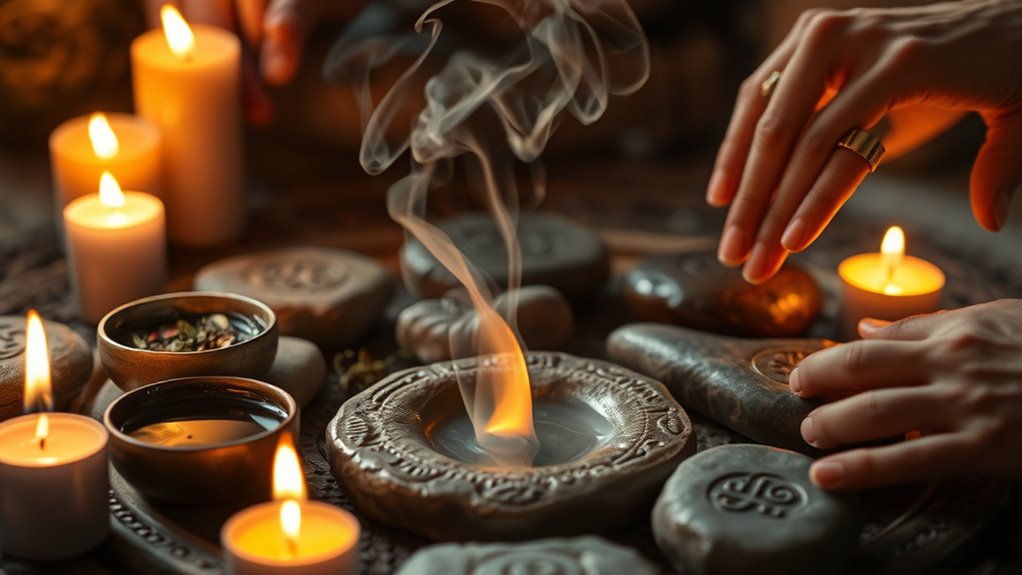
Elemental symbolism plays a vital role in many rituals around the world, serving as a powerful way to connect with the natural forces that influence our lives. When you participate in a ritual, you often work with elemental associations—fire, water, air, and earth—each representing different energies and qualities. These elements aren’t just symbolic; they’re integral to the process, helping you channel specific intentions and invoke particular states of consciousness. To do this effectively, you’ll typically use ritualistic tools associated with each element. For example, a candle might symbolize fire’s transformative power, while a bowl of water can represent water’s flow and emotional depth. Stones or crystals often stand for earth, grounding your practice, and feathers or incense can embody air, facilitating communication and clarity.
Your choice of ritualistic tools isn’t arbitrary; it’s a deliberate act that enhances your connection to the elements. When you light a candle, you’re not just creating light—you’re inviting the energy of fire to ignite your intentions. When you pour water into a vessel, you’re inviting emotional cleansing and fluidity. These tools serve as physical representations of the elements, helping you focus your attention and energy during your practice. By consciously selecting these tools, you align your mind and body with the elemental energies, creating a powerful synergy that amplifies your ritual’s effectiveness. Additionally, understanding the core personality traits of the individuals involved can help tailor the ritual to better resonate with their unique energies.
Understanding elemental associations also involves recognizing their symbolic meanings and how they interact within your ritual space. Fire embodies transformation and passion, urging you to release what no longer serves you. Water symbolizes intuition and healing, guiding you to flow with life’s currents. Air encourages mental clarity and communication, helping you articulate your intentions. Earth grounds you, providing stability and nourishment. As you incorporate these associations into your rituals, you craft a balanced environment that reflects the harmony of the natural world. This harmony helps you access deeper states of awareness, making your ritual more meaningful.
Using elemental symbolism in rituals isn’t just about the tools or symbols you employ; it’s about the energy you bring into your practice. By consciously working with elemental associations and ritualistic tools, you create a sacred space that fosters growth, healing, and transformation. These elements serve as gateways to connect with universal energies, making your rituals more potent and aligned with nature’s rhythms. Whether you’re seeking clarity, protection, or renewal, understanding the significance of the elements allows you to harness their power deliberately, turning your ritual into a meaningful act of spiritual alignment.
As an affiliate, we earn on qualifying purchases.
Frequently Asked Questions
How Do Different Cultures Interpret Elemental Symbolism Uniquely?
You see that different cultures interpret elemental symbolism uniquely through their cultural interpretations and ritual symbolism. For example, in some traditions, fire represents transformation and passion, while in others, it’s a symbol of divine presence. Water might signify purification in one culture and life in another. You recognize that these varied meanings deepen the cultural richness, influencing how rituals are performed and understood across diverse societies.
Can Elemental Symbolism Influence Modern Psychological Practices?
Yes, elemental symbolism can influence modern psychological practices. You might find it useful for emotional healing, as it taps into deep subconscious influences that help you understand and process feelings. Techniques like visualization or guided imagery often incorporate elements like fire or water to evoke specific emotional responses. By engaging with these symbols, you can access inner strengths and foster balance, ultimately promoting psychological well-being through a powerful, symbolic language.
Are There Any Scientific Bases for Elemental Symbolism Efficacy?
While elemental symbolism may seem like a gentle whisper of tradition, scientific validation remains limited. Empirical research hasn’t conclusively proven its efficacy, but some studies suggest it can influence psychological states subtly. You might find that personal experiences and cultural context shape its impact more than rigorous scientific proof. So, although there’s little concrete evidence, many trust in its symbolic power, giving it a meaningful place in personal or spiritual practices.
How Has Elemental Symbolism Evolved Throughout History?
You see that elemental symbolism has evolved considerably through history. Ancient elemental beliefs laid the groundwork for ritual symbolism, influencing cultures across time. Over centuries, these symbols adapted, blending with new spiritual practices and cultural contexts. Today, you can observe this evolution in modern rituals that still honor fire, water, earth, and air, showing how these ancient beliefs continue to shape spiritual expressions, transforming their meaning while maintaining their core significance.
What Are Common Misconceptions About Elemental Symbolism in Rituals?
Think of elemental symbolism as a delicate dance, not a rigid code. Many misconceptions about elements arise from symbolic misunderstandings—people often see fire as destruction or water as only cleansing. These oversimplifications ignore the nuanced roles elements play in rituals, representing balance, transformation, and life’s cycles. You might wrongly assume the elements are static symbols, but they’re dynamic forces that embody more than just their surface meanings.
Conclusion
As you explore elemental symbolism in rituals, remember it’s like a master key revealing deeper understanding. The elements—earth, water, fire, and air—are the brushstrokes painting the canvas of your spiritual journey. Embrace their power, and you’ll find your rituals become more vibrant, more meaningful. Just as a compass guides a traveler, these symbols direct your path through sacred practices, helping you connect with the universe’s timeless rhythms.
Evergreen bestsellers Picks
bestsellers
As an affiliate, we earn on qualifying purchases.