
Using a fountain pen transforms your journaling by making each stroke more expressive and pleasurable. The smooth ink flow responds to your pressure and angle, encouraging thoughtful, deliberate writing. This tactile experience deepens your connection to each word and helps develop your personal style. With its artistic variation and mindful rhythm, journaling becomes more than routine — it turns into a creative ritual. Keep exploring how this elegant tool can elevate your writing journey.

Turn your quiet moments into listening time
- Thousands of audiobooks, podcasts and originals
- Listen on your phone, tablet or Echo — also offline
- Cancel anytime
Key Takeaways
- Fountain pens offer a smooth, expressive ink flow that enhances the aesthetic quality of handwriting.
- They encourage slower, more deliberate writing, fostering deeper reflection and mindfulness.
- Variations in line thickness add an artistic and personal touch to journal entries.
- The tactile writing experience deepens the connection between the writer and their work.
- Proper ink and paper choices improve overall journaling quality, preventing smudging and bleed-through.
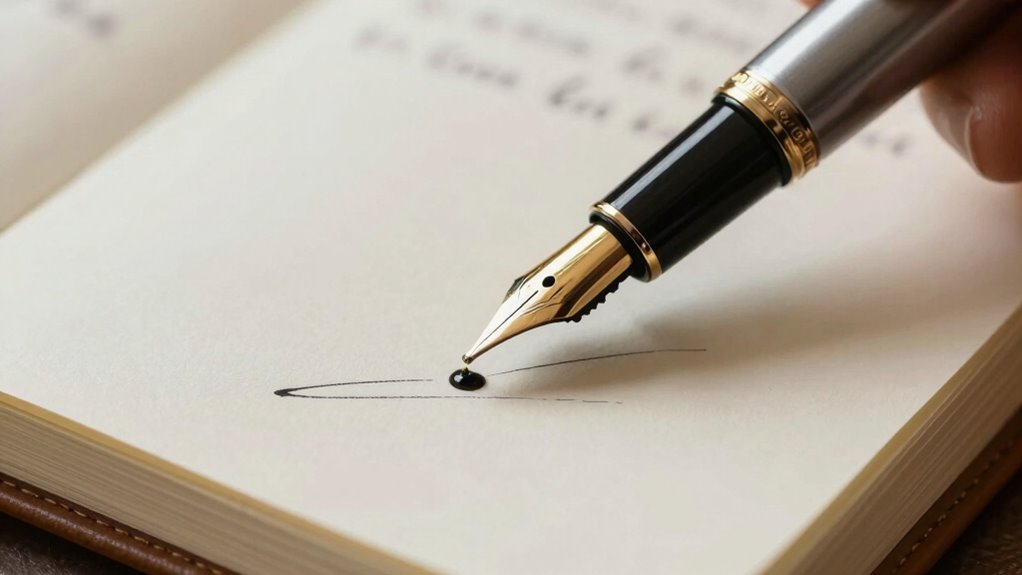
Fountain pens have long been cherished tools for writers and journal enthusiasts alike, offering a smooth, expressive writing experience that digital devices can’t match. When you pick up a fountain pen, you immediately notice how the ink flow feels more deliberate and controlled. Unlike ballpoints or gel pens, fountain pens deliver ink with a consistent, even flow that responds to your slight pressure and angle. This unique ink flow encourages you to slow down, paying more attention to each stroke and word. As a result, your handwriting aesthetics improve naturally, with each letter exhibiting a more elegant, fluid form. This precision in ink flow allows your penmanship to become more expressive, adding personality and character to your journal entries.
Fountain pens promote deliberate, elegant writing, transforming each stroke into an expressive, personal piece of art.
When you use a fountain pen, you’re not just writing words—you’re creating art. The variation in line thickness, caused by changes in pressure and angle, adds a dynamic quality to your handwriting. This makes journaling feel more like an artistic act, where each letter and flourish reflects your mood and style. As your hand becomes more accustomed to the pen, your overall handwriting gains a more refined appearance, transforming your journal into a visual and emotional keepsake. The ink flow also minimizes smudging and bleeding through paper, ensuring your pages remain neat and legible even over long writing sessions. Consistent ink flow enhances the overall quality of your journaling experience, making each page feel more polished and intentional. Additionally, incorporating proper paper selection can further improve ink flow and prevent feathering or bleed-through, enriching your journaling process. Understanding how ink absorption interacts with different paper types can help you choose the best materials for your writing style.
The tactile sensation of writing with a fountain pen enhances the overall experience, making every word feel deliberate and meaningful. You tend to write more slowly and thoughtfully, which can lead to deeper reflections and clearer thoughts. The act of filling your journal with ink that flows smoothly from the nib becomes almost meditative, fostering a connection between your hand and your mind. Over time, you develop a personal style that’s distinctively yours, guided by the way your fountain pen responds to your touch. This connection between tool and writer elevates journaling from a routine task to a creative ritual, where the quality of your handwriting and the beauty of each page matter deeply. Additionally, the ink flow can influence your overall writing rhythm, encouraging a more mindful approach to journaling.
As an affiliate, we earn on qualifying purchases.
Frequently Asked Questions
How Do Fountain Pens Compare to Ballpoint Pens for Journaling?
Fountain pens offer a smoother writing experience compared to ballpoint pens, thanks to their consistent ink flow. You don’t need to press hard, reducing hand fatigue during long journaling sessions. The ink glides effortlessly onto paper, creating elegant lines. Ballpoint pens require more pressure, which can lead to uneven writing and smudging. With a fountain pen, your journaling feels more refined and enjoyable, encouraging you to write more often.
Are Fountain Pens Suitable for Left-Handed Writers?
Yes, fountain pens can be suitable for left-handed writers, but you’ll want one with an ergonomic grip to ease comfort and control. Be mindful of ink drying time; quick-drying ink prevents smudges as your hand glides across the pages like a whisper. With the right pen, your journaling becomes a dance of ink and thought, flowing seamlessly despite your handedness, transforming writing into a smooth, artistic expression.
What Are the Best Ink Colors for Journaling With Fountain Pens?
The best ink colors for journaling with fountain pens are shades that reflect your mood and inspire creativity. Consider classic vintage ink options like deep blue, rich brown, or emerald green, which evoke a sense of nostalgia. You might also explore ink color psychology—blues for calmness, reds for passion, or purples for luxury. These choices enhance your journaling experience, making it more personal and expressive.
How Do I Prevent My Fountain Pen From Skipping or Leaking?
To prevent your fountain pen from skipping or leaking, focus on maintaining proper ink flow and regular nib care. Always clean your nib thoroughly when switching ink colors or if you notice skipping. Make certain you’re using the right ink for your pen, and avoid overfilling the reservoir. Adjust the nib’s angle slightly during writing to promote smooth ink flow. Regular nib maintenance keeps ink flowing consistently, reducing leakage and skipping issues.
Can Fountain Pens Help Improve My Handwriting Skills?
Yes, fountain pens can help improve your handwriting skills. Many users find that practicing with a fountain pen encourages better calligraphy techniques and more deliberate strokes. Though some worry about ink flow adjustment, mastering this feature guarantees smoother writing, which enhances control. As you become more comfortable, you’ll naturally develop neater, more consistent handwriting, making your writing more elegant and enjoyable.
Conclusion
Switching to a fountain pen transforms your journaling into an epic adventure—each stroke feels like wielding a magic wand, turning simple words into masterpieces. Your thoughts flow with a grace that makes rivers jealous, and every page becomes a canvas of your soul’s deepest colors. Once you experience this, you’ll wonder how you ever settled for anything less. Fountain pens don’t just write; they elevate your entire journaling universe to legendary heights.
Fall Picks
fall essentials
As an affiliate, we earn on qualifying purchases.