TL;DR

Get books, candles and calm essentials delivered free — and shop member deals
- Fast, free delivery on millions of items
- Access to Prime Big Deal Days deals on October 6–7
- Prime Video, Amazon Music and more included
Meditation and mindfulness tools—from a quiet timer and a paper journal to guided audio and apps—can make practice easier to start, but none is required. Choose a tool that fits your needs, privacy preferences, and budget, begin with a few manageable minutes, and remember that mindfulness is not a guaranteed treatment or a score measured by a wearable.
Your most useful meditation tool may be a kitchen timer, not a $90 wearable. A simple cue can help you pause, pay attention to one breath, and return to your day; a complicated gadget can just as easily become another thing to manage.
Meditation and mindfulness tools include guided audio, apps, journals, timers, breathing exercises, and devices that track body signals. They range from free, low-tech options to subscription services, but they all work best as aids rather than requirements. You can practise by noticing your feet on the pavement during a short walk.
This guide explains what each tool can do, where it falls short, and how to choose a small practice you can sustain. You’ll also find practical ways to protect your privacy and respond if focusing inward feels uncomfortable.
Choose the tool that addresses your actual barrier: guidance, timing, reflection, or convenience.
Start with a repeatable three-to-five-minute practice rather than waiting for a long, quiet session.
Use wearable readings as indirect trend information, not as a score of mindfulness or a diagnosis.
Check app pricing, offline access, accessibility features, and privacy practices before signing up.
If meditation feels distressing, stop or switch approaches; seek qualified support if the discomfort continues.
See how meditation and mindfulness differ before choosing a tool
Meditation and mindfulness tools serve practices that overlap, but meditation is a family of practices, while mindfulness is a way of paying attention to what is happening now with openness and less automatic judgment. You can practise mindfulness during a meditation session, but also while washing a mug or walking to the bus.
For example, sitting for five minutes and noticing each breath is meditation. Feeling warm water on your hands and hearing the faucet while you wash dishes is informal mindfulness. Neither activity requires you to empty your mind, and neither promises that you will feel calm every time.
That distinction matters when you choose equipment. A meditation app may offer a guided body scan, a compassion practice, or a quiet timer. A journal may help you notice what you experienced afterward, but it does not make the practice itself more authentic.
Relaxation can happen, but it is not the only goal. Some sessions feel ordinary; others bring up restlessness or difficult feelings. Treat tools as ways to make attention easier to practise—not as a test of whether you are doing it right.
As an affiliate, we earn on qualifying purchases.
Match each tool to the kind of support you want
Meditation and mindfulness tools work best when they solve a specific problem: guidance for uncertainty, a timer for structure, or a journal for reflection. You do not need to collect them all. Start with the friction point that keeps you from practising.
If you are unsure what to do, guided audio gives you a voice to follow. If you already know a practice, a simple timer lets you sit without more instructions. Consider Maya, who has ten minutes before work but finds long recordings distracting: a five-minute guide may suit her better than a full course.
| Tool | Useful for | What to watch for |
|---|---|---|
| Guided audio or app | Starting out or following a body scan | Cost, instructor style, and data collection |
| Timer | Quiet practice with a clear endpoint | Notification sounds that interrupt you |
| Paper journal | Noticing patterns after practice | Turning reflection into self-judgment |
| Wearable | Viewing sleep or heart-rate trends | Treating estimates as a mindfulness score |
Each option trades convenience for something else. Guided audio reduces the uncertainty of deciding what to do, but the instructor’s style may not suit you and a subscription can add cost. A timer is private and simple, though it gives no guidance if you are unsure how to practise. A journal can reveal patterns over time, but recording every session may start to feel like homework or encourage you to judge yourself. A wearable offers passive trend data, yet that information can be imprecise and easy to mistake for a measure of progress.
Simple tools can be enough. A phone’s built-in timer and a notebook you already own may provide all the structure you need. Try one option for a week before paying for a subscription or buying a device; notice whether it removes a real barrier or merely adds setup, notifications, or another thing to monitor.
Build a short practice you can repeat on an ordinary day
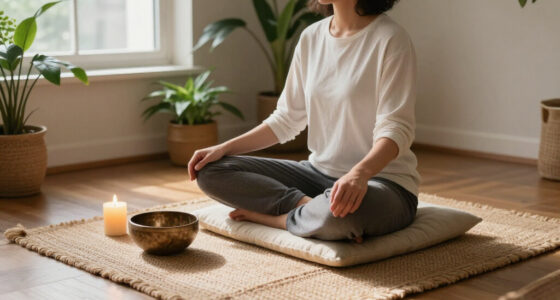
Meditation and mindfulness tools are easier to use when you connect them to a small, repeatable routine, rather than waiting for a perfect quiet hour. A few minutes can be a practical starting point; there is no universal minimum that makes a session count.
- Choose a place and cue. Sit at the end of your bed after brushing your teeth, or pause in a parked car before you go inside.
- Pick one anchor. Notice the feeling of your feet on the floor, the air at your nostrils, or sounds in the room.
- Set a brief limit. Try three to five minutes on a timer or with a short guided recording.
- Return without scolding yourself. When you notice your attention has wandered to an email or grocery list, gently come back to the anchor.
- Review the fit. Afterward, note whether the length and method felt manageable; change them if needed.
Imagine you sit down before dinner and remember that you forgot to reply to a message. The practice is not to force the thought away; it is to notice it, then return to your breathing or the chair beneath you. That return is the repetition.
Consistency matters more than equipment. A short routine you can repeat on a busy Tuesday may serve you better than an elaborate setup you only use on a free weekend.
Read app and wearable features with a clear eye
Meditation and mindfulness tools in apps can offer structure, including short sessions, reminders, sleep-focused audio, and courses for different settings. But a polished interface or personalised recommendation does not prove that a specific program suits you or that it will deliver a particular result.
Before signing up, check whether the app offers offline listening, captions, adjustable session lengths, and a clear explanation of free and paid features. These details affect whether the app will work in your actual routine: offline access can matter on a commute, captions can make audio usable in a shared space, and flexible session lengths help you avoid treating a long course as the only valid option. Read its privacy information too: some services collect account or usage data, and you may prefer a tool that asks for less. For example, if you want a two-minute breathing exercise during a commute, an app that requires a connection and several account permissions may add unnecessary hassle.
Wearables often pair meditation content with readings for heart rate, sleep, or estimated stress. Those measurements can help you spot patterns—for instance, noticing that a late coffee coincides with shorter sleep—but they do not directly measure mindfulness. Readings are affected by many influences, and a change after a session does not establish that meditation caused it. Treat them as prompts for curiosity, not as grades: if checking the numbers makes you anxious or shifts attention from the practice to chasing a result, it may be better to ignore or disable that feature.
Check current features, prices, and data policies before choosing a product, since services change. Let a device offer information, not a verdict on your wellbeing.
Keep expectations realistic—and make room for a different approach
Mindfulness may help some people with stress, anxiety, depressive symptoms, or pain, particularly as part of a structured program, but outcomes vary. It is not a guaranteed fix or a replacement for appropriate medical or mental-health care. Research findings about one course or group do not automatically apply to every app or every person.
It is also normal for a practice to feel uncomfortable. Sitting quietly may bring up a difficult memory, racing thoughts, or an awareness of tension you usually ignore. That does not mean you have failed, but it also does not mean you should push through: the aim is not to endure distress to prove commitment. If that happens, stop or shorten the session, open your eyes, and name ordinary details around you—such as the blue cup on the table or the sound of traffic outside.
You can also switch to an externally focused practice, like noticing footsteps during a slow walk, or try mindful movement instead of sitting still. These alternatives shift attention toward sights, sounds, and physical contact with the environment, which may feel more manageable than sustained inward focus. If distress continues, consider support from a qualified health professional or an appropriately trained instructor. You are allowed to pause.
For instance, if a body scan makes your chest feel tight, you might end the recording and feel your shoes against the floor instead. A useful tool should leave you with choices, not pressure to push through.
Use small everyday moments when a formal session will not fit
You can practise mindfulness without sitting down or buying anything: bring attention to a routine activity and notice its details. This works well when your schedule is crowded or a formal meditation feels awkward, though it is not a substitute for every kind of structured practice.
Choose a familiar task with a clear beginning and end. While making tea, feel the kettle’s handle, hear the water begin to boil, and notice the steam against your face. When your mind jumps to the next task, return to one detail without turning the moment into another performance target.
Other options include feeling each step on a short walk, listening to the sounds in a room, or noticing the taste and texture of your first few bites at lunch. A parent waiting outside school might use the minute before pickup to notice the cool air and the soles of their feet—no headphones required.
These brief pauses make practice portable. You can use them as a gentle bridge to a longer session or as a complete moment of attention in their own right. The key is not to monitor yourself all day; it is to return to the present when you choose.
Frequently Asked Questions
Do I need an app or special equipment to start meditating?
No. A comfortable seat and a few minutes are enough to begin. A timer or guided recording can offer structure, but you can also follow your breath without buying anything.
How long should a beginner meditate?
There is no universal minimum. Try three to five minutes if that feels manageable, then adjust the length based on what you can sustain and how the practice feels.
Is guided meditation better than sitting in silence?
Neither is automatically better. Guidance can help when you are new or want a specific exercise, while silence gives you room to practise independently; choose the format that feels useful.
Can a meditation app or wearable tell whether I am mindful?
No device directly measures mindfulness. An app can guide a session, and a wearable can show indirect signals such as heart rate or sleep estimates, but those readings are not a personal wellbeing score.
What should I do if meditation makes me feel worse?
Stop or shorten the session, open your eyes, and focus on something external, such as your feet on the floor or sounds nearby. If distress continues, speak with a qualified health professional or seek guidance from a suitably trained instructor.
Conclusion
Pick one small practice and one tool that makes it easier to begin. That could be a five-minute guided recording, a quiet timer, or simply noticing your steps on the walk home. You do not need a perfect streak, a special cushion, or a device that declares how calm you are.
Let the tool be a doorway, not another scoreboard. Some days, the most mindful thing you can notice is the rain tapping on your window—and then your next breath.
Halloween Picks
halloween
As an affiliate, we earn on qualifying purchases.