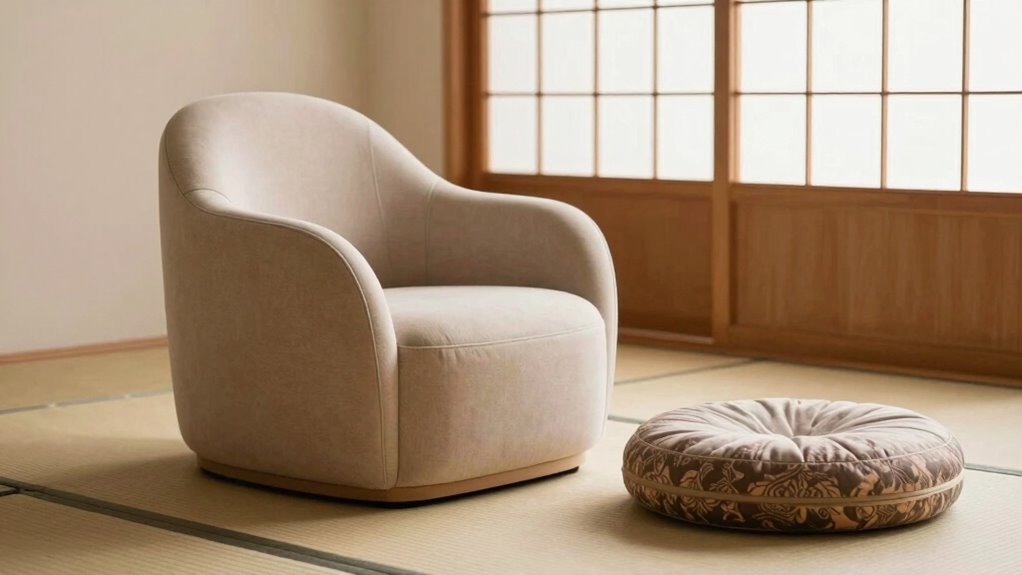
Choosing between a meditation chair and a floor seat depends on your comfort, physical needs, and cultural preferences. A chair provides ergonomic support, making longer sessions easier and reducing strain, especially if you have joint issues. Floor sitting fosters better flexibility and a deeper traditional connection but can be uncomfortable without padding. Think about your space and goals—more details on making the best choice for your practice await if you look further.
Key Takeaways
- Meditation chairs provide ergonomic support and comfort, reducing strain and enabling longer sessions, especially for those with mobility issues.
- Floor seating fosters cultural connection, flexibility, and may enhance spiritual practice but can cause discomfort without proper padding.
- Chairs are portable and ideal for small or shared spaces, while floor seating requires more space and setup like mats or cushions.
- Proper posture on a chair helps maintain spinal alignment, whereas floor sitting can improve flexibility over time with support.
- Choice depends on individual physical needs, meditation goals, environment, and cultural preferences to ensure sustainable practice.
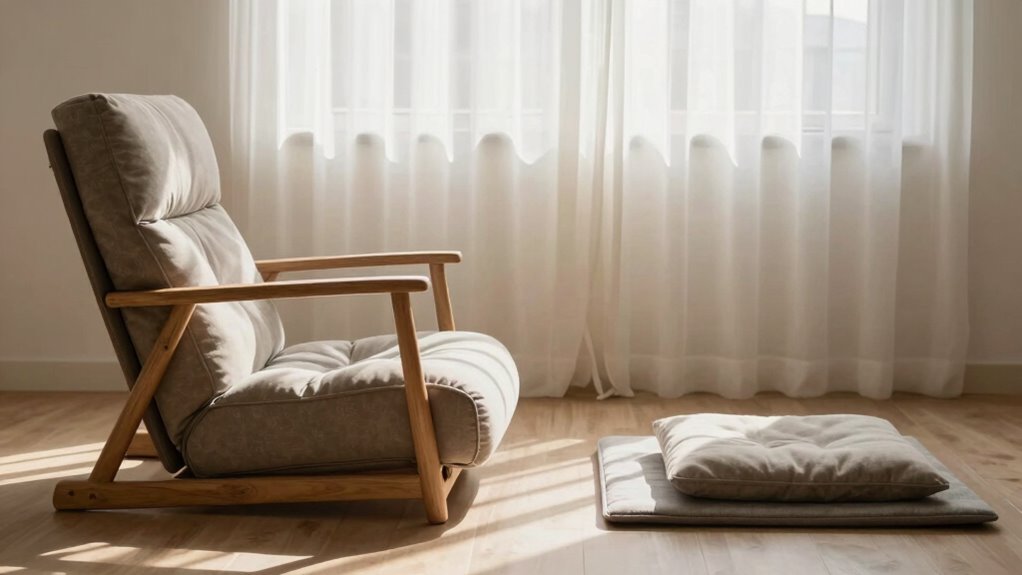
When choosing a meditation position, you might find yourself debating between using a meditation chair or sitting directly on the floor. Both options have their advantages, and your choice often depends on your personal comfort, physical needs, and cultural perspectives. A meditation chair typically offers ergonomic support, making it easier to sit upright without strain. With a chair, you can maintain proper spinal alignment, which helps you stay alert and focused during your practice. If you’re prone to back pain or joint issues, a chair can provide the necessary support to prevent discomfort, allowing you to meditate longer and more comfortably.
Choosing between a meditation chair and sitting on the floor depends on comfort, support, and cultural preference.
On the other hand, sitting directly on the floor connects you to centuries of cultural traditions, especially in Eastern practices like Zen Buddhism, yoga, and mindfulness. These traditions emphasize grounding and the natural posture, which some believe enhances spiritual connection and mindfulness. Sitting on the floor often encourages better flexibility and can help you develop core strength over time. However, it can be uncomfortable or even painful if you’re not used to it, especially if you lack adequate padding or support. Cushions or meditation benches can alleviate some discomfort, but they might still require some adaptation. Additionally, the cultural significance of floor sitting can deepen your meditation experience if you resonate with those traditions. Incorporating appropriate support such as cushions or mats can also make a significant difference in comfort. Using proper posture can further enhance your meditation by reducing strain and promoting relaxation. Furthermore, understanding the ergonomics of sitting can help you choose the best setup for your body and needs, especially considering the importance of proper alignment for long-term practice.
Your decision may also depend on your physical flexibility and overall health. If you have knee or hip issues, a chair might be more suitable, as it minimizes strain and allows you to maintain a comfortable position. Conversely, if you enjoy the cultural aspect of traditional sitting or want to improve your flexibility, sitting on the floor might be more fulfilling. It’s important to consider how each option affects your ability to stay relaxed and focused during meditation. Additionally, being aware of the vulnerabilities in devices can help you create a safe and distraction-free environment, whether you’re seated on a chair or the floor.
Another factor is space and environment. A meditation chair can be more portable and easier to set up in limited spaces, while sitting on the floor usually requires a quiet, clean area with enough room to sit comfortably. Think about how often you plan to meditate and whether you’ll be traveling or practicing at home. If you’re practicing in a shared or public space, a lightweight chair may be more convenient.
Ultimately, your choice should support your meditation goals and physical comfort. Whether you opt for a supportive chair or embrace the traditional floor seat, understanding the benefits and challenges of each helps you create a sustainable, effective practice. Remember, the best position is one that allows you to meditate consistently and comfortably, honoring both your body’s needs and your cultural or spiritual inclinations.

AtHope Ergonomic Cross Legged Office Chair with Wheels – Adjustable Height for Meditation, ADHD Desk & Yoga – Wide Criss Cross Design with Lumbar Support, Kneeling Chair – Black
Versatile Seating Positions for Home, Office, and Gaming: Our cross legged chair is perfect for those who prefer…
As an affiliate, we earn on qualifying purchases.
As an affiliate, we earn on qualifying purchases.
Frequently Asked Questions
Which Option Is Better for Long Meditation Sessions?
For long meditation sessions, a meditation chair offers better support and comfort, especially if it has adjustable features and cushioned seating. Your choice of seating material, like memory foam or breathable fabric, impacts comfort and durability. While floor seats may look aesthetically appealing and promote a traditional vibe, they can cause discomfort over extended periods. Ultimately, pick a chair that balances ergonomic support with aesthetic appeal for longer, more focused meditation sessions.
How Do Posture and Comfort Affect Meditation Quality?
Your posture and comfort directly impact your meditation quality. When you maintain ergonomic alignment, you reduce physical distractions, helping you stay mentally focused. A comfortable seat or chair supports your spine and minimizes tension, allowing you to relax fully. If your posture feels natural and aligned, you’ll find it easier to concentrate and deepen your meditation. Prioritizing comfort and proper alignment enhances your ability to achieve a calm, focused state.
Are There Health Risks Associated With Each Seating Choice?
Yes, there are health risks with each seating choice. Using a meditation chair may lead to poor posture alignment if it’s too high or lacks support, causing joint strain. Sitting on the floor could strain your knees or hips if you don’t have proper cushioning or flexibility. To reduce risks, choose a seat that promotes good posture and minimizes joint strain, and listen to your body’s signals during meditation.
Can Children or Elderly Comfortably Use Either Seat?
Children and the elderly can comfortably use either seat, but you should consider their needs. For children, focus on supporting proper posture to prevent discomfort, and for the elderly, prioritize adequate support to ease joint strain. Meditation chairs often provide better elderly support, while floor seats might suit children better if they’re designed for comfort. Always choose a seat that promotes healthy posture and offers enough cushioning.
Which Seating Option Is More Portable for Travel?
The meditation chair is generally more portable for travel, with over 60% of users citing ease of packing as a key benefit. For travel convenience, a lightweight, foldable chair offers better portability compared to a floor seat, which tends to be bulkier and less manageable on the go. If you’re frequently on the move, choosing a compact, foldable chair can make your meditation practice more adaptable and stress-free during trips.

Intelligent Design Large Floor Pillow for Adults Yoga or Meditation Cushion with Handle, Floor Cushion for Board Games, Lustrous Chenille Tufted, Handsewn Scalloped Edge, Azza, 24" x 24" x 5" Aqua
High Quality Finish – The Azza Large Floor cushion is a sophisticated large sitting Floor pillow featuring a…
As an affiliate, we earn on qualifying purchases.
As an affiliate, we earn on qualifying purchases.
Conclusion
Choosing between a meditation chair and a floor seat is like selecting your own path through a tranquil forest. The chair offers a gentle, supportive breeze guiding you comfortably, while the floor beckons like a sturdy, earthy trail that grounds your practice. Trust your body’s whispers and your heart’s compass to find the seat that resonates with your spirit. Whichever you choose, let it be the vessel that carries you to inner peace, as steady as the stars in the night sky.

Waterglider International Meditation Bench (Zen Black), Seiza, Sustainable Acacia Wood with Curved Bottom Edges for The Perfect Posture, Meditation Stool, Prayer Bench, Meditation Chair, Yoga Stool
PRACTIONERS UP TO 6 FEET TALL – Due to the size of the legs, the Waterglider International bench…
As an affiliate, we earn on qualifying purchases.
As an affiliate, we earn on qualifying purchases.

Retrospec Sedona Zafu Meditation Cushion with Buckwheat Hull Fill – Adjustable Yoga & Pilates Equipment Support – 17in Crescent Cotton Cover
NATURAL COMFORT & SUPPORT: Filled with sustainable buckwheat hulls, this meditation cushion elevates your practice by aligning your…
As an affiliate, we earn on qualifying purchases.
As an affiliate, we earn on qualifying purchases.