
TL;DR
A meditation cushion set usually pairs a raised seat with a flat mat: the seat can elevate your hips, while the mat cushions your knees and ankles. Choose the height, filling, shape, and care routine that suit your body and sitting position; if floor sitting hurts, a chair is a valid option.
Ten quiet minutes can feel surprisingly long when your ankles press into a hard floor. A meditation cushion set gives you two different kinds of support: a raised seat for your hips and, in many sets, a flat mat beneath your legs. That simple pairing can make a sitting practice more comfortable, though no cushion fits every body or guarantees good posture.

Turn your quiet moments into listening time
- Thousands of audiobooks, podcasts and originals
- Listen on your phone, tablet or Echo — also offline
- Cancel anytime
This guide explains what usually comes in a set, how shape and filling change the feel, and how to choose a height you can sit on without wobbling. You’ll also get a practical way to test a setup at home, plus care tips that help you avoid buying a cushion that looks lovely but feels wrong after ten minutes.
A typical set pairs a raised cushion for hip support with a flat mat for cushioning the knees, ankles, or floor contact points.
Test seat height with your own body; adjustable filling can help, but a comfortable chair is also a valid meditation seat.
Round, crescent, and rectangular shapes suit different positions, while buckwheat hulls, kapok, and foam differ in feel, weight, and care.
Check whether the cover is removable, how the filling should be cared for, and whether replacement fill is available.
Try the setup for several minutes and change it if you notice pain, instability, or pressure.
Know what each piece in a meditation cushion set does
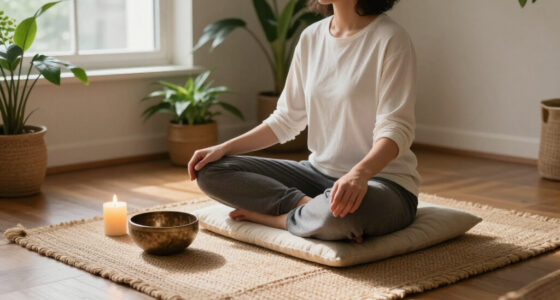
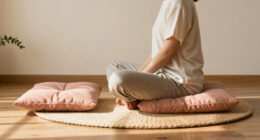
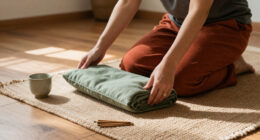
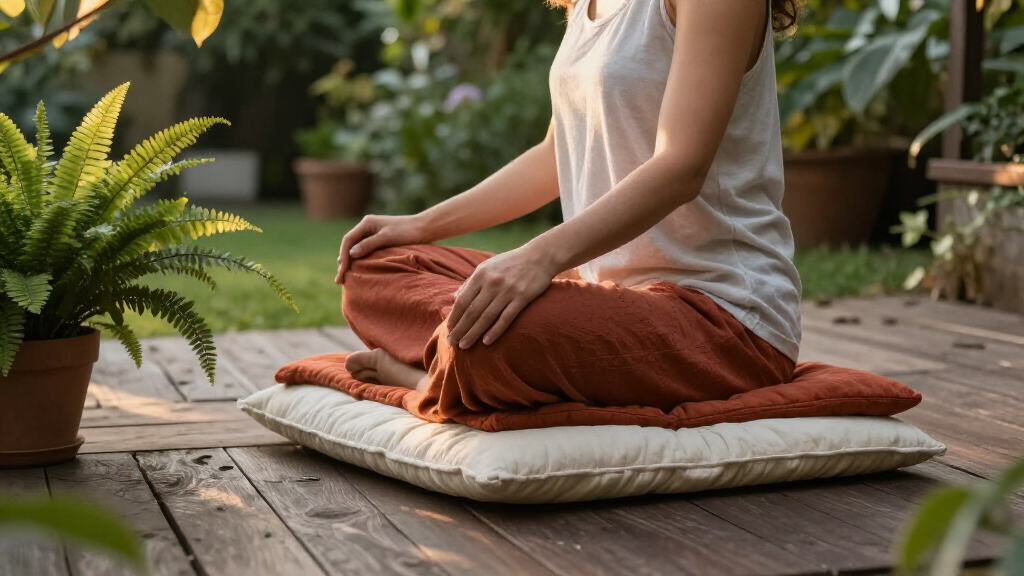
A meditation cushion set usually pairs a raised cushion with a flat mat, so each piece supports a different part of your seated posture. The cushion raises your hips; the mat softens contact between your legs and the floor. Together, they create a defined place to sit, like a small landing pad for a quiet practice.
The flat mat is often called a zabuton. It can cushion your knees, ankles, or the base of the seat, depending on how you sit and how large the mat is. It does not replace the raised cushion: sitting on a thin mat alone may leave your hips low and your knees high. For example, if your ankles feel sore on hardwood, the mat may help; if your pelvis rolls backward, the raised cushion may matter more.
Do you need both pieces? No. You can use the seat on its own, especially on carpet or a padded floor. But if you meditate on tile or wood, the extra layer can feel like the difference between sitting on a bare step and sitting on a cushioned bench. Check the listing carefully because some sets include only a cushion, while others add a mat or smaller accessories.
Think of the setup like a desk and chair: each part has a job, and one cannot always do the other’s work. A set typically pairs a raised cushion with a flat mat to offer both hip elevation and floor padding. Knowing that distinction helps you spend money on the support you actually need.
Products Worth Considering

Oura Ring 5 Smart Ring, Silver, Size 8

Withings Body Scan Smart Scale

Levoit Vital 100S-P Air Purifier with Washable Pre-Filter
As an affiliate, we earn on qualifying purchases.
Choose a height that lets your hips settle comfortably
A meditation cushion set should lift your hips enough for a relaxed, steady seat, with your knees comfortably supported rather than perched high above your pelvis. The right height varies with your leg length, flexibility, and preferred position, so a number on a product page cannot tell the whole story. Treat comfort and stability as your guide.
Try a simple home test before ordering: sit on a folded blanket, then add or remove a fold. Notice whether your pelvis feels slightly tipped forward and your back can rise without strain. If the seat feels like a bar stool, or your legs dangle awkwardly, it is probably too high. If your knees rise above your hips and your lower back rounds, try a thicker support.
For example, a beginner who sits cross-legged for five minutes may feel fine on a low cushion, then notice their knees aching during a longer session. Raising the seat a little can change the angle at the hips. Someone with less flexibility might need more height or might prefer kneeling, while another person may feel stable on a lower cushion. The same product can feel very different between two people.
Adjustable filling gives you room to tune the height. With a cushion that has a zippered inner liner, you may be able to remove a handful of hulls and keep them for later. Start with small changes, then sit for several minutes; a dramatic adjustment can make the cushion feel lopsided. A cushion can support your position, but it does not guarantee good posture, and comfort is a better test than a rigid ideal.
Compare shapes and fillings by the way they feel
Round, crescent, and rectangular meditation cushions offer different shapes and sitting experiences, while buckwheat hulls, kapok, and foam change the feel and weight. No filling wins for everyone. Your best match depends on whether you want a seat that conforms closely, springs back lightly, or stays compact and firm.
| Option | What you may notice | Good to check |
|---|---|---|
| Round cushion | Common, stable shape for cross-legged sitting | Diameter and usable seat area |
| Crescent cushion | May leave more room for the legs | Whether the curve suits your hips |
| Rectangular cushion | Can suit kneeling or other positions | Height and firmness across the seat |
| Buckwheat hulls | Conform closely and can often be adjusted | Weight and separate filling care |
| Kapok | Lighter, springier feel | Whether the firmness suits your body |
Imagine carrying your set to a weekly class: a hull-filled seat can feel substantial in your tote, while a lighter filling may be easier to bring along. At home, that weight might feel reassuring because the cushion stays put. Shape matters too. A crescent may give your legs extra space, while a round seat may be easier to place neatly in a small corner.
Product names and designs vary by maker, so read dimensions and descriptions rather than assuming every “zafu” has the same shape. A listing that says “firm” does not tell you exactly how it will feel once you sit down. If you can test in person, sit on the cushion for a few minutes; if you shop online, check return terms, cover details, and whether the filling can be adjusted or replaced.
Use the set for cross-legged sitting, kneeling, or a chair
A meditation cushion set can support cross-legged sitting or kneeling, but you do not have to sit on the floor to meditate. The goal is a position you can maintain without sharp discomfort or constant shifting. If floor sitting makes your knees or back hurt, a sturdy chair is a sensible alternative.
For a cross-legged setup, place your hips near the front half of the cushion and let your knees rest toward the mat if that feels comfortable. You might need to shift your legs or raise the cushion slightly. For kneeling, a rectangular seat or a cushion placed between your heels can reduce pressure, though people’s knees respond differently. Try one position for a short session before committing to a longer sit.
Here’s a realistic example: Maya wants to meditate before work, but the floor makes her ankles feel tender. She puts a flat mat under her legs and raises her seat with a cushion; when her knees still complain, she uses a dining chair instead. Her practice continues because she changes the setup instead of treating one traditional posture as a requirement.
Think of meditation posture as choosing shoes for a walk: the classic pair is not helpful if it pinches. If a position brings on pain, stop or change it rather than forcing your body to stay still. A cushion may improve comfort for some people, but it is not treatment for pain; persistent or concerning symptoms merit advice from a qualified health professional.
Comfort gives you a place to begin. You can meditate on a cushion, a folded blanket, or a chair, and change positions as your needs change.
Check covers, cleaning, and durability before you buy
A meditation cushion set is easier to live with when you know how its cover, inner filling, seams, and zipper should be cared for. A removable cover can be handy after a dusty class or a spilled cup of tea, but that does not mean the filling can go in the washing machine. Read the maker’s cleaning directions before buying.
Many covers can be removed for washing, while inner fillings may need spot cleaning or airing instead. Buckwheat hulls, for example, should not automatically be treated like washable laundry; moisture can create care problems, so follow the manufacturer’s instructions. If you meditate outdoors, a washable cover or a separate cloth beneath the set may save you from carrying grass stains back into the house.
Durability lives in small details: sturdy stitching, a zipper that opens smoothly, fabric that holds up to regular use, and a source for replacement filling. A bargain cushion can stop feeling like a bargain if its seams split after a few months or its cover cannot be cleaned. Organic or recycled fabric claims also vary, so check the exact material and any stated certification rather than relying on a broad label.
Before checkout, picture the routine: where will you store the mat, how far will you carry the cushion, and how will you clean it after a dusty weekend retreat? Hull-filled cushions can be heavy; lighter fills may travel more easily. A compact travel seat can be convenient, while a larger mat may feel better in a permanent home practice spot. Matching care and weight to your actual routine helps the set stay useful after the new-purchase glow fades.
Test your setup with a short, repeatable routine
You can test a meditation cushion set in about ten minutes by checking stability, hip height, pressure points, and how easily you can change position. A short trial gives you useful feedback before you commit to a long session. Start with a quiet corner and the position you expect to use most often.
- Place the mat on the floor where you plan to sit, then center the cushion on it.
- Sit for two minutes in your usual position and notice whether the cushion rocks, sinks, or feels too firm.
- Check your knees and hips. If your knees float high or your pelvis feels tucked under, adjust the height with filling or a folded blanket.
- Stay for five more minutes. Notice any pressure in your ankles, knees, or hips, and shift the mat or try kneeling if needed.
- Stand and inspect the set. Look for flattened areas, slipping fabric, or a cover that is awkward to remove.
For instance, a seat may feel plush for the first minute but sink until your knees sit above your hips. That is a useful sign to try a firmer fill or a little more height. Another set might feel stable but press into your ankles; the flat mat may need repositioning, or the seat may need to move forward so your legs rest differently.
Repeat the same test with a folded blanket or a chair. That comparison helps you notice whether the cushion set improves your comfort in a meaningful way. You do not need to chase a perfect posture or buy every accessory. You need a setup that lets you return to your practice without dreading the first minute on the floor.
Frequently Asked Questions
What comes in a meditation cushion set?
Most sets pair a raised cushion with a flat mat, often called a zabuton. Some listings include extra pillows or accessories, so check the item details and dimensions before ordering.
Do I need the mat as well as the cushion?
No. You can use the raised cushion on its own, especially on carpet or a padded floor. The mat adds cushioning beneath your knees, ankles, or seat when the floor feels hard.
Is buckwheat hull or kapok better?
Neither is best for everyone. Buckwheat hulls conform closely and are often adjustable, while kapok is lighter and springier; compare weight, feel, and care needs.
Can I meditate on a cushion if I have knee or back pain?
A cushion may make sitting more comfortable for some people, but it is not a treatment. Try another position or a chair if floor sitting hurts, and ask a qualified health professional about persistent or concerning symptoms.
How should I clean a meditation cushion set?
Follow the maker’s care instructions. Covers may be removable and washable, while the inner filling often needs separate care, such as airing or spot cleaning.
Can beginners use a meditation cushion?
Yes. A cushion is optional support, not a requirement for meditation. Beginners can compare a cushion with a folded blanket or chair and use whichever lets them sit comfortably.
Conclusion
Choose a meditation cushion set by testing how it supports your hips and legs, then check the filling, care instructions, and weight against your daily routine. If the floor does not work for your body, use a chair and keep the practice.
The best seat is the one that lets you settle, breathe, and begin—without making your knees negotiate with the floor.