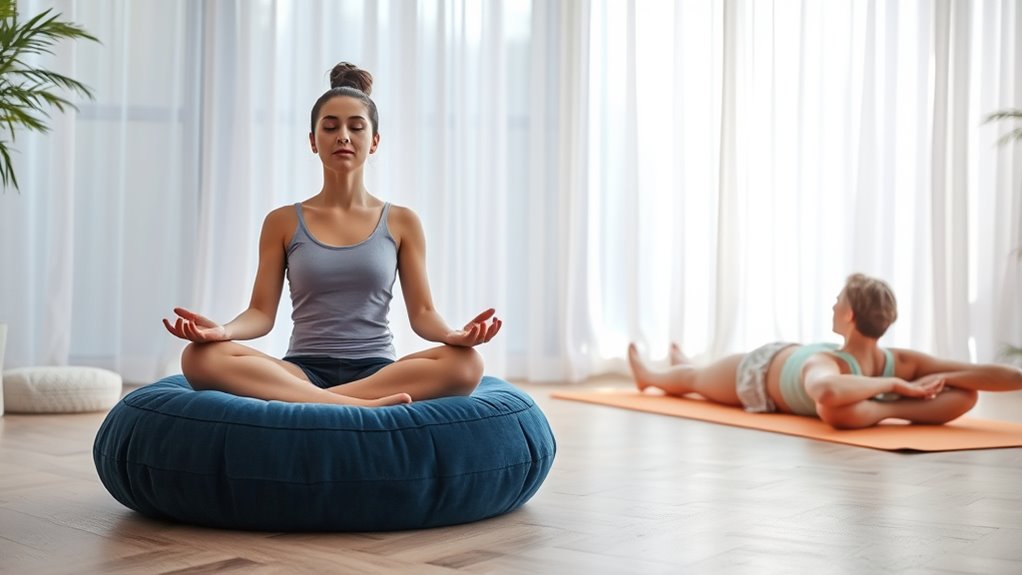
To align your mind, body, and emotions, try combining mindfulness techniques with breathing exercises. Focus on staying present through observation of your thoughts and sensations, while intentionally controlling your breath to calm your nervous system. Practicing consistently, even for a few minutes daily, helps build inner harmony and resilience. Using guided apps or biofeedback tools can boost your progress. If you’re interested, there’s more to explore on tailored meditation styles for deeper alignment.
Key Takeaways
- Mindfulness meditation enhances self-awareness and emotional balance, promoting internal alignment.
- Guided visualization techniques help align mind, body, and energy towards specific goals.
- Breathing exercises like diaphragmatic and box breathing stabilize the nervous system for mental clarity.
- Combining mindfulness with movement-based practices (e.g., yoga) fosters physical and energetic alignment.
- Consistent practice cultivates inner harmony, resilience, and a sense of alignment with one’s true self.
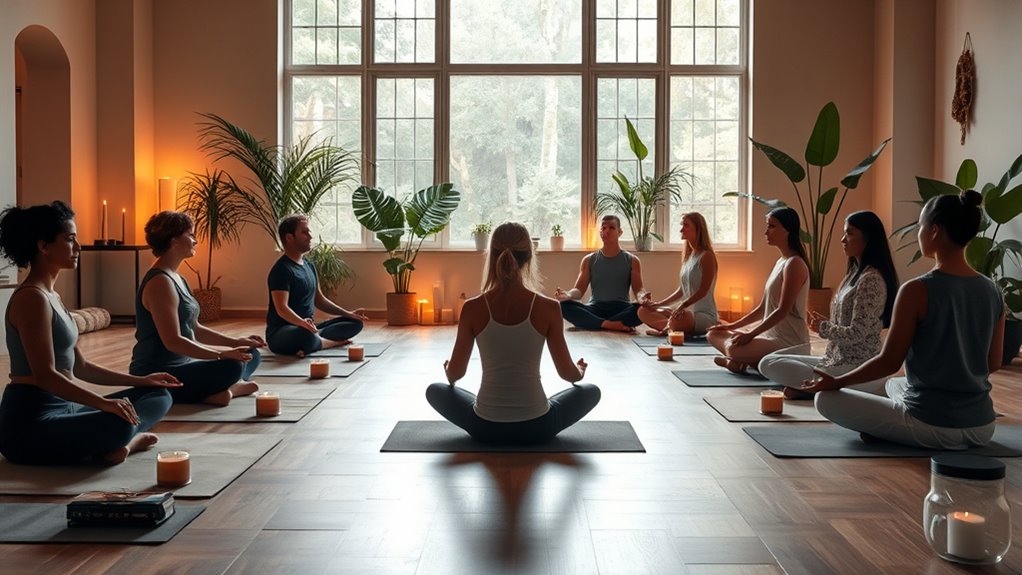
Have you ever wondered how many different ways there are to meditate? The truth is, meditation offers a wide array of styles, each designed to help you achieve mental clarity, emotional balance, and physical relaxation. One of the most accessible and effective approaches is focusing on mindfulness techniques. These methods encourage you to stay present in the moment, observing your thoughts, feelings, and bodily sensations without judgment. By practicing mindfulness regularly, you become more aware of your internal state, which can improve your overall well-being and foster a sense of inner harmony. You might find it helpful to start with simple mindfulness exercises, like paying attention to the sensations of your breath or the sounds around you. These practices anchor you to the present, reducing stress and promoting mental clarity.
Breathing exercises are another cornerstone of many meditation styles. They involve intentionally controlling your breath to calm your nervous system and center your mind. Techniques like diaphragmatic breathing, box breathing, or alternate nostril breathing can be practiced anywhere and require no special equipment. When you focus on your breath, you create a rhythm that helps quiet racing thoughts and creates a sense of stability. Breathing exercises are particularly effective because they directly influence your body’s relaxation response, lowering heart rate and reducing cortisol levels. As you deepen your awareness of your breath, you may notice your mind becoming clearer and your body feeling more grounded. Incorporating specialized equipment such as guided meditation apps or biofeedback devices can enhance your practice and provide additional support.
Combining mindfulness techniques with breathing exercises often yields the best results, as they complement each other seamlessly. You might start by taking a few deep breaths, then shift your focus to the sensations of each inhalation and exhalation. This combination can serve as a quick reset when you’re feeling overwhelmed or distracted. Over time, integrating these practices into your daily routine can help you cultivate a state of alignment—where your thoughts, emotions, and actions are harmonized. This alignment fosters resilience against stress and improves your ability to respond thoughtfully to life’s challenges. Remember, the key is consistency; even a few minutes each day can build a powerful foundation for mental and emotional balance.
Frequently Asked Questions
How Often Should I Practice Meditation for Optimal Alignment?
You should practice meditation daily for ideal alignment, maintaining consistency to deepen your connection. Aim for about 10-20 minutes each session, ideally at the same time every day to establish a routine. The perfect timing varies for each person, but mornings often set a positive tone. Regular practice helps you stay centered, balanced, and aligned with your intentions, making consistency your best tool for lasting benefits.
Can Meditation Help With Emotional Balance and Mental Clarity?
Imagine someone struggling with daily stress and mood swings; meditation can profoundly help. It boosts emotional resilience by calming your mind, allowing you to respond thoughtfully rather than react impulsively. Regular practice improves mental focus, clears mental clutter, and promotes emotional balance. With dedication, you’ll notice greater clarity in your thoughts and a steadier emotional state, making it easier to handle life’s challenges while enhancing your overall well-being.
Are There Specific Meditation Styles Suited for Beginners?
Yes, as a beginner, you’ll find guided visualization and body scan techniques especially helpful. Guided visualization leads you through calming images, making it easier to focus and relax. Body scan techniques help you become aware of physical sensations, promoting mindfulness and balance. You can start with just a few minutes daily, gradually increasing as you become more comfortable. These styles are simple, effective, and perfect for building a solid meditation foundation.
How Long Does It Typically Take to Feel the Benefits of Meditation?
You’ll feel the benefits of meditation almost instantly—sometimes in just minutes! While the timing expectations vary, many notice immediate effects like calmness, clarity, and a sense of peace that can seem almost magical. For some, it takes a few sessions to really notice these changes, but don’t worry—your mind and body start reaping rewards right from the first try. Keep practicing, and those benefits will only grow stronger.
Is Meditation Effective for Physical Health and Stress Reduction?
Yes, meditation is effective for physical health and stress reduction. You’ll notice mindfulness benefits like lower blood pressure, improved sleep, and reduced anxiety. Breathing techniques help calm your nervous system, making you feel more relaxed and centered. Consistent practice enhances these effects over time, so stick with it. By dedicating a few minutes daily, you’ll experience significant improvements in your overall well-being and resilience against stress.
Conclusion
Ultimately, exploring different meditation styles gently guides you toward greater alignment. It’s like finding the right rhythm that quietly resonates with your inner self, encouraging balance without force. By embracing the variety, you’re softly opening doors to deeper calm and clarity, allowing your true nature to shine through with a gentle grace. Remember, the journey is yours to shape—each step, no matter how small, nudges you closer to harmony’s subtle embrace.