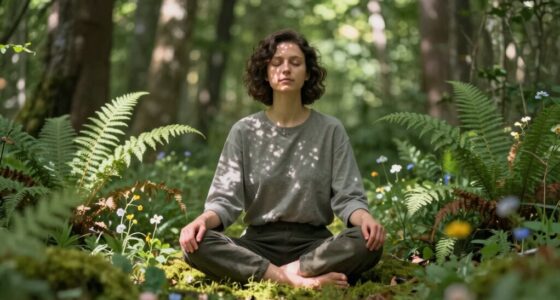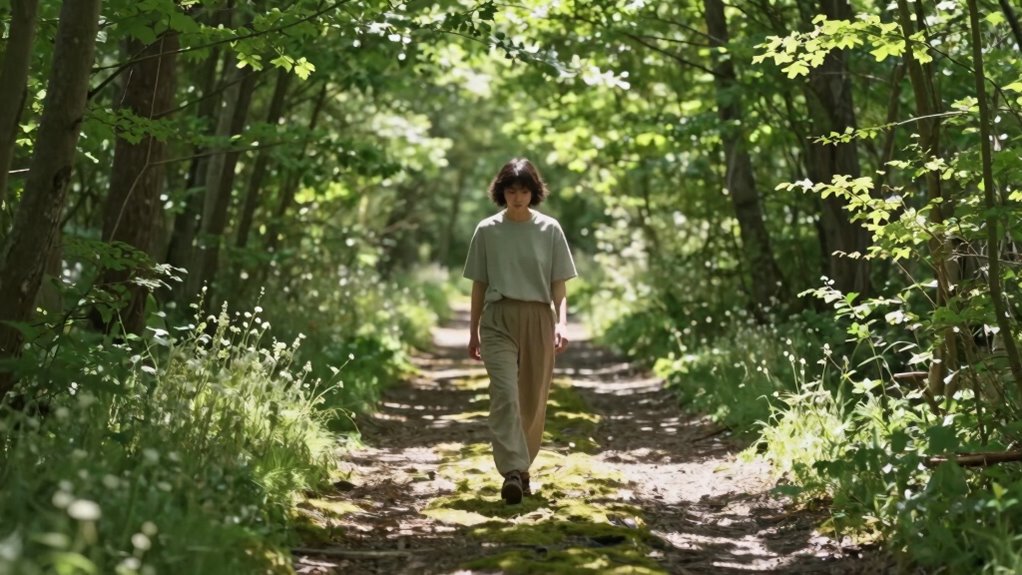

To use mindful walking to clear your head, start by setting a gentle intention like “observe and breathe.” Focus on your breath, inhaling deeply through your nose and exhaling slowly, using it to set the pace. Pay attention to how your body moves, noticing sensations in your feet and muscles. Stay present by tuning into sounds, smells, and textures around you. Keep your shoulders relaxed and mindfully redirect your focus whenever it drifts—more tips await you if you continue exploring.

Get books, candles and calm essentials delivered free — and shop member deals
- Fast, free delivery on millions of items
- Access to Prime Big Deal Days deals on October 6–7
- Prime Video, Amazon Music and more included
Key Takeaways
- Set a clear intention, such as “observe and breathe,” to focus your mind during the walk.
- Use deep, controlled breathing to calm the nervous system and anchor your attention.
- Pay attention to bodily sensations and how your feet connect with the ground for body awareness.
- Incorporate sensory awareness by noticing sounds, smells, and temperature to enhance presence.
- Gently redirect your focus back to your breath and sensations whenever your mind drifts.
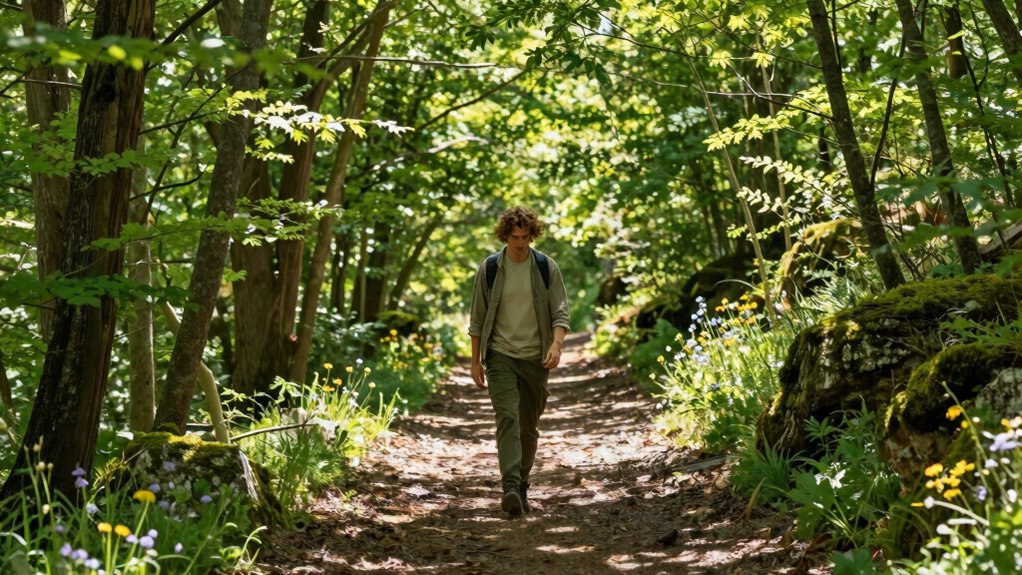
When your mind feels overwhelmed or cluttered, taking a mindful walk can be a simple yet powerful way to clear your head. The key is to slow down and bring your attention to the present moment. As you walk, focus on your breathing techniques—inhale deeply through your nose, feeling your lungs expand, and exhale fully through your mouth or nose. This controlled breathing helps calm your nervous system and anchors you in the now. Don’t rush; instead, let your breath set the rhythm of your walk.
As you step forward, cultivate body awareness. Notice how your feet connect with the ground, feeling the texture of the pavement or grass beneath your soles. Pay attention to the movement of your legs, the swing of your arms, and how your body shifts with each step. This mindfulness of your body encourages a gentle, steady pace, preventing you from rushing or overthinking. Keep your shoulders relaxed and your jaw unclenched, allowing tension to melt away as you walk. The more you tune into your physical sensations, the less space your busy thoughts will take up. Incorporating body awareness can also help deepen your connection to the present moment.
It’s helpful to set an intention at the start of your walk, like “I am here to observe and breathe.” This intention guides your focus and enhances the benefits of your practice. Throughout your walk, periodically check in with yourself—are you still paying attention to your breath and body? If your mind drifts to worries or plans, gently redirect your focus back to your breathing and bodily sensations. This act of gentle redirection trains your mind to stay present, reducing mental clutter.
You can also incorporate sensory awareness to deepen your mindfulness. Notice the sounds around you, whether it’s birds chirping, leaves rustling, or distant conversations. Feel the temperature of the air on your skin and smell the fragrances of nature or urban life. These sensory cues help anchor your awareness, pulling you out of rumination and into the moment. Being aware of mindful breathing can further enhance your sense of calm during your walk. As you walk mindfully, your thoughts become quieter, and your mental space clears, giving you a fresh perspective.
Practicing mindful walking regularly builds resilience against stress and helps you develop a more peaceful mind. Focus on your breathing techniques and body awareness during each walk, and over time, you’ll find it easier to access calmness whenever your mind feels overwhelmed. It’s a simple practice, but its effects can be profound—offering clarity and calm whenever you need it most.
mindful walking meditation guide
As an affiliate, we earn on qualifying purchases.
As an affiliate, we earn on qualifying purchases.
Frequently Asked Questions
Can Mindful Walking Be Practiced Indoors?
Yes, you can practice mindful walking indoors. Find a quiet space where you won’t be disturbed, and focus on your breath using breathing techniques to anchor your attention. Walk slowly, paying close attention to each step and how your body moves. Indoor environments can be just as effective as outdoor ones for mindfulness, helping you clear your mind and reduce stress anytime you need a mental reset.
How Long Should Each Mindful Walk Last?
You should aim for each mindful walk to last about 10 to 20 minutes. Maintain a comfortable walking pace that allows you to stay present without rushing. Focus on your breathing techniques, taking deep, steady breaths to anchor yourself in the moment. If you have more time, extend your walk gradually, but even short sessions help clear your mind and promote mindfulness effectively.
Is Prior Meditation Experience Necessary?
You don’t need a meditation background to try mindful walking; it’s perfect for beginners. With some simple tips, like focusing on your breath and the sensation of each step, you can easily incorporate it into your routine. Start with short walks, maybe five minutes, and gradually extend your time. Remember, the key is staying present and gentle with yourself, no prior experience required.
Can Mindful Walking Improve Sleep Quality?
Sure, mindful walking can boost your sleep quality—because who doesn’t want to snooze like a pro? It improves sleep hygiene by calming your mind and body, making relaxation techniques more effective. As you walk mindfully, you reduce stress and anxiety, helping you drift off easier. So, lace up those shoes, embrace the slow stroll, and turn your nightly routine into a peaceful escape from the chaos. Sleep tight!
How Do I Stay Focused During the Walk?
To stay focused during your walk, use breathing techniques to anchor your attention, taking slow, deep breaths to calm your mind. Enhance your focus through sensory awareness by paying close attention to what you see, hear, feel, smell, and taste. When your mind wanders, gently bring it back to these sensations and your breath. This practice keeps you present, making your mindful walk more effective and calming.
Conclusion
As you step outside, feel the cool breeze kiss your skin and hear the gentle rustle of leaves beneath your feet. With each mindful step, imagine your worries melting away like dew in the morning sun. Let the world’s quiet beauty fill your mind, clearing clutter and restoring calm. Remember, this simple walk isn’t just movement—it’s your moment to reconnect, breathe deeply, and find clarity amidst life’s chaos.
Halloween Picks
halloween
As an affiliate, we earn on qualifying purchases.