

To use nature for emotional recovery, take intentional walks in local forests or parks, focusing fully on your surroundings without distractions like your phone. Practice mindfulness by observing details such as textures, sounds, and smells, and slow your pace to deepen your connection. Engage in wildlife observation, pausing to appreciate movements and sounds, which grounds you in the present moment and fosters curiosity. If you keep exploring these practices, you’ll discover even more ways to restore your emotional well-being through nature.
Key Takeaways
- Engage in mindful walks in natural settings, focusing on sights, sounds, and textures to promote presence and reduce stress.
- Limit distractions like phones to fully immerse yourself and deepen your connection with the environment.
- Observe wildlife and nature details to foster curiosity, wonder, and grounding in the present moment.
- Incorporate outdoor activities like gardening or conservation efforts to strengthen emotional resilience.
- Practice regular nature immersion to enhance mental health, emotional recovery, and a sense of purpose.
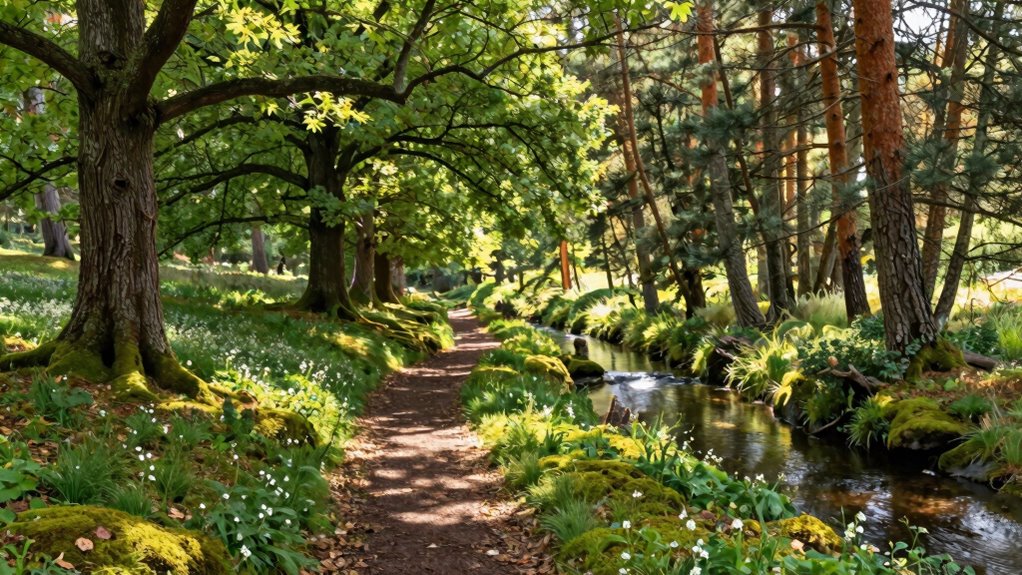
Have you ever noticed how a walk in the woods can instantly lift your mood? There’s something about being immersed in nature that soothes your mind and reconnects you with yourself. When you step into a forest, you’re not just walking—you’re engaging in an experience called forest bathing, a practice rooted in Japanese tradition that encourages you to slow down and fully absorb the environment around you. As you move quietly among the trees, you allow yourself to become present, letting the sights, sounds, and smells wash over you, helping to reduce stress and clear mental clutter.
Wildlife observation is a key part of this process. When you keep a keen eye on the animals and birds around you, it shifts your focus away from worries and racing thoughts. Watching a squirrel dash up a tree or listening to the melodic calls of songbirds can instantly ground you in the here and now. This act of observing wildlife not only distracts from emotional turmoil but also fosters a sense of connection to the larger ecosystem. It reminds you that you’re part of something bigger—an intricate web of life that continues regardless of your struggles.
Observing wildlife shifts your focus, grounding you in the present and fostering a deep connection to the larger ecosystem.
To start using nature for emotional recovery, find a local forest or wooded area where you can walk calmly and intentionally. As you venture into the woods, set aside your phone or any distractions. Instead, focus on your breath, the texture of the bark, the rustling leaves, and the distant calls of wildlife. Approach your walk as an opportunity to practice forest bathing, intentionally slowing your pace and opening your senses to the environment. As you do this, notice the small details—the way moss carpets the ground or how sunlight filters through the canopy. These moments of mindfulness can help you release tension and cultivate a sense of calm. Incorporating landscaping elements that mimic natural environments can further enhance your connection with nature and amplify its emotional benefits. Additionally, engaging in outdoor activities, like gardening or nature walks, can boost your mood and overall mental health. Research also shows that engaging in private placement investments, such as wildlife conservation projects or eco-friendly initiatives, can deepen your sense of purpose and connection to the environment.
Furthermore, understanding how contrast ratio influences visual harmony can deepen your appreciation of natural scenery and its calming effects. Engaging in wildlife observation during your walks enhances the restorative effect. Take a moment to pause and watch for movement or listen for sounds that indicate nearby creatures. Whether it’s a bird flitting from branch to branch or a deer grazing at a distance, these encounters foster feelings of wonder and connection. Over time, this practice can improve your emotional resilience, helping you better cope with stress and sadness. By intentionally immersing yourself in the natural world—through forest bathing and wildlife observation—you give yourself a powerful tool for emotional recovery that’s simple, accessible, and profoundly healing.
mindfulness walking shoes for nature walks
As an affiliate, we earn on qualifying purchases.
As an affiliate, we earn on qualifying purchases.
Frequently Asked Questions
Can Indoor Plants Provide Similar Emotional Benefits as Outdoor Nature?
Indoor greenery can indeed offer emotional benefits similar to outdoor nature. When you care for plants, you create an emotional connection that boosts your mood and reduces stress. While indoor plants might not replicate all outdoor experiences, they still provide visual comfort, improve air quality, and bring a calming presence into your space. Engaging with indoor greenery helps you feel more grounded and connected, supporting your emotional recovery.
How Long Should I Spend in Nature for Emotional Healing?
You should spend at least 20 to 30 minutes in nature daily for emotional healing, following general duration guidelines. This time allows your mind to relax and your stress levels to decrease, promoting faster healing time. If possible, extend your outdoor sessions to an hour or more, especially during weekends or free time. Consistent, mindful exposure helps you reconnect with nature and enhances your emotional well-being effectively.
Are There Specific Types of Environments More Effective for Recovery?
You might find urban parks or forest bathing especially effective for recovery. Urban parks offer a quick escape filled with greenery and fresh air, while forest bathing immerses you deeply in nature’s calming presence. Both environments help reduce stress and boost mood, but forest bathing’s immersive experience often delivers deeper emotional healing. Next time you seek recovery, consider choosing these environments—they could be exactly what you need to feel renewed.
Is Nature Therapy Suitable for All Mental Health Conditions?
Nature therapy can benefit many mental health conditions, but it’s not a cure-all. You might find it especially helpful for stress, anxiety, or depression, yet some conditions need additional treatments. Urban green spaces make nature more accessible, helping reduce mental health stigma by normalizing outdoor therapy. However, always consult a mental health professional to determine if nature therapy suits your specific needs and complements your overall treatment plan.
Can Children or the Elderly Benefit Equally From Nature Exposure?
You’ll find that children and the elderly both benefit from nature exposure. For example, a child’s development can accelerate with outdoor play, improving cognitive skills and emotional resilience. Similarly, elderly individuals experience enhanced well-being, reduced loneliness, and improved mood through garden visits or walks. Nature’s calming effects support their mental health, making it a valuable tool for fostering overall well-being across all ages.
Conclusion
So, step outside and soak in the soothing serenity of nature. Let the lush landscapes lift your spirits, and listen to the gentle whispers of the wind to wash worries away. Embrace the calming cadence of trees and tides, fueling your emotional freedom. Remember, nature’s nurturing nurture is always near—ready to renew your resilience and restore your radiance. Take that essential voyage into vibrant vistas—your healing horizon awaits.