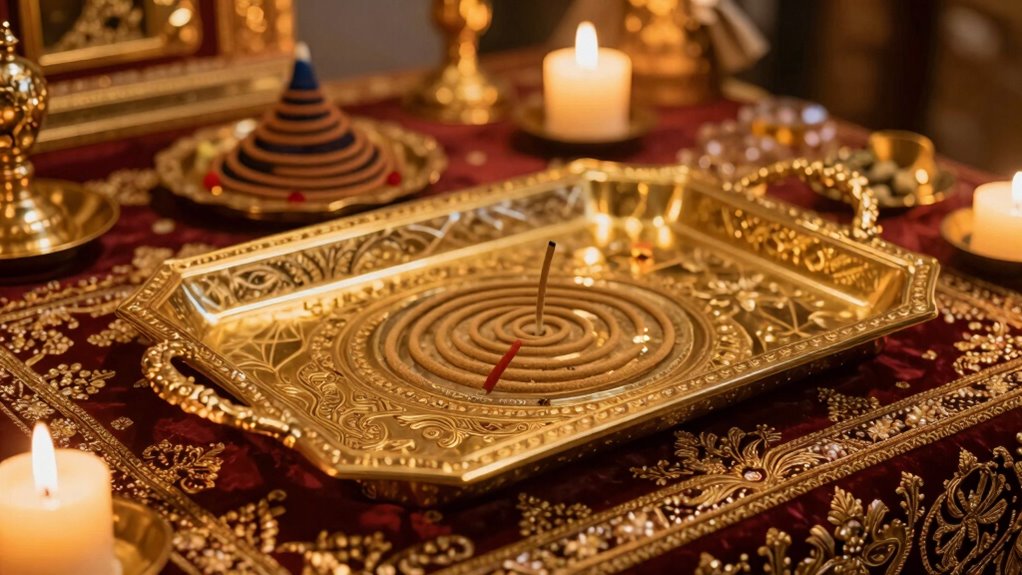

Ritual trays and altar cloths shape sacred spaces by acting as visual symbols of respect and spiritual intent. They carry cultural meanings through fabrics, colors, and patterns that evoke specific energies or deities. By carefully choosing and arranging these items, you create a space that feels authentic and purposeful, enhancing reverence and focus. If you explore further, you’ll discover how these objects deepen connections to tradition and elevate your spiritual practice.

Turn your quiet moments into listening time
- Thousands of audiobooks, podcasts and originals
- Listen on your phone, tablet or Echo — also offline
- Cancel anytime
Key Takeaways
- They transform ordinary areas into sacred spaces through visual cues of reverence and spiritual significance.
- Use of specific materials, colors, and patterns conveys cultural symbolism and enhances spiritual resonance.
- Arranged elements signal importance, inviting focus and connection with deities, ancestors, or spiritual energies.
- Their symbolic qualities influence the energy and emotional atmosphere of rituals and sacred environments.
- Thoughtful design and placement create authentic, meaningful spaces that deepen spiritual practice and intention.
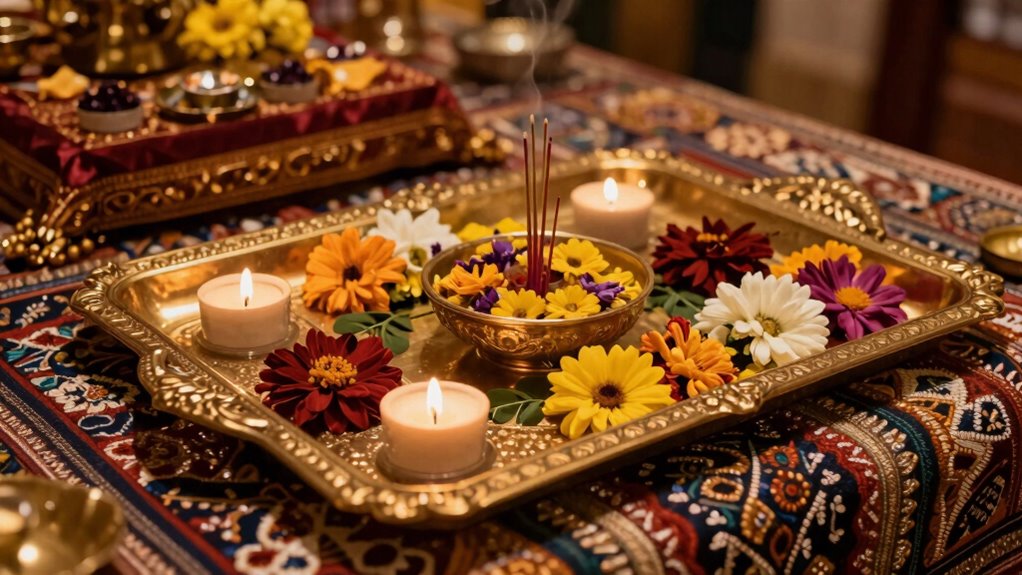
Altar cloths, on the other hand, do more than just cover the surface. They act as a visual expression of respect and reverence, transforming an ordinary space into a sacred one. The choice of fabric and design can carry profound cultural symbolism, representing themes like purity, protection, or specific spiritual deities. For instance, certain colors or patterns might be associated with particular energies or traditions, making the cloth itself a powerful element of the ritual. The material significance of these cloths is also notable; soft, luxurious fabrics can elevate the perceived importance of the altar, while simpler materials might emphasize humility and accessibility. Your selection of cloths can set the tone for the entire ceremony, subtly influencing the mood and focus of participants. Additionally, material significance plays a role in how these objects communicate their purpose and meaning within spiritual practices. Both ritual trays and altar cloths serve to demarcate the sacred from the mundane. You might choose an ornate tray or an embroidered cloth to honor specific deities or ancestors, signaling their importance and inviting their presence. Conversely, minimalist or natural materials can foster a sense of grounding and humility. The tactile qualities of these objects—the smoothness of polished wood, the richness of silk, or the earthy feel of linen—add layers of sensory meaning to your practice. Incorporating cultural symbolism into your choices can deepen the spiritual resonance of your sacred space. Understanding the history of rituals associated with these objects can also enhance their significance and guide your selections. For example, traditional practices often influence the materials and styles used in ritual objects across different cultures. Moreover, the role of symbolism influences how these elements evoke particular energies and intentions during rituals. As you arrange and select these items, you’re engaging in a form of nonverbal communication that reinforces the spiritual narrative you wish to convey. Ultimately, ritual trays and altar cloths shape sacred spaces by blending cultural symbolism with material significance. They serve as tangible connectors to tradition, intention, and reverence, transforming simple objects into powerful symbols that elevate your practice. When crafted with care and thoughtfulness, these elements help you create a space that feels both meaningful and authentic, inviting a deeper connection to the spiritual domain.
altar cloths for spiritual practice
As an affiliate, we earn on qualifying purchases.
As an affiliate, we earn on qualifying purchases.
Frequently Asked Questions
What Materials Are Most Durable for Ritual Trays and Altar Cloths?
You should choose materials like hardwood, stone, or metal for ritual trays due to their aesthetic durability and material sustainability. These options withstand frequent use and environmental factors, maintaining their appearance over time. Leather or thick woven fabrics work well for altar cloths because of their resilience and timeless look. By selecting these durable materials, you guarantee your sacred space remains beautiful and functional, honoring tradition while prioritizing longevity.
How Do Cultural Differences Influence the Design of Sacred Spaces?
You feel the power of cultural symbolism and regional aesthetics shaping sacred spaces, revealing deep traditions and beliefs. These differences influence every detail, from colors to materials, creating a unique atmosphere that connects you to your heritage. As you observe these variations, a sense of awe builds, knowing that each design choice reflects profound spiritual meaning. It’s a beautiful reminder that sacred spaces are a mirror of diverse cultural identities worldwide.
Can Ritual Trays and Altar Cloths Be Reused Across Different Ceremonies?
Yes, ritual trays and altar cloths can be reused across different ceremonies, especially when focusing on cross-cultural reuse. You can adapt them for various traditions by incorporating personalized customization, like adding symbols or colors meaningful to each occasion. This flexibility allows you to honor different spiritual practices while maintaining respect for cultural differences. Reusing these items thoughtfully enhances the sacredness and continuity of your spiritual space.
What Are Common Symbols Incorporated Into Altar Cloth Designs?
You’ll often see symbolic motifs like crosses, flowers, or celestial symbols woven into altar cloth designs, each representing different spiritual themes. Color symbolism also plays a key role, with white denoting purity, red symbolizing passion, or gold representing divine energy. These elements help create a sacred atmosphere, emphasizing the spiritual significance of the space and guiding your focus during rituals or ceremonies.
How Do Lighting Choices Affect the Ambiance of Sacred Spaces?
Lighting choices directly influence the lighting ambiance, shaping the spiritual atmosphere of sacred spaces. By using soft, warm lights or candles, you create a sense of calm, reverence, and intimacy. Bright, focused lighting can highlight important ritual elements, while dimmer settings foster reflection. Thoughtful lighting enhances connection, making the space feel sacred and inviting, helping practitioners feel more centered and spiritually engaged during ceremonies or meditation.
Conclusion
As you step into these sacred spaces, remember that ritual trays and altar cloths are the delicate brushstrokes painting a spiritual canvas. They transform simple surfaces into portals of reverence, turning everyday objects into symbols of devotion. Like silent guardians, they hold the weight of tradition and intention. Embrace how these elements weave a tapestry of meaning, inviting you to connect deeply with the sacred heartbeat that pulses through every carefully arranged detail.
Fall Picks
fall essentials
As an affiliate, we earn on qualifying purchases.