TL;DR

Get books, candles and calm essentials delivered free — and shop member deals
- Fast, free delivery on millions of items
- Access to Prime Big Deal Days deals on October 6–7
- Prime Video, Amazon Music and more included
Spiritual Halloween decor is a flexible modern phrase for displays inspired by remembrance, nature, folklore, or personal spirituality—not one fixed tradition or required set of symbols. You can make your display meaningful with a few carefully chosen objects, clear cultural context, reusable materials, and safe lighting.
A pumpkin beside a handwritten letter can feel more meaningful than a shelf full of spooky decorations. That’s the appeal of spiritual Halloween decor: it can make room for memory, nature, folklore, or personal belief without requiring one particular religion or style.
The phrase has no single established definition. People use it for everything from a quiet remembrance display to an autumn arrangement of leaves and candlelight. You’ll learn what the term can mean, how it differs from Samhain, and how to create a display that feels personal without treating someone else’s sacred traditions as props.
Whether you’re decorating a small apartment or setting up a family gathering, your best guide is simple: choose objects with a reason, make their meaning clear, and think about the people who will share the space.
Treat spiritual Halloween decor as a flexible modern phrase, not one fixed tradition.
Choose a few objects for personal reasons and explain their meaning without presenting it as universal.
Keep Samhain distinct from general Halloween or autumn decorations.
Ask family members before creating a memorial display for someone else’s loved one.
Use battery candles, clear walkways, and reusable or compostable materials where practical.
What spiritual Halloween decor can mean in your home
Spiritual Halloween decor is a broad, modern phrase for Halloween displays shaped by remembrance, nature, folklore, or personal spiritual beliefs. It describes a range of styles rather than one established tradition, so your display doesn’t need prescribed objects or rituals. For example, a person might place a family photograph beside fall leaves, while a neighbor chooses only pumpkins and soft amber light.
That flexibility matters because objects don’t mean the same thing to everyone. A candle may represent a loved one to one family and simply offer warm light to another; a raven could be a folklore reference, a favorite bird, or just a striking black shape against orange leaves. Explain what an object means to you instead of claiming that it carries a universal spiritual message.
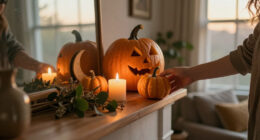
For a practical example, imagine a narrow entryway with a pumpkin, a few dried branches, and a small framed note about a relative who loved autumn walks. The display can feel reflective without suggesting that every visitor needs to share your beliefs. That’s what makes meaning-first decorating useful: the story behind a choice matters more than buying a checklist of supposedly spiritual items.
A thoughtful display doesn’t need to tell everyone what to believe; it can simply show what the season means to you.
As an affiliate, we earn on qualifying purchases.
How Halloween’s layered history helps you decorate thoughtfully
Spiritual Halloween decor draws on several possible influences, but Halloween itself has a layered history rather than one single origin. Its customs developed alongside the Christian observance of All Hallows’ Eve and the following days of All Saints’ Day and All Souls’ Day; some present-day traditions are also associated with Samhain, a Gaelic seasonal festival. Those connections don’t mean that every modern Halloween custom directly preserves an ancient practice.
Samhain and Halloween aren’t interchangeable terms. Samhain is a specific seasonal festival with historical and contemporary observances, while Halloween decor can simply use autumn colors, pumpkins, or folklore imagery. If you’re setting out a harvest arrangement for a party, there’s no need to label it Samhain decor unless that description genuinely reflects your practice and knowledge.
Consider a host who wants a reflective seasonal table. They might choose pears, branches, and a small lantern, then describe the arrangement as an autumn display rather than claiming it represents a particular religion. That small distinction keeps the decoration honest and leaves room for different beliefs at the same gathering. When you reference a tradition, learn its context from reliable sources and people connected to it instead of flattening its history into a spooky theme.
How to build a meaningful display in five practical steps
- Pick one intention. Decide whether your display is for remembrance, seasonal reflection, folklore, or simply a gentler Halloween mood. A clear purpose keeps a small windowsill from becoming a jumble.
- Choose three to five objects. For example, use a photograph, a handwritten memory, a small vase of flowers, and a pumpkin. Fewer pieces give each one room to be noticed.
- Explain personal meaning when helpful. A small note such as “Grandma loved these yellow flowers” gives guests context without speaking for an entire tradition.
- Check cultural context. If an object belongs to a living religion or cultural practice, research its meaning and whether it’s appropriate for you to use. When in doubt, choose another decoration.
- Make it safe and comfortable. Use battery candles near dry foliage, keep paths clear, and ask family members what feels appropriate when you’re honoring someone else.
Here’s how those steps might work in a real home: you set a small side table for an uncle who loved gardening, add his photograph, a handwritten note, and a few fallen leaves, then use a battery candle rather than placing a flame beside dried stems. The result feels specific because each object has a reason.
Keep the display adaptable. If a child finds a skull unsettling or a guest is grieving, you can move the object or make the memorial area private. A thoughtful arrangement can change as your household’s needs change; it doesn’t have to become a permanent statement.
Which decor style fits your beliefs, space, and guests
The best style depends on what you want the room to say and who will see it. Nature-led, remembrance, and folklore-inspired displays can all feel reflective, but they use different objects and may suit different households. Use this quick comparison to choose a direction before you shop.
| Style | Useful objects | Good fit when… |
|---|---|---|
| Nature-led | Pumpkins, leaves, branches, seed heads | You want an autumn look without spiritual claims |
| Remembrance | Photographs, letters, flowers, a quiet light | Your family wants a personal place to reflect |
| Folklore-inspired | Raven images, moons, storybooks, handmade paper shapes | You enjoy seasonal stories and symbols as art |
| Personal spiritual | Objects meaningful to your own practice | You can explain their context and use them respectfully |
For instance, a family with young children may choose painted pumpkins and paper moons, while a couple hosting a remembrance evening may prefer photographs and a vase of flowers. Neither approach is more authentic. Your display should reflect your own intention and the comfort of the people who share the space.
When you borrow imagery, be precise about what you’re borrowing. A raven from a favorite folktale is not automatically a sacred symbol, and a moon decoration doesn’t tell visitors what you believe. Let context do the work: tell your own story, and don’t assign one meaning to a symbol across different cultures.
How to make remembrance decor kind to grieving guests
A remembrance display works best when it follows the wishes of the people connected to the person being honored. Use familiar items—perhaps a photograph, a favorite flower, a recipe card, or a handwritten memory—and ask relatives what feels welcome before making a shared memorial. A small arrangement on a side table can invite reflection without turning grief into a performance.
Imagine you’re hosting dinner and want to remember a friend who died recently. You could place one photograph beside a flower they loved, then tell guests that the display is there for anyone who wants a quiet moment. You might also choose not to include death imagery, candles, or a public toast if those details could be painful for someone at the table.
Give people room to respond differently. One guest may want to share a story; another may prefer to focus on the meal. Neither response needs correcting. If you’re honoring another family’s loved one, a direct question—“Would a small photograph feel comforting, or would you rather keep the evening light?”—can prevent a well-meant surprise from landing badly.
There is no single right way to remember someone, and personal customs are not automatically religious rites. Let your family’s beliefs and preferences guide the display. A photograph and a familiar flower can carry plenty of meaning without asking anyone else to interpret them.
How to keep spiritual Halloween decor safe and reusable
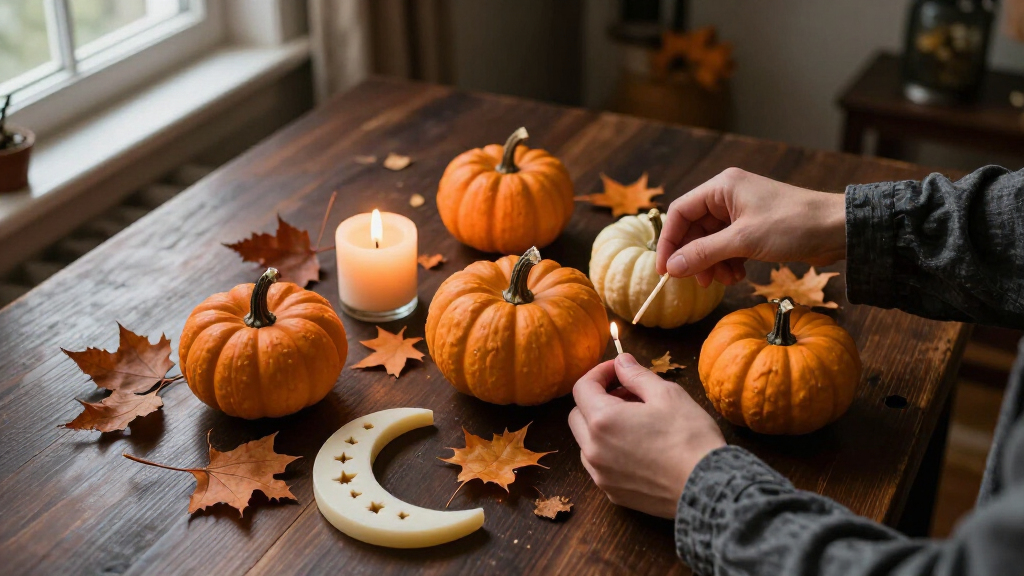
You can make a reflective Halloween display safer and less wasteful by favoring reusable objects, untreated natural materials, and battery-operated lights. A small string of warm LEDs beside a fabric pumpkin gives you the glow of candlelight without an open flame next to dried leaves, pets, or curious children. Keep decorations away from doorways and stairs, where a trailing branch or loose cord can become a trip hazard.
Reuse first: bring out last year’s fabric garland, borrow a vase, or cut paper moons from scraps. For a concrete setup, place a bowl of small gourds on a sturdy shelf, arrange a few fallen leaves around it, and store the battery lights in their original box after the season. Untreated leaves and branches may be compostable where local rules allow; painted or glitter-covered materials usually need a different disposal route.
Think about how the display feels, too. For a child-friendly living room, choose soft lighting and pumpkins with friendly faces instead of graphic skulls or sudden-motion props. If a guest has a strong association with death imagery, a quiet nature-led arrangement may make the gathering more comfortable.
Safety doesn’t have to flatten the mood. A battery candle casts a steady amber glow, and a bowl of apples smells like autumn when you walk through the door. Gentle atmosphere comes from careful choices, not from using a real flame or filling every surface with props.
Frequently Asked Questions
Is spiritual Halloween decor the same as Samhain decor?
No. Samhain is a specific Gaelic seasonal festival with its own historical and contemporary observances; spiritual Halloween decor is a broad modern phrase that can include many styles. Autumn leaves or pumpkins alone don’t make a display Samhain decor.
Is spiritual Halloween decor religious or occult?
It can reflect a religious or spiritual practice, but it can also be secular, nature-focused, or simply atmospheric. You can make a reflective display with pumpkins, flowers, and soft light without identifying with a particular practice.
How can I create a respectful remembrance display?
Choose items meaningful to the person or family, such as a photograph, letter, flower, or favorite recipe. If you’re honoring someone else’s loved one, ask relatives what would feel appropriate before setting it up.
What symbols can I use for spiritual Halloween decor?
People often choose candles, leaves, pumpkins, ravens, moons, or skulls, but their meanings vary. Share what a symbol means in your display instead of treating that meaning as universal.
Can I decorate this way without practicing witchcraft?
Yes. A nature-inspired or reflective Halloween display doesn’t require a particular spiritual identity. For example, a bowl of gourds, a family photograph, and a battery candle can create a meaningful seasonal corner.
How do I keep the display child-friendly and safe?
Choose pumpkins, leaves, gentle folklore imagery, and warm battery lighting, especially around children, pets, and dried plants. Keep cords and decorations out of walkways, and skip intense imagery if it may frighten a child or guest.
Conclusion
Make your display personal before you make it elaborate. Choose a few objects that tell your story, respect the context of any traditions you reference, and adjust the setup for the people who will see it.
A pumpkin, a handwritten memory, and one warm pool of light may be enough. Let the season glow gently, like a porch lamp waiting for someone to come home.
Fall Picks
fall essentials
As an affiliate, we earn on qualifying purchases.