
TL;DR
Spiritual meditation cushions are seating aids that can raise your hips, support a steadier posture, and cushion your knees and ankles. Choose a shape and filling that suit your body and practice surface; a chair, folded blanket, or no cushion can work just as well. Comfort supports practice, but a cushion does not promise a particular spiritual experience.
A cushion can change the way your body meets the floor, but it can’t do your meditation for you. The right seat may make a stiff morning session feel more settled; the wrong one can leave your knees hovering and your ankles complaining before the timer rings.

Turn your quiet moments into listening time
- Thousands of audiobooks, podcasts and originals
- Listen on your phone, tablet or Echo — also offline
- Cancel anytime
Spiritual meditation cushions is a broad, descriptive term for cushions people use during seated practice. The phrase doesn’t name a standardized product or a cushion tied to one religion. In this guide, you’ll learn what different styles support, how materials feel, and how to test a seat before buying one. You’ll also see why a sturdy chair can be a perfectly good choice.
The aim is simple: find a position that feels stable and comfortable enough for you to sit without forcing your body. Think of a cushion as an adjustable seat, like changing the height of a chair until your feet rest well. It can support your practice, while the meaning of that practice remains yours.
A meditation cushion can raise your hips and cushion pressure points, but it doesn’t guarantee a spiritual outcome.
A zafu supports the seat; a zabuton cushions the knees and ankles. You can use one, both, or neither.
Buckwheat hulls are adjustable and heavy, while kapok is light and resilient; foam is consistent and cotton batting can compress.
Try a folded blanket or firm pillow at different heights before buying a cushion.
A stable chair is a valid option, and pain or numbness is a cue to change position or stop.
What a Meditation Cushion Can Do for Your Sitting Practice
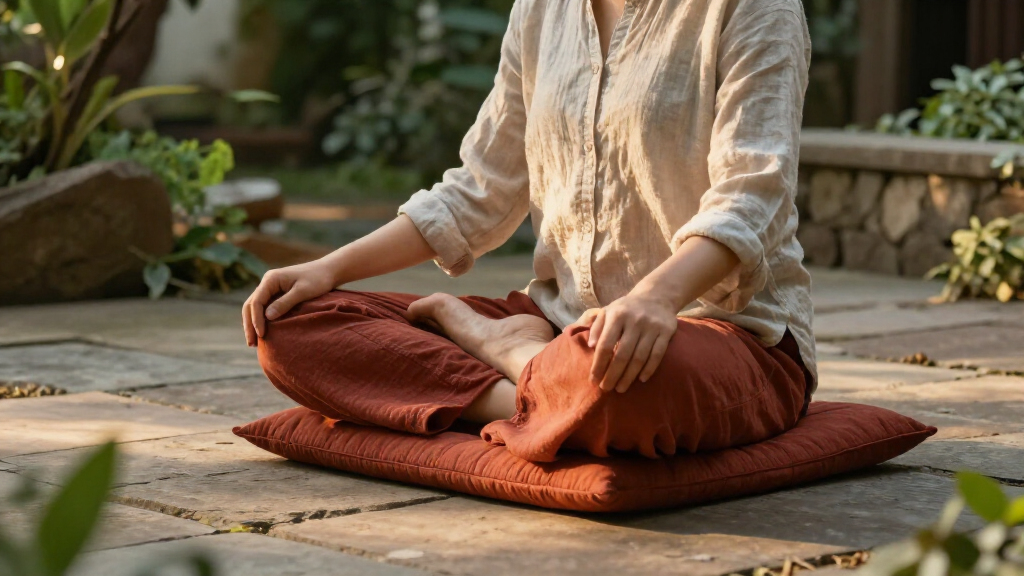
A meditation cushion is a seating aid that can raise your hips above your knees, help your pelvis tilt comfortably, and soften pressure on your ankles or knees. Its job is to make seated practice more comfortable and sustainable, not to create a spiritual experience. If your hips feel tight on the floor, a little lift may help your back feel less like it’s working to hold you upright.
Imagine sitting on a low cushion at home while the kettle clicks off nearby. With your hips slightly raised, your legs may settle more easily and your spine may feel easier to balance. If your knees still hang high or your feet tingle, that height or posture may not suit you. Try another position instead of asking your body to tolerate the discomfort.
A cushion doesn’t have to replace the floor or become part of a ritual. Some people sit on one for a few quiet minutes before work; others use a dining chair because the floor hurts their hips. Both choices can support a steady practice. The useful measure is comfort and stability, not whether your setup resembles someone else’s.
A cushion can support the body while you sit. It cannot promise calm, insight, or any other particular result.
Products Worth Considering

Levoit Eleva 300X Air Purifier with Fully Sealed HEPA Filtration and Smart Control

Levoit Vital 200S-P Smart Air Purifier for Large Rooms (up to 1875 ft²)

Hyperice Hypervolt 3 Percussion Massage Gun with Heated Head and Carry Case
As an affiliate, we earn on qualifying purchases.
Choose a Cushion Shape That Matches How You Sit
Choose a cushion shape according to the position you want to hold and the pressure points you want to support. A zafu is a round cushion often used to raise the seat; a zabuton is a flat mat placed beneath the seat to cushion the knees and ankles. You may use either one, both, or neither.
For example, someone who sits cross-legged on a wooden floor might try a zafu to lift the hips, then add a zabuton if the ankles press painfully into the boards. A curved crescent or moon cushion can leave more room for the legs. Rectangular cushions or benches can suit kneeling or a broader base, while bolsters and folding cushions can work for reclined practice or travel.
These names sometimes appear alongside particular traditions, but a shape doesn’t determine the meaning of your meditation. The cushion is a seat, and its usefulness depends on how it feels under your body. If you sit on a chair, you might not need one at all. A folded blanket can be a sensible first trial before you spend money on a new setup.
Think of choosing a shape like choosing shoes for a walk: the style matters less than where it presses and how steady you feel. Start with your posture, then consider whether you need more height, padding beneath your legs, or a portable seat.
Compare Fillings Before You Buy
Cushion fillings differ in weight, firmness, and how much you can adjust them. Buckwheat hulls shift around inside the cover, so you can often remove or add filling to change the seat height. They tend to feel firm and substantial, though the cushion can be heavy to carry. Kapok feels light and resilient but may be firmer and harder to reshape.
Foam often provides a consistent, lightweight seat, but you can’t shape it as readily as loose filling. Cotton batting can feel soft at first, then compress with use. These differences become clear in a simple scene: if you move your cushion from a bedroom to a quiet corner each evening, a heavy hull-filled cushion may feel like a chore. If your hips need a carefully adjusted height, that same filling may be useful.
| Filling | What it feels like | Trade-off to consider |
|---|---|---|
| Buckwheat hulls | Firm and adjustable | Heavier; may need refilling |
| Kapok | Light and resilient | Less adjustable |
| Foam | Light and consistent | Less shape adjustment |
| Cotton batting | Soft at first | Can compress over time |
Look for clear details about the filling, whether it can be replaced, and how to care for the cover. A removable cotton or linen cover may make cleaning easier. If a listing says a cushion is “eco-friendly,” look for specific material and sourcing details rather than treating the label alone as proof.
Test Your Sitting Height Before You Settle on a Cushion
Test your sitting height by trying a few firm supports and noticing whether your hips, knees, and back can settle without strain. There is no universal cushion height: body proportions, flexibility, posture, and the surface all affect what feels right. A height that suits your friend may leave your own knees floating in the air.
- Start with a firm support. Fold a blanket or use a firm pillow, then sit near its front edge in your usual posture.
- Check your legs. Notice whether your knees feel supported or hang above the floor, and whether your ankles press hard into it.
- Adjust the height. Add or remove a layer and pay attention to whether your pelvis can rest comfortably.
- Pause and reassess. If numbness, sharp pain, or growing discomfort appears, change position or stop.
- Try a chair if needed. A stable chair is a valid meditation seat, especially if the floor causes pain.
For instance, you might try a folded blanket in the evening and discover that a slightly higher seat makes cross-legged sitting easier, while a lower one feels better when kneeling. That gives you a useful starting point when comparing products. It doesn’t have to produce one perfect posture; a good setup gives you room to sit steadily and make small changes.
Think of the process like adjusting a bicycle seat: a few small changes can make a big difference to how the ride feels. Don’t force your body into full lotus or another position just because you saw it in a photo. Persistent pain is a reason to seek qualified clinical advice.
Keep Your Cushion Comfortable With Simple Care
Keep a meditation cushion comfortable by following its care label, protecting the cover from dirt, and checking whether the filling still supports you. Covers made of cotton or linen may be removable and washable, but care instructions vary. Loose fillings often call for airing or spot cleaning rather than a turn in the washing machine.
Picture a cushion used every day beside a sunny window: dust gathers on the fabric, and the seat gradually feels flatter. If the cover unzips, washing it according to the maker’s instructions can freshen the outside. If the cushion uses buckwheat hulls, check whether the maker sells replacement filling; cotton batting may compress over time and need attention.
There’s no single lifespan that fits every cushion. How long yours lasts depends on its materials, construction, frequency of use, and care. Look for compressed filling, damaged seams, or lost support as signs that you may need to refill or replace it. A cushion that no longer holds its shape can turn a comfortable seat into a wobbly one.
If you share a meditation space, washable covers can make regular use easier to manage. For travel, a lighter folding seat may be more practical than a heavy cushion, even if it offers less adjustability. Think about where the cushion will live and how you’ll carry or clean it before deciding which features matter most.
Build a Setup That Supports Your Practice, Not an Ideal Pose
A supportive practice setup gives your body a steady place to rest and leaves room to change posture. That could mean a zafu and zabuton on a quiet rug, a folded blanket on the living room floor, or a firm chair near a bright window. You don’t need special equipment to begin, and sitting on a chair is a valid choice.
Consider someone who has ten minutes before the rest of the household wakes. They could use a stable dining chair, place both feet on the floor, and sit without the knee pressure they get from crossing their legs. Another person may prefer a cushion because raising the hips makes floor sitting more comfortable. The right setup depends on the person, their mobility, and the surface beneath them.
Some current product themes include adjustable or refillable fillings, portable designs, washable covers, and more attention to different bodies and chair-based practice. Sellers may also describe materials as organic, recycled, or locally sourced. If those claims matter to you, look for specific descriptions rather than relying on a vague label.
Key aspects to compare include height, firmness, posture, cover care, adjustability, portability, durability, and material details. A product that suits your daily routine may be more useful than a beautiful cushion that stays packed in a closet. Like setting a table before a meal, your setup can make it easier to begin; it doesn’t decide what happens once you sit down.
- Choose a stable position that feels comfortable for your body.
- Try a folded blanket or pillow before buying a cushion.
- Check the cover and filling care instructions.
- Change posture if discomfort or numbness appears.
Frequently Asked Questions
What are spiritual meditation cushions for?
They are seating aids that can raise your hips, support a steadier posture, and soften pressure on your knees or ankles. The phrase is descriptive rather than a standardized product category, and a cushion does not define the spiritual meaning of your practice.
Do I need both a zafu and a zabuton?
No. A zafu raises and supports your seat, while a zabuton cushions your knees and ankles beneath it. You can try one, both, a folded blanket, or a chair depending on what feels comfortable.
How tall should my meditation cushion be?
There is no one height that suits everyone because body proportions, flexibility, posture, and the floor all matter. Try different heights with a folded blanket or firm pillow and notice whether your hips and knees feel settled.
Is buckwheat or kapok better?
Buckwheat hulls are adjustable and firm but make a heavier cushion. Kapok is lighter and resilient but can be harder to reshape. Your preferred firmness and whether you need to carry the cushion can guide the choice.
Can I meditate in a chair instead?
Yes. A stable chair is a valid seat, especially if floor sitting causes discomfort. Choose a position where you feel steady, and change your posture if pain or numbness develops.
How should I clean a meditation cushion?
Follow the maker’s care label. A removable cover may be washable, while the filling may need airing or spot cleaning. Check the instructions before washing any part of the cushion.
Conclusion
Choose your seat by how your body feels, not by the promise on a product label or the pose in a photograph. Try a folded blanket, adjust the height, and notice whether your hips, knees, and ankles can rest without strain. If a cushion helps, use one; if a chair feels better, sit there.
Let the seat support your practice, then let the practice be yours. A good cushion is the quiet place your body can land while you turn your attention inward.