
TL;DR

Turn your quiet moments into listening time
- Thousands of audiobooks, podcasts and originals
- Listen on your phone, tablet or Echo — also offline
- Cancel anytime
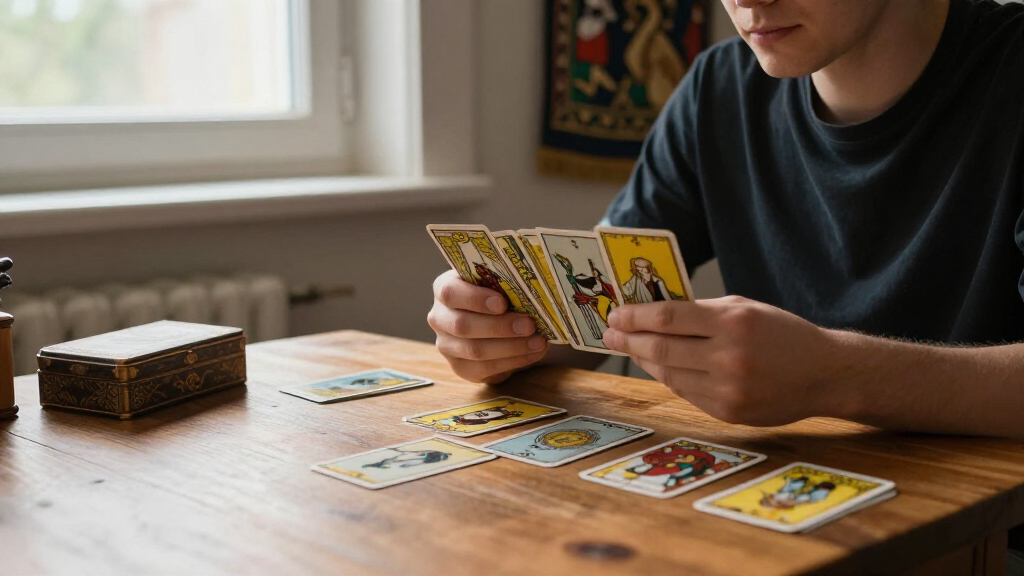
Tarot originally began as a courtly card game in the 15th century. Over centuries, it evolved into a tool for divination, a shift driven by cultural and spiritual developments. This story traces that transformation and its significance today, similar to how the artistic history of tarot reflects its cultural evolution.
Tarot, initially created as a courtly card game in the 15th century, has become a popular tool for divination and spiritual guidance today. This transformation reflects centuries of cultural shifts, spiritual movements, and changing perceptions of mysticism, making Tarot a significant element in contemporary spirituality.
Historically, Tarot cards originated in Italy during the 15th century as a form of entertainment among aristocratic circles. From card game to a tool of divination: the artistic history of tarot Known as ‘tarocchi,’ these cards were used for games and social gatherings, with no initial association with mysticism or divination.
It was not until the late 18th and early 19th centuries that Tarot began to be linked with mystical and esoteric practices. Influenced by the rise of occultism and spiritualism, Tarot cards were reinterpreted as tools for divination, prophecy, and personal insight, which is a topic explored in the history of tarot. This shift was driven by figures like Antoine Court de Gébelin, who claimed that Tarot held ancient Egyptian secrets, fueling interest in its mystical potential.
Today, Tarot decks are widely used in spiritual and therapeutic contexts, with millions of practitioners worldwide. The transition from a courtly game to a divinatory instrument marks a significant cultural evolution, reflecting changing attitudes toward mysticism and the human desire for guidance beyond conventional means.
Cultural and Spiritual Impact of Tarot’s Evolution
The transformation of Tarot from a courtly game to a divination tool highlights broader shifts in cultural attitudes toward spirituality, mysticism, and personal insight. It exemplifies how objects can acquire new meanings over time, influenced by social, spiritual, and esoteric movements.
This shift has contributed to the modern popularity of Tarot in wellness, therapy, and spiritual communities, shaping contemporary understandings of self-reflection and intuition. Recognizing its origins underscores the diversity of Tarot’s significance and its role in cultural history.
As an affiliate, we earn on qualifying purchases.
Historical Roots and Changing Perceptions of Tarot
Tarot cards first appeared in Italy in the 15th century as a leisure activity among aristocrats. Known as ‘tarocchi,’ these cards had no mystical connotations initially. It was only in the late 18th century that Tarot was linked with occult practices, influenced by the rise of spiritualism and esoteric societies. Prominent figures like Antoine Court de Gébelin propagated the idea that Tarot contained ancient Egyptian symbolism, which helped popularize its use for divination.
Throughout the 19th and 20th centuries, Tarot’s mystical reputation grew, with various decks and interpretations emerging. The modern image of Tarot as a spiritual tool was solidified by the New Age movement and popular culture, making it a staple in contemporary spiritual practices.
“Tarot’s origins as a courtly card game are well-documented, but its transformation into a divinatory tool is largely a product of esoteric reinterpretation during the 18th century.”
— Dr. Lisa Miller, historian of esoteric traditions
Unclear Aspects of Tarot’s Mystical Adoption
It remains uncertain precisely when and how Tarot’s mystical associations fully overshadowed its original purpose as a game. While influential figures like Court de Gébelin contributed to this shift, the extent of popular adoption and the timeline of this transformation are still debated among historians. Additionally, the specific cultural factors that accelerated Tarot’s mystical reputation in different regions are not fully understood.
Future Trends in Tarot’s Cultural and Spiritual Role
Researchers and practitioners are exploring new interpretations and applications of Tarot in therapy, mindfulness, and spiritual development. As interest in alternative spirituality continues to grow, Tarot’s role may evolve further, possibly integrating with digital platforms and new forms of personal guidance. Ongoing scholarly work aims to better understand its historical roots and cultural significance.
Key Questions
When did Tarot first become associated with divination?
Although Tarot originated as a card game in the 15th century, its association with divination began in the late 18th century, influenced by occult and esoteric movements.
Are Tarot cards originally designed for mystical purposes?
No, initially Tarot cards were created as a social game among European aristocrats. Their mystical use developed later, driven by esoteric interpretations.
Why did people start believing Tarot could predict the future?
Influential figures and occultists in the 18th and 19th centuries promoted the idea that Tarot contained secret knowledge, which helped establish its reputation as a tool for divination.
Is Tarot still used as a game today?
Yes, Tarot is still played as a game in some regions, but its primary use today is for spiritual guidance, self-reflection, and divination.
How has modern culture influenced Tarot’s popularity?
Popular culture, including books, movies, and social media, has helped normalize Tarot as a spiritual and psychological tool, expanding its reach worldwide.
Source: rss
Fall Picks
fall essentials
As an affiliate, we earn on qualifying purchases.