

Visualization can boost your learning confidence by turning complex ideas into clear mental images, helping you understand and remember better. It also lets you organize information with mental maps and rehearse skills mentally, reducing anxiety and reinforcing your abilities. By regularly using visualization alongside other strategies, you’ll strengthen neural connections and feel more prepared. Keep exploring, and you’ll discover even more ways to enhance your confidence through powerful mental techniques.

Turn your quiet moments into listening time
- Thousands of audiobooks, podcasts and originals
- Listen on your phone, tablet or Echo — also offline
- Cancel anytime
Key Takeaways
- Visualization transforms abstract concepts into mental images, making learning more tangible and easier to understand.
- Creating mental maps helps organize information, enhancing clarity and boosting confidence in recall.
- Regular mental rehearsal reduces anxiety and reinforces understanding, leading to increased learning confidence.
- Combining visualization with other techniques strengthens neural pathways, making learning more effective and self-assured.
- Visualization provides a mental toolkit that improves preparedness, reduces doubts, and fosters confidence in skills.
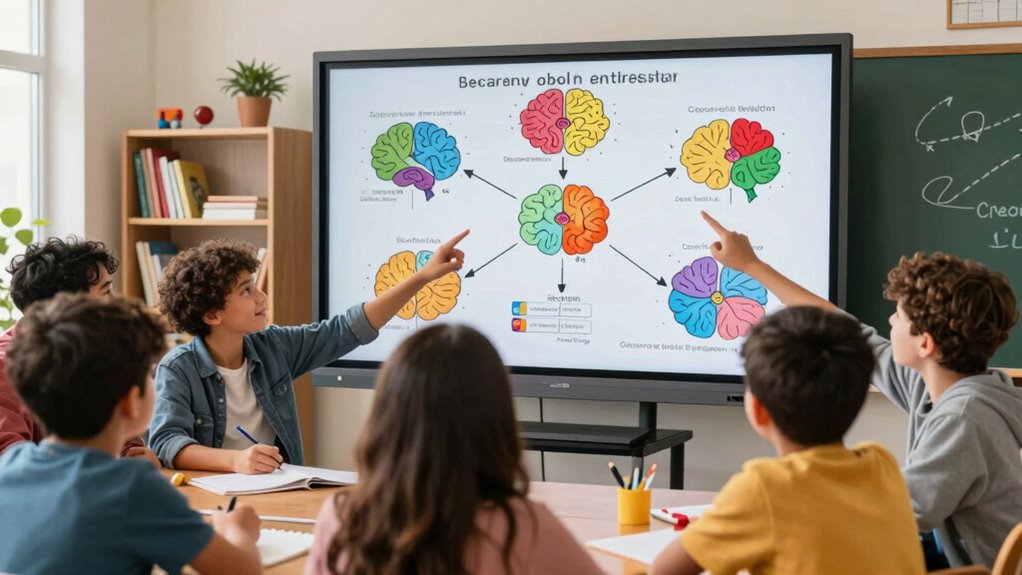
Visualization plays an essential role in building your learning confidence by turning abstract concepts into tangible images that your brain can process more effectively. When you visualize, you’re fundamentally creating mental pictures that make complex ideas easier to grasp. This technique isn’t just about daydreaming; it’s a powerful tool for improving understanding and retention. By mentally rehearsing information, you reinforce neural pathways, making it easier to recall details when needed. This process, known as mental rehearsal, allows you to practice skills or review material in your mind, reducing anxiety and increasing confidence in your abilities.
Visualization transforms abstract ideas into clear mental images, boosting understanding, retention, and confidence in your learning journey.
Cognitive mapping is another crucial component of visualization that boosts your learning confidence. It involves creating mental maps or diagrams that organize information logically and visually. When you develop cognitive maps, you’re essentially outlining the relationships between concepts, which helps you see the bigger picture and understand how pieces fit together. This visual organization makes studying more efficient because you’re not just memorizing isolated facts but understanding the connections between ideas. As a result, you become more confident in your grasp of the subject, knowing you have a clear mental framework to guide your recall.
Using visualization to enhance learning confidence isn’t complicated. Start by identifying key concepts or skills you want to master. Then, close your eyes and imagine a vivid scene that represents those ideas—like picturing yourself solving a problem or explaining a concept to someone else. Incorporate sensory details to make the image more realistic and memorable. As you do this regularly, your brain begins to associate these mental images with actual performance, reducing doubts and boosting self-assurance. Additionally, understanding the importance of projector contrast ratios can help you better visualize how image quality impacts your overall viewing experience, whether for studying or entertainment.
Incorporating visual learning techniques into your routine can further strengthen your ability to recall information and build confidence, especially when combined with other strategies. Combining mental rehearsal with cognitive mapping creates a powerful synergy—visualizing the steps involved in a task while organizing related information visually helps solidify your understanding and confidence. In fact, research shows that visualization enhances neural connections, making learning more durable and effective. Recognizing that neural pathways are strengthened through repeated visualization can motivate you to practice consistently, knowing that your brain is physically adapting to support your learning. Moreover, understanding how indoor air quality affects cognitive function highlights the importance of a healthy environment for optimal learning performance. Involving multiple senses and techniques enhances the effectiveness of visualization, making it a comprehensive approach to mastering new material. Incorporating visualization into your study routine is straightforward. Take a few minutes each day to mentally rehearse challenging topics or practice explaining concepts through vivid imagery. Draw out cognitive maps on paper or use mental visualization to create a mental landscape of the material. Over time, these techniques become second nature, and you’ll notice a shift in how you approach learning. You’ll feel more prepared and less anxious, knowing you have a mental toolkit that makes complex information more accessible. Visualization, especially when paired with mental rehearsal and cognitive mapping, becomes a crucial strategy for building enduring learning confidence.
As an affiliate, we earn on qualifying purchases.
Frequently Asked Questions
How Quickly Can Visualization Techniques Boost Learning Confidence?
You can see improvement in learning confidence quite quickly with visualization techniques, especially through mental rehearsal and sensory engagement. When you actively imagine yourself succeeding and involve your senses, you reinforce positive beliefs and reduce anxiety. With consistent practice, you might notice boosted confidence within days or weeks. The key is to stay committed, mentally rehearse regularly, and engage all your senses to strengthen your belief in your abilities.
Are There Specific Subjects Where Visualization Is More Effective?
You’ll find visualization most effective with abstract concepts and complex subjects, as studies show it can improve understanding by up to 60%. When tackling subjects like mathematics, science, or philosophy, imagining diagrams, processes, or scenarios helps clarify intricate ideas. Visual tools make these challenging topics more accessible, boosting your confidence and retention. So, using visualization in these areas can turn confusion into clarity and make learning more engaging.
Can Visualization Replace Traditional Study Methods Entirely?
Visualization can’t replace traditional study methods entirely because it works best alongside techniques like mind mapping and sensory engagement. These methods help organize information and deepen understanding, making your learning more effective. While visualization boosts memory and confidence, relying solely on it may leave gaps. Combining it with active note-taking, reading, and practice guarantees a well-rounded approach, helping you learn efficiently and retain knowledge longer.
What Are Common Mistakes When Using Visualization for Learning?
Oh, the classic mistake of thinking mental imagery alone magically boosts your brainpower. You might fall for cognitive bias, believing vivid pictures replace actual studying. Instead, you skip critical analysis and rely solely on visualization, thinking it’s enough. But forget that, because true learning needs active engagement, not just pretty mental images. Overestimating visualization’s power, you risk neglecting foundational study methods, turning your brain into a mental picture gallery with no real knowledge inside.
Is Visualization Suitable for All Age Groups and Learning Styles?
Visualization can be effective across all age groups and learning styles when you adapt techniques accordingly. For children, use colorful images and simple visuals, while adults might benefit from detailed diagrams. Tailor your approach to your learning style—visual learners thrive with imagery, whereas kinesthetic learners might prefer drawing or physical activities. Using age-specific techniques and ensuring learning style compatibility helps maximize visualization’s benefits, making it a versatile tool for everyone.
Conclusion
By blending bold visuals with your learning process, you boost belief and build better confidence. Visualization’s vivid, vibrant images transform tension into trust, turning tricky tasks into tangible triumphs. When you leverage lively, logical images, you’ll notice noticeable progress and newfound confidence. So, seize the power of pictures, practice persistently, and propel your potential. Remember, with visualization, your confidence can climb, create, and conquer—making learning not just easier, but also exhilarating!
Fall Picks
fall essentials
As an affiliate, we earn on qualifying purchases.