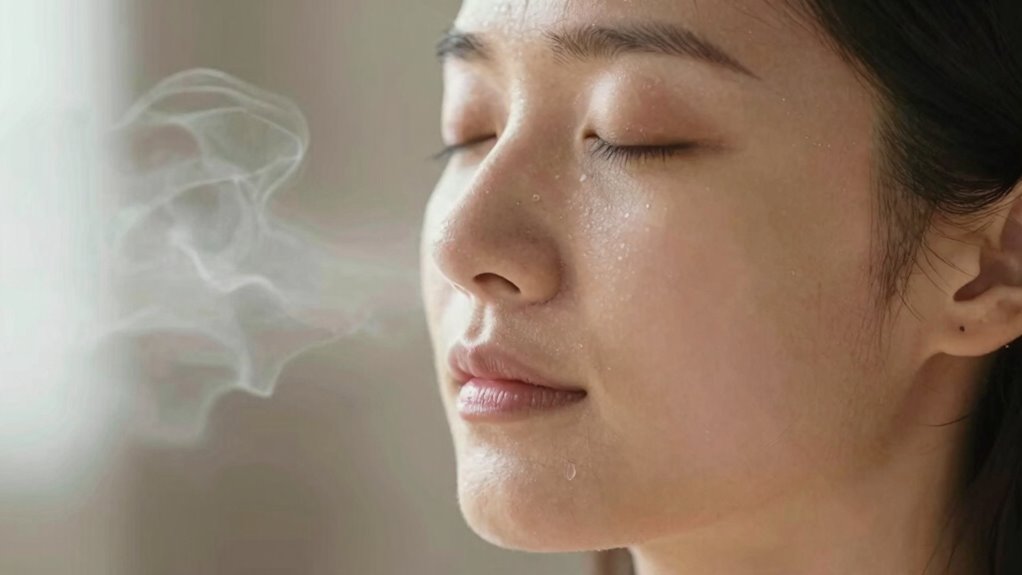

Breath awareness improves calm by helping you regulate your stress response and stay present. When you focus on your breath, you send calming signals to your brain, reducing feelings of anxiety. Slowing and deepening your breathing creates a mental pause, anchoring you in the current moment and easing tension. Regular practice strengthens this connection, making it easier to access peace anytime. Keep exploring to discover how simple breathing techniques can transform your sense of calm.

Turn your quiet moments into listening time
- Thousands of audiobooks, podcasts and originals
- Listen on your phone, tablet or Echo — also offline
- Cancel anytime
Key Takeaways
- Focusing on breath shifts mental states from stress to relaxation by promoting mindfulness and present-moment awareness.
- Deep, slow breathing signals the nervous system to activate calming responses, reducing stress hormones.
- Breath awareness creates a mental pause, helping to break free from worries and emotional overwhelm.
- Regular practice rewires the body’s response to tension, enhancing overall emotional resilience.
- Incorporating sound and mindfulness techniques amplifies relaxation, reinforcing feelings of calm through physiological and mental pathways.
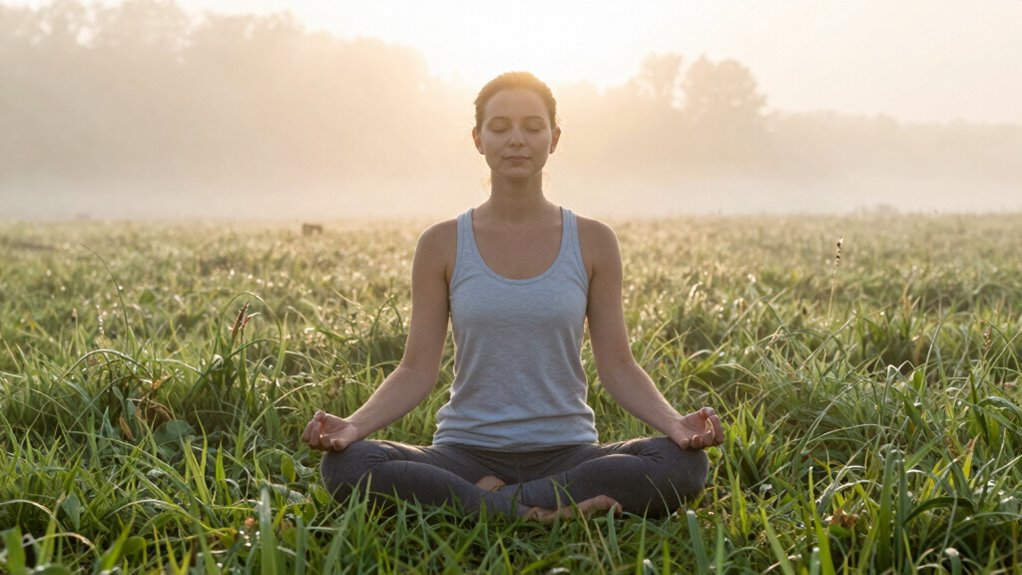
Have you ever noticed how your breath can influence your mood and sense of calm? It’s a simple yet powerful connection that many overlook. When you pay attention to your breathing, you tap into a natural tool for managing stress and cultivating a sense of peace. Mindfulness techniques centered around breath awareness allow you to anchor yourself in the present moment, helping you break free from worries about the past or future. This practice isn’t just about calming down; it’s about shifting your mental state to a more balanced, centered place.
When stress starts to build, your breathing often becomes shallow and rapid, signaling your nervous system to react. By consciously slowing and deepening your breath, you send a calming signal to your brain. This act of deliberate breathing isn’t just relaxing—it’s a form of stress reduction that rewires your body’s response to tension. As you focus on each inhale and exhale, you create a pause, giving your mind a chance to escape the chaos of daily life and settle into tranquility. It’s like giving yourself a mental reset button, one that’s always available through your breath. Incorporating proper breathing techniques can enhance the benefits of breath awareness even further. Additionally, understanding how sound vibrations influence brainwave patterns can deepen your practice and promote relaxation.
Practicing mindfulness techniques related to breath awareness can be surprisingly easy and effective. You don’t need special equipment or a lot of time—just a quiet space and your attention. You might start by simply observing your natural breathing pattern without trying to change it. Over time, you can introduce techniques such as diaphragmatic breathing or counting breaths to deepen your practice. As you become more mindful of your breath, you’ll notice how your body responds—your shoulders relax, your heart rate slows, and your overall sense of tension diminishes. This heightened awareness reinforces the calming effect, making it easier to access this state whenever you need it. Recognizing the natural connection between breath and mood can motivate you to make this a regular part of your routine. Developing this awareness can also be supported by mindfulness practices, which help strengthen your focus and presence.
Incorporating breath awareness into your daily routine can markedly improve your emotional resilience. It’s a straightforward way to regain control when life feels overwhelming. As you practice regularly, you’ll find that your response to stress becomes more measured and less reactive. This steady, intentional focus on your breath acts as a mental anchor, grounding you in the present and fostering a sense of calm that extends beyond moments of immediate stress. Ultimately, understanding why breath awareness improves calm reveals a simple truth: your breath is always with you, ready to guide you toward peace whenever you need it. Recognizing the importance of well-drained soil and full sun for certain plants reminds us how essential proper conditions are for growth and stability—just like a healthy mind needs the right environment to flourish.
diaphragmatic breathing exercise tools
As an affiliate, we earn on qualifying purchases.
As an affiliate, we earn on qualifying purchases.
Frequently Asked Questions
Can Breath Awareness Reduce Anxiety Instantly?
Yes, breath awareness can reduce anxiety instantly. When you practice mindfulness meditation and focus on your breath, you activate your body’s relaxation response. Respiratory exercises help slow your breathing, lowering heart rate and easing tension. By consciously controlling your breath in the moment, you shift your mind away from stressors, creating immediate calm. Regular practice enhances this effect, making it easier to manage anxiety over time.
Is Breath Awareness Effective for Chronic Stress?
Breath awareness is highly effective for chronic stress, much like a steady anchor in turbulent waters. By practicing mindfulness techniques, you can regulate your physiological responses, reducing cortisol levels and calming your nervous system. Regularly focusing on your breath helps retrain your body’s stress response, creating resilience over time. Incorporating this simple habit into your daily routine can considerably ease long-term stress, fostering a sense of calm and stability.
How Long Should I Practice Breath Awareness Daily?
You should practice breath awareness for at least 10 to 15 minutes daily, focusing on breath timing and maintaining practice consistency. Regular sessions help you develop better control over your breath, which promotes calmness. As you become more comfortable, you can extend your practice gradually. The key is to make it a daily habit, ensuring that your breathing exercises become an integral part of your routine for lasting benefits.
Does Breath Awareness Improve Sleep Quality?
Practicing breath awareness can considerably improve your sleep quality; studies show it reduces insomnia symptoms by calming your nervous system. When you focus on your breath, it enhances sleep hygiene by lowering stress and promoting relaxation. This practice helps you fall asleep faster and enjoy more restful nights. By incorporating breath awareness into your bedtime routine, you set the stage for more peaceful, restorative sleep every night.
Can Breath Awareness Help With Emotional Regulation?
Yes, breath awareness can help you with emotional regulation. By focusing on your breath, you strengthen your emotional resilience, making it easier to manage stress and strong feelings. It promotes mood stability by calming your nervous system and reducing reactive responses. Regular practice helps you become more aware of your emotional states, empowering you to respond thoughtfully instead of impulsively, leading to a more balanced and centered emotional life.
Conclusion
So, next time life feels overwhelming, remember that simply paying attention to your breath can turn chaos into calm. It’s ironic how something so effortless—just inhaling and exhaling—can be your secret weapon against stress. Instead of complex solutions, you’ve got your own body’s built-in peacekeeper. Just breathe consciously, and watch the storm inside you settle quietly, as if calm were just a breath away, waiting to be uncovered in the most ordinary act.
Fall Picks
fall essentials
As an affiliate, we earn on qualifying purchases.