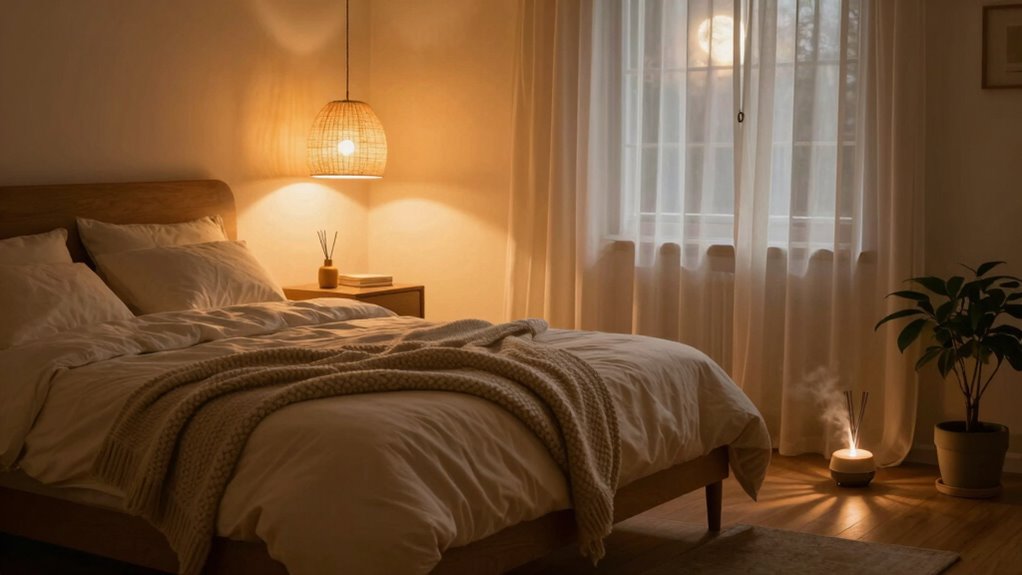

To create a calming bedtime environment, start by keeping your space quiet, dark, and clutter-free to reduce external stimuli. Use dim, warm lighting or candlelight and diffuse calming scents like lavender or chamomile to promote relaxation. Establish a consistent routine, avoiding screens and bright lights at least an hour before bed. Incorporate relaxing activities such as reading or listening to soft music. For more tips to enhance your sleep space, keep exploring these simple strategies.

Turn your quiet moments into listening time
- Thousands of audiobooks, podcasts and originals
- Listen on your phone, tablet or Echo — also offline
- Cancel anytime
Key Takeaways
- Use soft, warm lighting or candlelight to create a cozy, relaxing atmosphere.
- Incorporate calming scents like lavender or chamomile through diffusers or pillows.
- Keep the bedroom quiet, dark, and free of distractions to promote restful sleep.
- Declutter the space to reduce visual stimulation and enhance relaxation.
- Establish a consistent bedtime routine with calming activities to signal wind-down time.
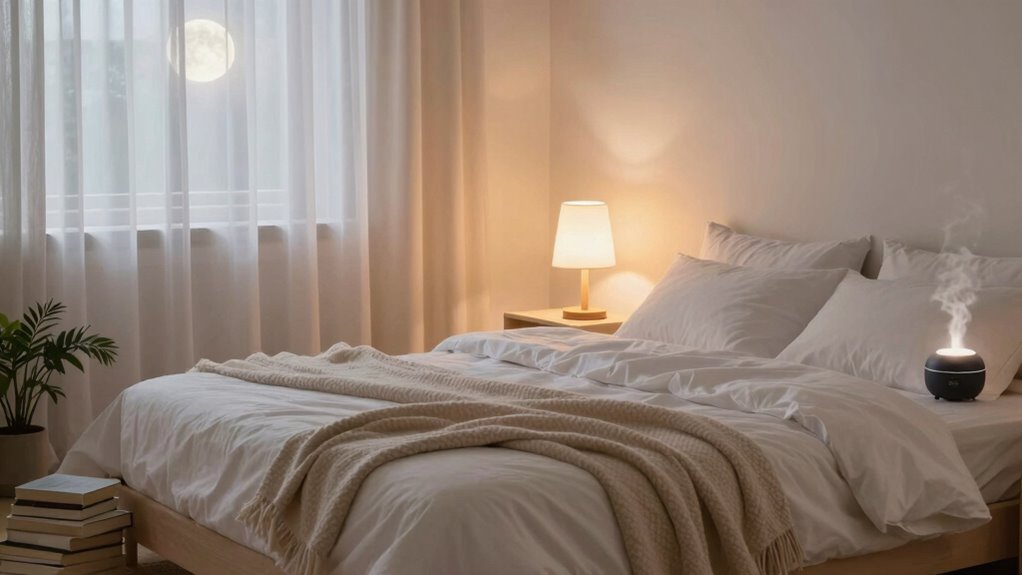
Creating a calming bedtime environment can make a significant difference in how easily you fall asleep and how restful your night is. When your surroundings are peaceful and inviting, your mind relaxes, making it easier to drift into sleep. One way to promote relaxation is through dream journaling. Keeping a journal by your bedside allows you to jot down your thoughts or dreams before bed, helping clear your mind of lingering worries or ideas. This simple act can improve your sleep quality by giving your brain a designated space to process the day’s events, preventing racing thoughts that often keep you awake. Over time, dream journaling can also enhance your ability to remember dreams, which many find intriguing and calming.
In addition to mental routines, creating a sensory-friendly environment plays a crucial role. Aromatherapy benefits are well-known for their soothing effects, so consider integrating calming scents into your bedtime routine. Lavender, chamomile, and ylang-ylang are popular choices because they promote relaxation and reduce stress. Diffusing essential oils in your bedroom or adding a few drops to your pillow can create a tranquil atmosphere. The gentle aroma not only helps you unwind but also signals to your brain that it’s time to relax, making it easier to shift from wakefulness to sleep. Combining aromatherapy with other calming practices, like dimming lights and reducing noise, amplifies the overall effect. Incorporating environmental stimuli reduction strategies can further enhance your sleep environment by minimizing disruptions from external sources.
Your choice of lighting is equally important when setting the scene for sleep. Opt for soft, warm lights or candlelight to create a cozy ambiance. Bright, harsh lights can interfere with melatonin production, the hormone responsible for regulating sleep. Avoid screens at least an hour before bed, as the blue light emitted can disrupt your natural sleep cycle. Instead, read a book or listen to calming music, both of which can help you unwind further. Establishing a consistent bedtime routine signals to your body that it’s time to wind down, reinforcing the calming environment you’re creating. Additionally, sleep-friendly lighting can help improve your overall sleep quality by supporting your natural circadian rhythm. Furthermore, reducing environmental stimuli by keeping your bedroom quiet and dark can further promote restful sleep, as noise and light pollution are known to interfere with sleep quality. Ensuring that your sleep space is also free of clutter and distractions aligns with the importance of a clutter-free environment for optimal relaxation and sleep.
As an affiliate, we earn on qualifying purchases.
Frequently Asked Questions
Can Pets Affect My Bedtime Environment?
Pets can definitely influence your bedtime environment. If you have pet allergies, their presence might cause sneezing or discomfort, making it harder to relax. On the other hand, pet companionship can provide comfort and reduce anxiety, helping you unwind. To create a calming space, consider designating pet-free zones or using air purifiers. Balancing your pet’s presence with your comfort needs ensures a peaceful, restful bedtime environment.
What Colors Promote Relaxation at Bedtime?
You might think bright reds or bold yellows are the way to go, but actually, soothing shades are what truly transform your bedtime. Color psychology shows that soft blues, gentle greens, and muted lavenders promote relaxation and tranquility. These calming hues help slow your mind, lower stress, and prepare you for restful sleep. Embrace these peaceful shades—your mind and body will thank you for the serenity they bring to your nightly routine.
Is It Better to Read or Listen to Music Before Sleep?
Listening to music is often better before sleep because it combines relaxation techniques with your sleep routine, helping you unwind more effectively. Music can slow your heart rate and reduce stress, making it easier to fall asleep. Reading can be calming too, but it might stimulate your mind, making it harder to relax. Choose what works best for you, and aim for a consistent bedtime routine to improve your sleep quality.
How Does Room Temperature Impact Sleep Quality?
Think of your room temperature as the Goldilocks’ bed—just right for a peaceful sleep. When it’s too hot or cold, your body’s temperature regulation and sleep cycle get disrupted, making it harder to fall asleep and stay asleep. Maintaining a cool, comfortable environment helps your body naturally regulate temperature, supporting deeper rest. Ideally, keep your room around 60-67°F for ideal sleep quality and uninterrupted dreams.
Should I Use White Noise or Silence for Better Sleep?
You should try white noise for better sleep, especially if you’re sensitive to sudden sounds. Sound therapy like gentle white noise can mask disruptive noises and create a consistent auditory environment. Incorporate it into your sleep rituals by playing it softly as you wind down. If you prefer silence, make certain your room is quiet enough to promote peaceful rest. Experiment to find what helps you relax and fall asleep most easily.
Conclusion
Creating a calming bedtime environment helps you unwind and enjoy restful sleep. Keep your space quiet, dim, and clutter-free, and establish a soothing pre-sleep routine. Remember, a peaceful mind leads to peaceful dreams—”A good laugh and a long sleep are the best cures in the doctor’s book.” By making small adjustments, you’ll find bedtime becomes a cozy retreat rather than a chore. Sweet dreams await when your environment feels just right.
Fall Picks
fall essentials
As an affiliate, we earn on qualifying purchases.