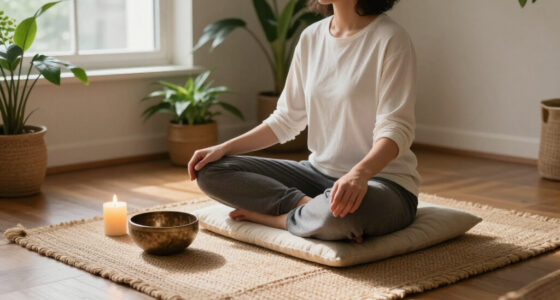
This guide helps beginners choose and use a cushion for seated spiritual meditation. You will compare cushion shapes and fillings, set up a safe sitting position, and adjust the height so you can remain steady without forcing your hips, knees, or back. Allow about 20-30 minutes to set up and test a cushion you already have; shopping for one may take longer.

Turn your quiet moments into listening time
- Thousands of audiobooks, podcasts and originals
- Listen on your phone, tablet or Echo — also offline
- Cancel anytime

Retrospec Sedona Zafu Meditation Cushion
- ✔ Shape: Crescent
- ✔ Dimensions: 17 × 10.5 × 5.5 inches
- ✔ Fill: Buckwheat hulls

Cheer Collection Buckwheat Meditation Cushion, Small, Gray
- ✔ Shape: Round
- ✔ Dimensions: 15 inches diameter × 6 inches high
- ✔ Fill: Adjustable buckwheat hulls

Hihealer Crescent Meditation Cushion with Buckwheat Hull Filling
- ✔ Shape: Crescent
- ✔ Dimensions: 25.2 × 9.5 inches
- ✔ Listed thickness: 1 inch
Difficulty: Beginner | Time: 20-30 minutes to choose and set up; allow extra time to try different cushions
What You’ll Need
Tools & Materials:
- A meditation cushion, firm pillow, or folded blanket for testing
- A firm, level floor or meditation mat
- Optional: a ruler or tape measure to compare cushion height
Knowledge:
- No meditation experience is required
- You should be able to sit on the floor, or be willing to use a chair if floor sitting is uncomfortable
Choose support for your body and practice rather than for a spiritual label, color, or tradition. A cushion can make sitting more comfortable, but it does not need to be specially branded or blessed. If you have an injury, persistent pain, or restricted movement, follow advice from a qualified health professional and use a chair if needed.
Retrospec Sedona Zafu Meditation Cushion
The Retrospec Sedona makes the strongest all-around case for a regular seated practice because it combines a crescent profile with adjustable buckwheat hulls. We can change the fill to alter the cushion’s fullness and firmness, which gives it an advantage over choosing a fixed-feel floor pillow when posture or comfort preferences are still evolving. Its listed 5.5-inch height provides a raised seat, though that height may feel excessive or insufficient depending on mobility and preferred sitting position.Compared with Cheer’s round cushion, Sedona gives up a simple circular footprint in favor of a crescent shape that may leave more room for the legs. Its 17-inch length is also broader than Cheer’s 15-inch diameter, while Cheer stands half an inch taller. The cotton cover and machine-washable care make routine upkeep clearer than Hihealer’s velvet option, whose care details are not supplied. A carrying handle helps when moving it between a meditation space and another room.There are practical compromises: buckwheat fill often needs adjustment before it feels right, and the product listing does not tell us how much fill can be removed or added. The one-year limited warranty is useful context, but the cushion remains a single seat rather than a complete meditation set. We’d choose it for a flexible, portable starting point; buyers who want a round seat or an especially tall cushion should compare Cheer directly.
Pros:
- Adjustable buckwheat hull fill allows changes to firmness and fullness.
- Crescent shape offers an alternative to a round, centered seat.
- Cotton cover is machine washable.
- Carrying handle and one-year limited warranty add practical convenience.
Cons:
- Buckwheat hulls may need repositioning or adjustment to reach a preferred feel.
- The 5.5-inch height will not suit every posture or mobility preference.
- Only one cushion is included.
Best for: Meditators who want a portable crescent seat with adjustable support and an easy-care cotton cover.
Not ideal for: People who prefer a round sitting surface, want a plush cushion, or already know that a 5.5-inch seat is not the right height for them.
Bottom line: For most buyers seeking a spiritual meditation seat, Sedona offers the clearest balance of adjustability, portable crescent design, and straightforward care.
“For most buyers seeking a spiritual meditation seat, Sedona offers the clearest balance of adjustability, portable crescent design, and straightforward care.”
Cheer Collection Buckwheat Meditation Cushion, Small, Gray
Cheer Collection is the most clearly specified choice for buyers who want a small, round meditation seat. Its 15-inch diameter gives the cushion a defined footprint, and the six-inch height makes it half an inch taller than the Retrospec Sedona. For someone who prefers a centered seat and needs to fit a cushion into a compact practice area, that shape may be easier to place and store than Sedona’s longer crescent.The round design also means less of the leg-facing cutaway associated with a crescent cushion. Compared with Hihealer, Cheer provides a stated six-inch height and removable fill, so the buyer has more concrete information about how the cushion may function as a raised seat. Its buckwheat hulls can be added or removed to alter fullness, and the removable, machine-washable cover helps keep maintenance manageable. The built-in handle and listed 3.2-pound weight support moving it between spaces.Compactness has a cost: the small surface may not suit every body size or seated position, and a round cushion may feel restrictive to people who need more room for their legs. Like Sedona, the hull filling is firmer than plush fiber, and adjustment can require trial and error. Its cotton-blend cover includes microfiber, unlike Sedona’s cotton cover, so shoppers seeking a fully cotton cover should choose Retrospec. Cheer is best when a modest circular footprint matters more than a crescent’s leg clearance.
Pros:
- Round 15-inch shape suits a compact, centered practice setup.
- Six-inch height and adjustable fill allow changes to the seat profile.
- Removable cover is machine washable.
- Built-in handle and stated 3.2-pound weight make it easy to move.
Cons:
- Small dimensions may feel limiting for some seated positions.
- Buckwheat hulls provide a firmer feel than plush fiber filling.
- Cotton-blend cover is not all cotton.
Best for: Meditators with limited floor space who prefer a compact round cushion and want removable fill.
Not ideal for: People who need a broad seat, prefer crescent leg clearance, or want a soft, plush floor pillow.
Bottom line: Cheer is the best fit when we want a compact round cushion with adjustable fill and a stated six-inch seat height.
“Cheer is the best fit when we want a compact round cushion with adjustable fill and a stated six-inch seat height.”
Hihealer Crescent Meditation Cushion with Buckwheat Hull Filling
Hihealer offers a more specialized take on the crescent cushion: a firm buckwheat-filled seat with a velvet cover and a carry handle. The curved shape is intended to support seated posture and reduce pressure on the knees and ankles, making it relevant to buyers who specifically want a crescent design for meditation or floor relaxation. Compared with Retrospec, however, its fill is described as firm without a stated adjustment feature, so it appears less adaptable if the initial feel is not right.The biggest comparison point is the listed thickness: one inch. That is much thinner than Retrospec’s 5.5-inch height or Cheer’s six-inch height, both of which are more clearly positioned as raised seats. The Hihealer dimensions list a length and width but not a height separate from the thickness, so buyers should confirm that this low profile matches their intended seated posture before choosing it. Its velvet cover gives it a distinct tactile and visual character, but the supplied details do not specify whether that cover is removable or washable.We place Hihealer third because its crescent form and firm fill may appeal to a defined preference, yet the thin listed profile and missing care information make it a less straightforward recommendation for most meditation routines. It also specifies indoor use only, while Retrospec and Cheer offer handles and clearer care guidance. This model makes the most sense for someone who prioritizes the velvet finish and wants a low, firm surface; buyers seeking adjustable elevation should look to either of the other two.
Pros:
- Crescent shape is designed for seated meditation posture.
- Firm buckwheat filling offers a stable, contouring feel.
- Velvet cover gives it a distinct finish compared with the cotton options.
- Carry handle supports moving it around the home.
Cons:
- Listed thickness is only one inch, much less than the other cushions’ stated heights.
- Fill adjustment and cover care are not specified.
- Recommended for indoor use only.
Best for: Buyers who want a firm, low-profile crescent cushion with a velvet cover for indoor practice.
Not ideal for: Anyone looking for a clearly elevated seat, adjustable fill, specified washable cover, or outdoor use.
Bottom line: Hihealer suits shoppers who specifically want a firm velvet crescent, but its one-inch listed thickness makes fit verification essential.
“Hihealer suits shoppers who specifically want a firm velvet crescent, but its one-inch listed thickness makes fit verification essential.”
As an Amazon Associate we earn from qualifying purchases.
Before You Start
Set aside a quiet, level space where you can sit without being disturbed. Wear clothing that lets your hips and knees bend freely. Plan to test your position for a few minutes at a time; discomfort is useful information, not something you need to push through. Stop and change position if you feel sharp pain, numbness, tingling, or worsening joint discomfort.
Step-by-Step Instructions
Step 1: Decide how you want to sit
Choose a posture you can maintain without strain. You can sit cross-legged, kneel with a cushion between your ankles, or sit on a chair with your feet flat on the floor. If you are new to floor sitting, start with the position that lets your knees rest comfortably and your torso stay upright. You do not need to copy a particular meditation posture.
Tip:Flexibility varies. A posture that works for someone else may not suit your hips, knees, or ankles.
Check: You can hold the position briefly without forcing your legs or rounding your back.
Step 2: Select a cushion shape
Match the cushion shape to your chosen posture. A round, firm cushion, often called a zafu, raises the hips for cross-legged sitting. A crescent cushion can give the thighs more room. A rectangular kneeling cushion or bench supports a kneeling posture. For chair meditation, use a stable seat pad only if it does not make your feet dangle or your chair feel unsteady.
Tip:When possible, sit on a display cushion before buying. Product names and traditional associations do not tell you whether a shape fits your body.
Check: The cushion supports your sitting bones or knees without pressing sharply into them or blocking your legs.
Step 3: Check the filling and firmness
Choose filling that feels supportive rather than plush or hard. Buckwheat hulls conform to your shape and can often be added or removed. Kapok and other fiber fillings tend to feel lighter and springier. Foam is easy to maintain but may compress differently over time. Sit on the cushion for several minutes and notice whether it sinks enough to tilt your pelvis or feels so hard that pressure builds.
Tip:Check whether the cover can be removed and washed, and whether the filling can be adjusted or replaced. These details affect upkeep and how long the cushion stays useful.
Check: Your weight feels evenly supported, and the cushion retains enough height to keep your hips above or level with your knees.
Step 4: Set the cushion on a stable surface
Place the cushion on a level floor or a non-slip mat. Center it so it cannot slide as you sit down or shift your weight. If the floor is hard, add a folded blanket or meditation mat under your knees and ankles. Keep any extra padding flat so it does not make the base unstable.
Tip:Do not stack soft pillows under the cushion. They may shift and make balance harder.
Check: The cushion stays in place when you sit down, and your knees or ankles have enough padding to rest comfortably.
Step 5: Sit and adjust your height
Sit toward the front half of the cushion and let your knees lower toward the floor. Cross your legs only as far as they move comfortably, or settle into your kneeling posture. If your knees sit noticeably higher than your hips, raise the cushion with firm, stable support or remove filling if the cushion feels too high. Make one small adjustment at a time, then sit again.
Tip:For a cushion with adjustable filling, open the cover over a clean surface and remove a small amount at a time. Keep the filling dry and store any extra in a sealed container.
Check: Your pelvis feels stable, and your hips are level with or slightly higher than your knees without pressure building quickly.
Step 6: Align your torso and legs
Rest your hands on your thighs and lengthen your spine without stiffening. Let your shoulders drop, keep your chin level, and allow your lower back to retain a natural curve. Adjust your legs or add flat padding under your knees if they hover uncomfortably. Keep your breathing easy; avoid holding yourself rigid to achieve a particular appearance.
Tip:If floor sitting remains uncomfortable after adjustment, use a chair with your feet supported. A chair is a valid meditation seat.
Check: You can breathe normally, relax your shoulders, and remain upright without bracing your back.
Step 7: Test the position before meditating
Stay seated for three to five minutes and check for changes in comfort. Notice pressure at your sitting bones, knees, ankles, and lower back. If discomfort grows, stop and change the cushion height, leg position, or seat. Do not treat pain or numbness as a sign that the posture is working.
Tip:Repeat the test after changing only one factor. This makes it easier to tell which adjustment helped.
Check: You can finish the short test without sharp pain, numbness, tingling, or a strong urge to brace against discomfort.
Step 8: Begin with a manageable sitting period
Start your meditation with a short period that feels sustainable. Set a timer if it helps you avoid checking the clock. When the session ends, stand slowly and give your legs a moment to adjust. Increase sitting time gradually only if the position remains comfortable.
Tip:You can shift position or use a chair during a session. Comfort supports attention; staying still at any cost is not required.
Check: You complete the session with steady support and can stand without lingering pain or numbness.
Common Mistakes to Avoid
- Choosing a cushion because it looks traditional or spiritually significant. — Test the shape, height, and firmness against your posture. Pick one that supports your body and is practical to maintain.
- Using a cushion that is too low, so the knees rise above the hips and the back rounds. — Raise the hips with a firmer or taller cushion, or use stable folded support. Recheck your posture after every change.
- Forcing a cross-legged or kneeling pose despite discomfort. — Use a different leg position or sit in a chair. Stop if pain, numbness, or tingling develops.
- Adding too much loose padding under the cushion. — Keep the cushion on a level, stable base. Put a flat mat under the knees if they need padding.
Troubleshooting
Problem: My lower back rounds or I keep leaning forward.
Solution: Try a slightly higher, firmer cushion and sit near its front edge. Let the pelvis tilt naturally forward, relax the shoulders, and check that your hips are not lower than your knees. If the position still strains your back, use a chair.
Problem: My knees or ankles hurt while I sit.
Solution: Change your leg position, add a flat mat beneath the affected area, or switch to a chair. Avoid forcing the knees toward the floor. Seek appropriate health advice for pain that persists outside meditation or worsens.
Problem: The cushion flattens or feels lumpy.
Solution: Check the care instructions and redistribute adjustable filling. Add or remove filling in small amounts if the design allows it. Replace the cushion if its support has worn down or its filling is damaged.
Problem: I feel numbness or tingling during a session.
Solution: End the posture, change position, and allow sensation to return. Try a chair or reduce the sitting period. Do not resume the same position while symptoms continue; seek medical advice if numbness or tingling persists.
What Success Looks Like
Your cushion remains stable on the floor, supports your hips or knees without sharp pressure, and lets you sit upright with relaxed shoulders and easy breathing. A short session ends without pain, numbness, or tingling, and you can stand comfortably afterward. The right cushion is the one that meets these practical checks for your body and chosen posture.
Next Steps
After each session, air the cushion if it feels damp and follow the cover and filling care instructions. Recheck the fit if the cushion compresses, your posture changes, or discomfort develops. Adjust one feature at a time, and keep a chair available for sessions when floor sitting does not feel comfortable.
Frequently Asked Questions
Do I need a special spiritual meditation cushion?
No. A firm pillow, folded blanket, or ordinary floor cushion can work if it stays stable and supports a comfortable posture. Choose based on fit, materials, and care needs rather than spiritual branding.
How high should a meditation cushion be?
There is no single height that suits everyone. Start with your hips level with or slightly higher than your knees, then adjust in small increments. Your torso should feel upright without back strain.
Can I meditate in a chair instead of on a cushion?
Yes. Sit toward the front of a stable chair, rest both feet on the floor or a firm footrest, and let your back remain naturally upright. Use a seat pad only if it does not make you unstable.
How long should I sit on my cushion at first?
Begin with a short session that feels manageable, such as five minutes. Increase the time gradually if your posture remains comfortable, and change position whenever you need to.
When should I replace or adjust my cushion?
Adjust an adjustable cushion when its height no longer supports your posture. Replace it if the filling is damaged, it no longer holds its shape, or it has become difficult to keep clean.