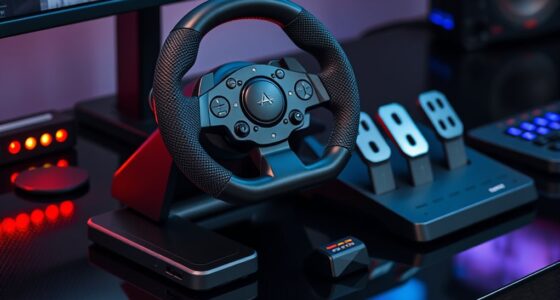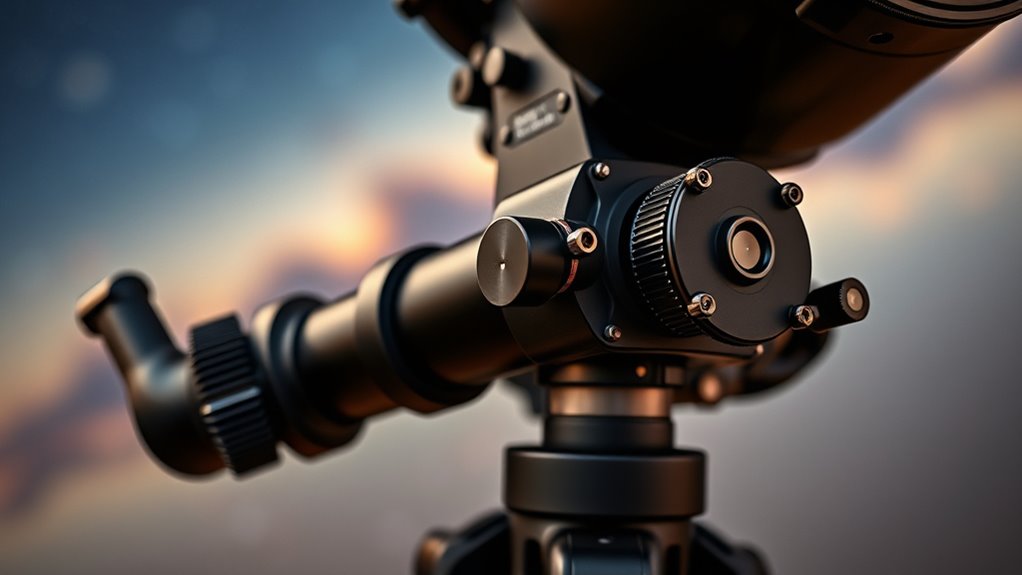

Choosing the right equatorial mount with a belt drive system can significantly enhance your astrophotography and stargazing experience. The Celestron CGX stands out for its high payload capacity and advanced computerized features, making it ideal for serious astronomers. Meanwhile, the PMC-Eight offers cutting-edge responsiveness and smooth tracking with its multi-CPU setup, perfect for those seeking precision. Both models showcase the benefits of belt drives—quiet operation, reduced backlash, and improved stability—but they also come with tradeoffs like complexity and cost. Here’s a detailed look at these two top contenders to help you decide which best suits your needs.

Turn your quiet moments into listening time
- Thousands of audiobooks, podcasts and originals
- Listen on your phone, tablet or Echo — also offline
- Cancel anytime
Key Takeaways
- The Celestron CGX excels in high payload capacity and extensive computerized control, making it suitable for large telescopes and astrophotography enthusiasts.
- The PMC-Eight provides superior responsiveness and smooth tracking thanks to its multi-CPU system, ideal for advanced astrophotographers who prioritize precision.
- Both mounts employ belt drive systems that reduce noise and backlash but can introduce complexity and higher price points.
- Setup complexity varies: the CGX may be challenging for beginners, while the PMC-Eight requires some technical know-how for optimal assembly.
- Choosing between these depends on whether you prioritize payload capacity and automation (Celestron) or responsiveness and fine control (PMC-Eight).
| Celestron CGX Computerized German Equatorial Mount & Tripod, 55 lb Payload |  | Best Overall for Payload and Automation | Payload Capacity: 55 lb | Mount Type: German Equatorial | Motor Type: High-Torque Servo Motors | VIEW ON AMAZON | See Our Full Breakdown |
| PMC-Eight Equatorial Tracker System Tripod and Mount for Astrophotography with WiFi and Bluetooth |  | Best for Precision and Responsiveness | Mount Type: Equatorial | Focus Type: No Focuser | Compatible Devices: Tablet | VIEW ON AMAZON | See Our Full Breakdown |
| equatorial mounts with belt drive system | Mount Type | Payload Capacity | Motor Type | Drive System |
|---|---|---|---|---|
| Celestron CGX Computerized Ger | German Equatorial | 55 lb | High-Torque Servo Motors | Belt-Drive |
| PMC-Eight Equatorial Tracker S | Equatorial | — | — | — |
More Details on Our Top Picks
Celestron CGX Computerized German Equatorial Mount & Tripod, 55 lb Payload
The Celestron CGX stands out for its impressive payload capacity of 55 pounds, making it well-suited for large telescopes and astrophotography setups. Its high-torque servo motors combined with a belt-drive system provide smooth, precise movements that reduce backlash and noise—crucial for capturing sharp images. The integrated NexStar+ controller grants access to a database of 40,000 objects and guided tours, streamlining the star-hopping process. Compared to the PMC-Eight, the CGX offers a more comprehensive computerized interface, though it’s bulkier and more complex for beginners. If you need a robust, tech-rich mount capable of handling heavy gear, this is a top choice, but expect a steeper learning curve and weight considerations.
Pros:- High payload capacity supports large telescopes
- Extensive object database with guided tours
- Smooth belt-drive for quiet, precise tracking
- Advanced computerized control system
Cons:- Heavy and less portable
- Complex setup process
- May be overwhelming for new users
Best for: Serious astrophotographers and astronomers with larger telescopes seeking high payload capacity and automation.
Not ideal for: Beginners or those prioritizing portability and simplicity in setup.
- Payload Capacity:55 lb
- Mount Type:German Equatorial
- Motor Type:High-Torque Servo Motors
- Drive System:Belt-Drive
- Hand Controller:NexStar+
- Object Database:40,000 objects
Our verdict“An excellent choice for advanced users needing robust payload support and extensive automation, despite its complexity.”
PMC-Eight Equatorial Tracker System Tripod and Mount for Astrophotography with WiFi and Bluetooth
The PMC-Eight sets itself apart through its innovative eight-CPU system, delivering exceptional responsiveness and reliability for astrophotography. Its dual-axis worm gears are paired with belt drives, ensuring smooth, quiet operation that minimizes backlash. Designed for tech-savvy users, it integrates seamlessly with the ExploreStars app, offering straightforward star alignment and navigation. Compared with the Celestron CGX, the PMC-Eight emphasizes real-time responsiveness, making it perfect for capturing fast-moving objects or detailed tracking. However, its setup can be more involved, especially for users unfamiliar with advanced configurations. If you prioritize real-time control, responsiveness, and fine precision, this model makes a compelling choice, but it comes at a higher price and complexity.
Pros:- Multi-CPU system delivers rapid response
- Smooth, accurate tracking with quiet belt drives
- User-friendly app simplifies star alignment
- Highly responsive for fast astrophotography
Cons:- Complex setup process
- No built-in focuser limits focusing options
- Higher cost compared to simpler mounts
Best for: Advanced astrophotographers seeking fast, precise tracking and modern connectivity features.
Not ideal for: Beginners or those looking for straightforward, plug-and-play mounts.
- Mount Type:Equatorial
- Focus Type:No Focuser
- Compatible Devices:Tablet
- Additional Features:Integrated PMC-Eight system with eight CPUs
- Gears:Clutched dual-axis worm gears with belt drives
Our verdict“A top-tier choice for users needing swift, precise control and advanced tech features, albeit with a learning curve and premium price.”

How We Picked
Our selection process focused on mounts equipped with belt drive systems that are designed for astrophotography and precise tracking. We prioritized models with reliable build quality, advanced control features, and positive user feedback. We compared their payload capacities, ease of use, technological innovations—such as multi-CPU systems—and overall value for different types of astronomers. Both models had to feature belt drives to ensure smooth, quiet operation with minimal backlash, and their suitability for serious amateur astrophotography was a key factor.
| equatorial mounts with belt drive system | Mount Type |
|---|---|
| Celestron CGX Computerized Ger | German Equatorial |
| PMC-Eight Equatorial Tracker S | Equatorial |
Factors to Consider When Choosing Equatorial Mounts With Belt Drive Systems
When selecting an equatorial mount with a belt drive system, it’s important to consider your specific needs such as payload capacity, ease of use, responsiveness, and technological features. Belt drives offer quieter, smoother tracking and less backlash, which are critical for astrophotography. The choice depends heavily on your experience level and your primary observing or imaging goals—whether you need a heavy-duty mount for large telescopes or a highly responsive system for capturing fast-moving objects.Understanding Belt Drive Systems
Belt drive systems use flexible belts instead of traditional gears, providing quieter operation and reduced backlash. This results in smoother movements, especially beneficial during long exposure astrophotography sessions. However, belt drives can be more complex to maintain and repair, and may add to the overall cost of the mount. When choosing an equatorial mount with a belt drive, consider durability, tension adjustment mechanisms, and compatibility with your existing gear.
Key Features to Consider
Capacity and stability are paramount—ensure the mount can handle your telescope and accessories comfortably. For astrophotography, look for mounts with precise tracking, low backlash, and advanced control options. Connectivity features like WiFi or Bluetooth can simplify setup and control, especially with modern apps. Also, evaluate setup complexity, weight, and portability based on your observing environment and frequency of use.
Matching the Mount to Your Needs
If you prioritize heavy payload support and automation, the Celestron CGX offers robust features suited for advanced users. Conversely, if rapid responsiveness and fine control for astrophotography are your main goals, the PMC-Eight provides superior performance, albeit with a more demanding setup process. Your choice should align with your technical comfort level, budget, and specific imaging or observing objectives.
Frequently Asked Questions
What are the main advantages of belt drive systems in equatorial mounts?
Belt drive systems significantly reduce noise and backlash during tracking, resulting in smoother and quieter operation. This is especially advantageous for astrophotography, where precise, stable movements are critical. Belt drives also tend to produce less gear wear over time, maintaining accuracy during extended use.
Are belt drive mounts more difficult to maintain than traditional gear-based mounts?
Yes, belt drive systems can require more careful tension adjustment and periodic inspection for belt wear or slippage. While they generally offer better performance, they may need a bit more technical maintenance to keep them operating optimally. However, many high-quality models provide accessible tension adjustment mechanisms to mitigate this concern.
Which mount is better suited for beginner astrophotographers?
Typically, neither of these models is ideal for absolute beginners due to their complexity. However, the Celestron CGX’s extensive computerized features and guided controls could be more approachable for those willing to learn sophisticated setups. Still, beginners might prefer simpler, less feature-rich mounts until they gain more experience.
How important is payload capacity when choosing an equatorial mount?
Payload capacity determines how much weight your mount can handle safely. Overloading can lead to vibrations, tracking errors, and potential damage. For astrophotography, having a mount that comfortably exceeds your telescope’s weight ensures stability and reliable tracking, which are essential for quality imaging.
Can I upgrade or modify these mounts later?
Many high-quality mounts allow for upgrades such as adding focusers, autoguiders, or improved control modules. Belt drive systems themselves are often part of the core design, but the electronics and accessories may be upgradeable. It’s advisable to check manufacturer compatibility and support before planning future modifications.
Conclusion
For users prioritizing high payload capacity and extensive automation, the Celestron CGX makes an excellent choice, especially for serious astrophotographers with larger telescopes. If your focus is on precision, responsiveness, and advanced control features for detailed imaging, the PMC-Eight offers superior performance, though it demands more technical skill and a higher budget. Beginners or casual observers may find these options overly complex, so consider simpler mounts tailored to entry-level use. Ultimately, your decision should match your experience level, imaging goals, and setup preferences.
Halloween Picks
halloween
As an affiliate, we earn on qualifying purchases.