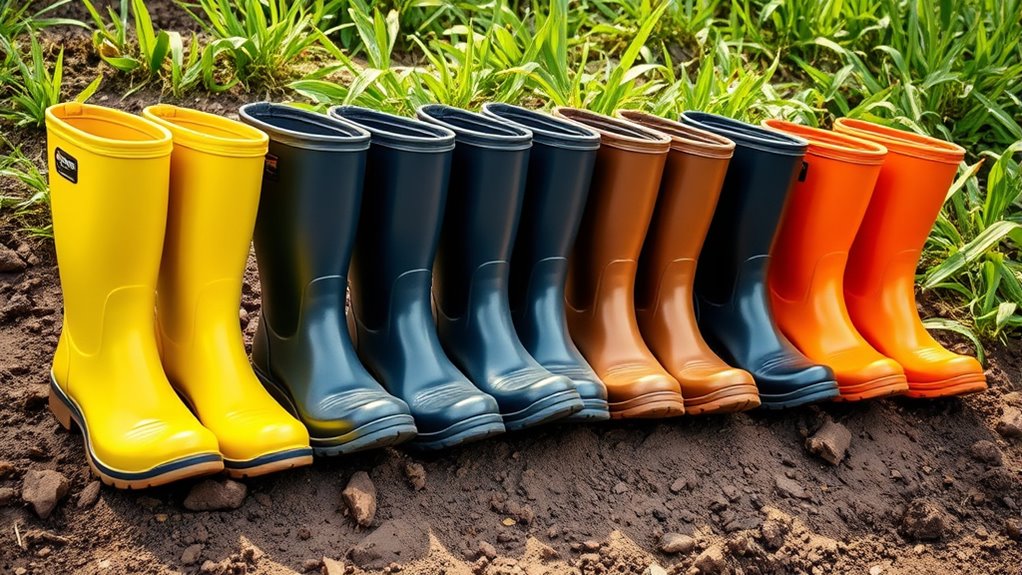

Steel toe rubber boots combine waterproof coverage with a protective toe for wet work, but the right pair depends on your hazards, fit, and how much time you spend on your feet. I’d put the TIDEWE Men’s Waterproof Rubber Work Boots with Steel Toe and Shank at the top for its work-focused mix of protection and support. The Xtratuf 15” Legacy is a standout for buyers prioritizing chemical resistance, while the Dunlop Chesapeake is a simpler PVC option for basic wet-site needs. The main tradeoffs are weight, comfort over long shifts, outsole grip, and whether you need chemical resistance beyond ordinary waterproofing. Read on for all 14 picks and guidance on matching boot construction to your job.

Turn your quiet moments into listening time
- Thousands of audiobooks, podcasts and originals
- Listen on your phone, tablet or Echo — also offline
- Cancel anytime
Key Takeaways
- The TIDEWE boot leads for general work use because its steel toe and shank make it a more work-oriented choice than a basic waterproof rain boot.
- The Xtratuf Legacy and Servus XTP stand apart for chemical-resistant work; ordinary waterproof rubber or PVC should not be treated as chemical protection.
- Dunlop Chesapeake is the straightforward PVC pick for buyers who want uncomplicated wet-weather coverage, while specialized needs may justify a more protective build.
- Several HISEA models overlap in purpose, so compare their stated outsole and construction details rather than assuming the brand name alone signals a meaningful difference.
- Fit and shift length are recurring tradeoffs: tall waterproof shafts can help block splash and muck, but boot weight and room for work socks matter for all-day wear.
| Men’s Steel Toe Waterproof PVC Rain Boots |  | Best for Puncture Protection | Outer material: PVC | Sole material: PVC | Construction: Seamless, injection-molded | VIEW ON AMAZON | See Our Full Breakdown |
| TIDEWE Men’s Waterproof Rubber Work Boots with Steel Toe and Shank |  | Best for Cold, Wet Work | Outer material: Neoprene and rubber | Sole material: Rubber | Height: Mid-calf | VIEW ON AMAZON | See Our Full Breakdown |
| HISEA Men’s Steel-Toe Rain Boots, Waterproof Rubber Work Boots |  | Best for Adjustable Shaft Height | Outer material: PVC | Sole material: PVC | Inner material: Fabric | VIEW ON AMAZON | See Our Full Breakdown |
| Showave Men’s Rubber Boots Steel Toe Rain Boot Waterproof Construction |  | Best for Knee-High Coverage | Outer material: PVC | Sole material: Synthetic rubber | Shaft height: Knee-high | VIEW ON AMAZON | See Our Full Breakdown |
| Men’s Steel Toe Rain Boots, Waterproof Knee High Work Boots |  | Best for Roomier Leg Fit | Fabric type: PVC rubber | Sole material: Synthetic rubber | Shaft height: Knee-high | VIEW ON AMAZON | See Our Full Breakdown |
| Men’s Steel Toe Waterproof Rubber Rain Boots | | Best for Puncture Protection | Outer and sole material: PVC | Inner material: Polyurethane | Closure: Pull-on | VIEW ON AMAZON | See Our Full Breakdown |
| Dunlop Chesapeake Steel Toe PVC Work Boots, Black |  | Best Knee-High Coverage | Origin: Made in the USA | Sole material: PVC | Shaft height: Knee-high | VIEW ON AMAZON | See Our Full Breakdown |
| Xtratuf 15” Men’s Steel Toe Legacy Boot – Waterproof Latex Rubber Footwear – Slip & Chemical-Resistant |  | Best for Rugged Wet-Work Wear | Shaft height: 15 inches | Shaft circumference: 7.8 inches | Weight: Approximately 5.15 lbs | VIEW ON AMAZON | See Our Full Breakdown |
| Servus XTP 15″ PVC Chemical-Resistant Steel Toe Work Boots, Men’s, Black, Yellow & Gray, Size 11 |  | Best for Chemical-Exposure Work | Material: PVC | Shaft height: 15 inches | Listed size: 11 | VIEW ON AMAZON | See Our Full Breakdown |
| Trudave Steel Toe Rubber Boots for Men, Waterproof and Anti-Slip Work and Hunting Boots, Size 6-14 |  | Best for Work and Outdoor Versatility | Sole material: Rubber | Outer material: Rubber | Inner material: Airmesh | VIEW ON AMAZON | See Our Full Breakdown |
| Hunthor Rubber Work Boots for Men with Steel Toe, Waterproof Hunting Boots |  | Best for Adjustable Outdoor Fit | Toe protection: Steel toe | Additional protection: Puncture-resistant layer | Waterproof: Yes | VIEW ON AMAZON | See Our Full Breakdown |
| HISEA Men’s Steel-Toe Waterproof Rain Boots |  | Best for Simple Pull-On Workwear | Toe protection: Steel toe meeting ASTM 2413-18 | Construction: Seamless PVC polyblend, injection molded | Waterproof: Yes | VIEW ON AMAZON | See Our Full Breakdown |
| HISEA Men’s Steel-Toe Rain Boots, Waterproof Rubber Boots with Slip-Resistant Outsole | | Best for Customizable Shaft Height | Toe protection: Steel toe meeting ASTM 2413-18 | Outer material: Polyvinyl chloride (PVC) | Sole material: Polyvinyl chloride (PVC) | VIEW ON AMAZON | See Our Full Breakdown |
| MUCK Chore Classic Men’s Steel Toe Work Boot |  | Best for Cold-Weather Flexibility | Shaft height: 16 inches | Neoprene thickness: 5 mm | Waterproof construction: Rubber overlay | VIEW ON AMAZON | See Our Full Breakdown |
| steel toe rubber boot | Toe protection | Sole material | Waterproof | Outer material |
|---|---|---|---|---|
| Men’s Steel Toe Waterproof PVC | Steel toe; ASTM F2413-18 impact (I-75) and compression (C-75) | PVC | — | PVC |
| TIDEWE Men’s Waterproof Rubber | Steel toe | Rubber | — | Neoprene and rubber |
| HISEA Men’s Steel-Toe Rain Boo | Steel toe; meets ASTM 2413-18 | PVC | — | PVC |
| Showave Men’s Rubber Boots Ste | Steel toe; ASTM F2413-18 | Synthetic rubber | Yes | PVC |
| Men’s Steel Toe Rain Boots | Steel toe | Synthetic rubber | Yes | — |
| Men’s Steel Toe Waterproof Rub | Steel toe | — | Yes | — |
| Dunlop Chesapeake Steel Toe PV | Steel toe | PVC | Yes | — |
| Xtratuf 15” Men’s Steel Toe Le | Steel toe | Rubber | Yes | — |
| Servus XTP 15" PVC Chemical-Re | Steel toe | — | Yes | — |
| Trudave Steel Toe Rubber Boots | Steel toe | Rubber | Yes | Rubber |
| Hunthor Rubber Work Boots for | Steel toe | Rubber | Yes | Neoprene |
| HISEA Men’s Steel-Toe Waterpro | Steel toe meeting ASTM 2413-18 | — | Yes | — |
| HISEA Men’s Steel-Toe Rain Boo | Steel toe meeting ASTM 2413-18 | Polyvinyl chloride (PVC) | — | Polyvinyl chloride (PVC) |
| MUCK Chore Classic Men’s Steel | Steel toe; ASTM F2413-11 M I/75 C/75 EH | Rubber | — | — |
More Details on Our Top Picks
Men’s Steel Toe Waterproof PVC Rain Boots
For buyers who need more than a protective toe in wet work areas, this boot pairs a steel toe with a puncture-resistant steel midsole. Its seamless, injection-molded PVC construction blocks water without seams that can become leak points, while the removable PU insole adds cushioning and can be taken out for drying or replacement. Compared with the TIDEWE Men’s Waterproof Rubber Work Boots, this model specifies a puncture-resistant midsole and oil-resistant outsole, while TIDEWE adds a warm neoprene lining and steel shank. The tradeoff is a less adaptable pull-on fit and PVC that may feel less breathable during long shifts. I’d favor it for wet sites where underfoot protection matters more than warmth or fine fit adjustment.
Pros:- Steel toe meets or exceeds ASTM F2413-18 impact and compression standards
- Puncture-resistant steel midsole adds protection underfoot
- Seamless, injection-molded PVC construction is waterproof
- Removable PU insole and oil-resistant outsole
Cons:- PVC may be less breathable than fabric-lined footwear
- Pull-on design does not allow adjustment around the foot or ankle
Best for: Workers in wet industrial or agricultural areas who want both steel-toe and puncture-resistant midsole protection.
Not ideal for: Workers who need an adjustable, close-fitting boot or more breathability for extended shifts.
- Outer material:PVC
- Sole material:PVC
- Construction:Seamless, injection-molded
- Closure:Pull-on
- Toe protection:Steel toe; ASTM F2413-18 impact (I-75) and compression (C-75)
- Midsole:Puncture-resistant steel
- Insole:Removable PU
- Outsole:Oil-, slip-, and abrasion-resistant
Our verdict“Choose this pair for wet work where puncture protection is a priority, but skip it if breathability or adjustable fit matters more.”
TIDEWE Men’s Waterproof Rubber Work Boots with Steel Toe and Shank
The TIDEWE stands apart from the PVC-focused options here by using a rubber-and-neoprene shell with a 6 mm neoprene lining. That lining adds warmth and flexibility for cold, wet jobs, while the steel shank supports the arch and the steel toe guards against impacts. Deep-tread rubber outsoles are aimed at traction on slippery terrain. Compared with the Men’s Steel Toe Waterproof PVC Rain Boots, TIDEWE prioritizes warmth and a supportive shank rather than a specified puncture-resistant steel midsole. Its mid-calf shaft may also feel limiting for buyers who want knee-high coverage, and the listed weight of 3.31 kg makes weight worth checking before committing to long walks. Fit guidance calls for checking the size chart and allowing extra room.
Pros:- Waterproof rubber and neoprene construction
- 6 mm neoprene lining provides warmth and flexibility
- Steel shank adds arch support
- Deep-tread rubber outsole is designed for slippery terrain
Cons:- Mid-calf height offers less coverage than knee-high models such as Showave
- Listed weight is 3.31 kg, which may feel substantial over long distances
- Sizing requires careful measurement against the manufacturer’s chart
Best for: Outdoor workers who need a warm, waterproof boot with a steel shank for cold, slippery conditions.
Not ideal for: Workers who want a lightweight knee-high boot or specifically need a puncture-resistant steel midsole.
- Outer material:Neoprene and rubber
- Sole material:Rubber
- Height:Mid-calf
- Lining:6 mm neoprene
- Toe protection:Steel toe
- Shank:Steel
- Closure:Pull-on
- Item weight:3.31 kg
- Water resistance:Waterproof
Our verdict“Pick TIDEWE for warmth and shank support in cold, wet work, but choose a different model if you need knee-high coverage or a specified puncture-resistant midsole.”
HISEA Men’s Steel-Toe Rain Boots, Waterproof Rubber Work Boots
HISEA’s distinguishing feature is its customizable shaft height, which gives buyers more flexibility than fixed-height options such as the knee-high Showave boots. The seamless PVC shell is waterproof, and the steel toe is listed as meeting ASTM 2413-18; a removable EVA insole offers a simple way to air out the boot or change the underfoot feel. The slip-resistant outsole suits wet work, though the supplied details do not specify a steel shank or puncture-resistant midsole like the TIDEWE and Men’s Steel Toe Waterproof PVC Rain Boots, respectively. Sizing may take extra attention, and waterproof PVC can run warm during prolonged wear. I’d choose this model for general wet-duty use when adjustable coverage matters more than added structural protection.
Pros:- Customizable shaft height offers flexible coverage
- Seamless PVC construction is waterproof
- Steel toe is listed as meeting ASTM 2413-18
- Removable EVA insole and slip-resistant outsole
Cons:- Sizing may require careful chart checking
- Waterproof construction may feel less breathable during extended wear
- Provided specs do not identify a steel shank or puncture-resistant midsole
Best for: Farm and general outdoor workers who want waterproof steel-toe boots with shaft height they can customize.
Not ideal for: Workers who need a documented puncture-resistant midsole, steel shank, or a highly breathable boot for long shifts.
- Outer material:PVC
- Sole material:PVC
- Inner material:Fabric
- Water resistance:Waterproof
- Toe protection:Steel toe; meets ASTM 2413-18
- Insole:Removable EVA
- Shaft:Customizable height
- Outsole:Slip-resistant
Our verdict“Choose HISEA when adjustable shaft coverage is the priority, but look to TIDEWE or the PVC Rain Boots for specified shank or puncture protection.”
Showave Men’s Rubber Boots Steel Toe Rain Boot Waterproof Construction
Showave is the coverage-focused pick: its knee-high shaft and 18.5-inch circumference suit jobs where splash, mud, or debris reaches above the calf. It also pairs a steel toe with a Kevlar puncture-resistant sole, an unusual combination beside the TIDEWE, whose steel shank supports the arch but is not listed as a puncture plate. The oil- and slip-resistant outsole adds practical traction for wet or oily ground. The product is described as lightweight and flexible, but its heavy-duty construction may feel stiff at first, and the PVC exterior can limit airflow. Compared with the HISEA model, Showave trades customizable shaft height for a fixed, taller profile. I’d choose it for high-coverage work rather than jobs where easy movement or ventilation comes first.
Pros:- Knee-high shaft provides extensive leg coverage
- Kevlar sole is specified for puncture resistance
- Steel toe protection meets ASTM F2413-18 standards
- Oil- and slip-resistant outsole suits wet and oily surfaces
Cons:- Heavy-duty construction may feel stiff initially
- PVC exterior may limit breathability during prolonged wear
- Fixed knee-high shaft may be excessive for jobs needing a shorter boot
Best for: Workers handling muddy, wet, or debris-prone jobs who want knee-high coverage and a puncture-resistant sole.
Not ideal for: People who need adjustable shaft height, high breathability, or a boot that feels flexible straight out of the box.
- Outer material:PVC
- Sole material:Synthetic rubber
- Shaft height:Knee-high
- Shaft circumference:18.5 inches
- Toe protection:Steel toe; ASTM F2413-18
- Puncture resistance:Kevlar sole
- Outsole:Oil- and slip-resistant
- Waterproof:Yes
Our verdict“Choose Showave for fixed knee-high coverage and a puncture-resistant sole, but favor HISEA if you want to adjust shaft height.”
Men’s Steel Toe Rain Boots, Waterproof Knee High Work Boots
This knee-high PVC boot is aimed at buyers who want straightforward water and mud coverage with a 14.5-inch shaft circumference. That narrower listed circumference may suit workers who find Showave’s 18.5-inch shaft too roomy, though the available information does not establish how either boot fits every calf shape. Its seamless PVC construction blocks water and debris, while the steel toe and slip- and oil-resistant outsole target basic wet-work protection. Compared with the Men’s Steel Toe Waterproof PVC Rain Boots, this model is listed as knee-high but does not specify a puncture-resistant steel midsole or ASTM toe standard. The cushioned insole is a comfort plus, but the boot may feel heavy over long stretches, and waterproof PVC can trap heat. I’d keep it on the shortlist for muddy jobs where simple coverage matters more than detailed safety specs.
Pros:- Knee-high construction helps keep out water, mud, and debris
- Seamless PVC rubber construction is waterproof
- Steel toe and slip- and oil-resistant outsole target wet-work hazards
- Cushioned insole and roomy toe box are described for comfort
Cons:- May feel heavy during prolonged wear
- Waterproof material may be less breathable
- Provided specs do not identify an ASTM toe rating or puncture-resistant midsole
Best for: Outdoor workers seeking knee-high waterproof coverage with a more modest listed shaft circumference than Showave.
Not ideal for: Workers who need a specified puncture-resistant midsole, detailed ASTM toe ratings, or a lightweight boot for long-distance walking.
- Fabric type:PVC rubber
- Sole material:Synthetic rubber
- Shaft height:Knee-high
- Shaft circumference:14.5 inches
- Toe protection:Steel toe
- Construction:Seamless
- Waterproof:Yes
- Outsole:Slip- and oil-resistant
Our verdict“Choose this model for knee-high waterproof coverage and a 14.5-inch listed shaft circumference, but favor Showave or the PVC Rain Boots for specified puncture protection.”
Men’s Steel Toe Waterproof Rubber Rain Boots
This pull-on PVC boot is the strongest fit here for buyers who need protection beneath the foot as well as at the toe. Its puncture-resistant steel midsole adds a layer the Dunlop Chesapeake listing does not specify, while the steel toe meets ASTM F2413-18 impact and compression ratings. Seamless, injection-molded construction helps keep water out, and the removable cushioned insole can be taken out for cleaning or replaced. An oil- and slip-resistant outsole adds useful traction for wet work areas. The tradeoff is its PVC build, which may feel less flexible than rubber options such as the Trudave. The product data also gives no fit guidance, so buyers who need a roomy or precise fit have less to go on.
Pros:- Puncture-resistant steel midsole adds underfoot protection
- Seamless waterproof construction limits water entry
- ASTM F2413-18 impact and compression ratings are specified
- Removable cushioned PU insole and heel kick plate support practical daily use
Cons:- PVC may feel less flexible than rubber boot materials
- No sizing or fit details are provided
Best for: Workers around wet sites with sharp debris underfoot who want a steel toe and a puncture-resistant midsole in a pull-on boot.
Not ideal for: Buyers who prioritize flexible movement or need detailed sizing and fit guidance before ordering.
- Outer and sole material:PVC
- Inner material:Polyurethane
- Closure:Pull-on
- Toe protection:Steel toe
- Midsole:Puncture-resistant steel
- Insole:Removable cushioned PU
- Construction:Injection-molded, seamless
- Waterproof:Yes
- Standards:ASTM F2413-18 impact (I-75) and compression (C-75)
Our verdict“Choose this pair when puncture protection and documented toe-impact ratings matter more than a flexible feel or detailed fit information.”
Dunlop Chesapeake Steel Toe PVC Work Boots, Black
The Chesapeake is the clearest choice in this group for buyers who want knee-high waterproof coverage without a more specialized chemical-resistance pitch. Its lightweight PVC construction is paired with a treaded, slip-resistant outsole, making it suited to muddy ground and wet work areas. A wide calf opening is a practical advantage for pulling the boots on over workwear; the Trudave, by comparison, lists a 12-inch shaft circumference and an adjustable buckle rather than a wide knee-high opening. The taller shaft also brings a real compromise: it can restrict ankle movement during kneeling, climbing, or other tasks that call for frequent foot flexion. The listing does not specify a puncture-resistant midsole or removable insole, so buyers needing those features should look at the Men’s Steel Toe Waterproof Rubber Rain Boots instead.
Pros:- Knee-high shaft offers coverage above the ankle
- Waterproof PVC construction is described as lightweight
- Wide calf opening eases wearing over workwear
- Treaded, slip-resistant outsole is suited to wet and uneven terrain
Cons:- Tall shaft may limit ankle mobility during active tasks
- PVC may feel less breathable than fabric or leather
- No puncture-resistant midsole or insole details are listed
Best for: Workers in muddy fields or wet facilities who want knee-high coverage and room to pull boots over work pants.
Not ideal for: People who frequently kneel, climb, or need added puncture protection and documented midsole details.
- Origin:Made in the USA
- Sole material:PVC
- Shaft height:Knee-high
- Shaft circumference:50.27 inches
- Toe protection:Steel toe
- Waterproof:Yes
- Outsole:Treaded, slip-resistant
Our verdict“Pick the Chesapeake for lightweight, knee-high wet-ground coverage, but skip it if mobility or underfoot puncture protection is a priority.”
Xtratuf 15” Men’s Steel Toe Legacy Boot – Waterproof Latex Rubber Footwear – Slip & Chemical-Resistant
Xtratuf’s Legacy boot leans toward rugged rubber construction for buyers working in wet industrial or fishing settings. Its 15-inch shaft provides substantial coverage, while a steel toe, slip-resistant sole, and open-cell foam footbed address protection, traction, and cushioning. Compared with the PVC Dunlop Chesapeake, this model uses rubber and has a specified cushioned footbed, but it is notably heavy at approximately 5.15 pounds. That weight can become tiring during long walks or shifts with lots of movement. The listing also gives a 7.8-inch shaft circumference, so shoppers should check whether that measurement suits their calves and layering needs. The product title mentions chemical resistance, though the supplied specifications do not identify particular chemicals or a test standard; buyers needing precise chemical compatibility should compare the Servus XTP’s stated chemical-resistant PVC construction and listed ASTM standard.
Pros:- Waterproof latex rubber construction is suited to wet work
- Steel toe provides toe protection
- Slip-resistant sole supports traction on wet surfaces
- Open-cell foam footbed adds cushioning
Cons:- Approximately 5.15-pound weight may contribute to fatigue
- 15-inch shaft and 7.8-inch circumference may not suit every leg or work layer
- Chemical resistance details and a specific standard are not provided in the supplied specs
Best for: Fishing and industrial workers who want a tall rubber boot with a steel toe, slip-resistant sole, and cushioned footbed for wet environments.
Not ideal for: Workers who walk long distances, need a lighter boot, or require clearly specified chemical-resistance testing.
- Shaft height:15 inches
- Shaft circumference:7.8 inches
- Weight:Approximately 5.15 lbs
- Sole material:Rubber
- Insole:Open-cell foam footbed
- Toe protection:Steel toe
- Waterproof:Yes
- Origin:Imported
Our verdict“Choose the Legacy for tall, rugged rubber coverage in wet work, but favor a lighter option for long-distance walking or a boot with specified chemical testing for chemical exposure.”
Servus XTP 15″ PVC Chemical-Resistant Steel Toe Work Boots, Men’s, Black, Yellow & Gray, Size 11
The Servus XTP is the most specialized pick here for industrial jobs where chemical-resistant waterproof construction matters alongside steel-toe protection. The listing names environments such as poultry processing and oil rigs, and its self-cleaning outsole is designed to shed debris rather than let it build up in the tread. That focus sets it apart from the general wet-ground appeal of the Dunlop Chesapeake. The supplied data also lists ASTM F2413-11 MI/75 C/75 protection and removable, washable insoles, useful for workers who need to clean their footwear between shifts. Its sturdy PVC construction may feel heavy, and the product is described primarily for industrial use rather than broad outdoor versatility. The listing specifies size 11 and a limited color combination, so buyers should check availability and fit before choosing it.
Pros:- PVC construction is described as waterproof and chemical-resistant
- Steel toe protection is paired with a listed ASTM standard
- Removable, washable insoles support cleaning between shifts
- Self-cleaning outsole is designed to clear debris
Cons:- Sturdy construction may make the boots heavy
- Industrial focus may be excessive for general outdoor use
- Supplied listing specifies size 11 and limited color options
Best for: Industrial workers in wet processing or oil-related settings who want chemical-resistant PVC, steel-toe protection, and washable insoles.
Not ideal for: Casual outdoor users or workers who need a lightweight boot, broader size-selection details, or a flexible all-purpose option.
- Material:PVC
- Shaft height:15 inches
- Listed size:11
- Color:Black, yellow, and gray
- Toe protection:Steel toe
- Standards:ASTM F2413-11 MI/75 C/75
- Waterproof:Yes
- Special feature:Chemical-resistant construction and self-cleaning outsole
Our verdict“Choose the Servus XTP for industrial wet work where chemical resistance and cleanable components matter more than a light, versatile feel.”
Trudave Steel Toe Rubber Boots for Men, Waterproof and Anti-Slip Work and Hunting Boots, Size 6-14
The Trudave is the most adaptable option in this batch for buyers moving between wet work and outdoor activities such as hunting. Its rubber waterproof build combines a steel toe with a steel shank, while the Airmesh lining and ergonomic arch support are aimed at comfort during extended wear. An adjustable buckle strap offers a way to secure the fit, unlike the straightforward pull-on PVC design of the Men’s Steel Toe Waterproof Rubber Rain Boots. The tradeoff is that the supplied data does not give an ASTM toe-protection standard or a puncture-resistant midsole, so workers with formal site requirements should compare it with the models that specify standards or underfoot protection. It may also feel heavy during long walks, and sizing is flagged as variable; checking the fit carefully matters, especially when choosing between work socks and lighter outdoor layers.
Pros:- Waterproof rubber construction suits muddy and wet conditions
- Steel toe and steel shank add protection and support
- Airmesh lining is intended to improve breathability
- Adjustable buckle strap helps secure the fit
Cons:- May feel heavy during extended walking
- No ASTM standard or puncture-resistant midsole is listed in the supplied specs
- Sizing may vary, so fit needs careful checking
Best for: Buyers who want one waterproof steel-toe boot for muddy work, hunting, and other outdoor use, with a breathable lining and adjustable fit.
Not ideal for: Workers who need a listed ASTM safety standard, puncture-resistant midsole, or a boot optimized for long-distance walking.
- Sole material:Rubber
- Outer material:Rubber
- Inner material:Airmesh
- Shaft circumference:12 inches
- Waterproof:Yes
- Toe protection:Steel toe
- Support:Steel shank
- Size range:6–14
Our verdict“Choose the Trudave for mixed work and outdoor use with a breathable lining, but select a standards-listed model if your job requires documented protection.”
Hunthor Rubber Work Boots for Men with Steel Toe, Waterproof Hunting Boots
The Hunthor stands out for buyers who need more than a waterproof shell: its steel toe and puncture-resistant layer add protection for rough outdoor work, while the high-traction rubber outsole is suited to wet or uneven ground. Compared with the pull-on HISEA Men’s Steel-Toe Waterproof Rain Boots, the Hunthor has a back gusset that allows some adjustment around the calf, a useful advantage when matching the shaft to different layers or leg shapes. Its breathable sandwich lining and EVA cushioning also support longer wear. The tradeoff is a more substantial, heavy-duty build that may feel cumbersome for casual errands, and the supplied details flag sizing as something to check carefully. I’d choose it for demanding outdoor tasks, not as a lightweight everyday rain boot.
Pros:- Steel toe and puncture-resistant layer provide protection from impact and underfoot hazards.
- Waterproof rubber construction suits wet outdoor work.
- Adjustable back gusset allows a more customizable calf fit than a fixed pull-on shaft.
- Breathable lining, EVA cushioning, and high-traction rubber outsole support comfort and grip.
Cons:- Heavy-duty construction may feel tiring or bulky for casual use.
- Sizing may require careful chart checks to get the fit right.
- The description notes limited color options.
Best for: Outdoor workers and hunters who need steel-toe and puncture protection, plus a calf fit that can be adjusted.
Not ideal for: People seeking a light boot for casual wear or those who want a simple fit without checking sizing carefully.
- Toe protection:Steel toe
- Additional protection:Puncture-resistant layer
- Waterproof:Yes
- Outer material:Neoprene
- Sole material:Rubber
- Shaft height:Calf high
- Shaft circumference:16 inches
- Lining and cushioning:Breathable sandwich lining; EVA-cushioned midsole
- Fit adjustment:Back gusset
Our verdict“Choose the Hunthor for wet, rugged work where puncture protection and an adjustable calf fit matter more than a lightweight feel.”
HISEA Men’s Steel-Toe Waterproof Rain Boots
This HISEA is the straightforward choice in this group: seamless, injection-molded construction keeps water from finding seams, and the pull-on design makes it easy to put on or remove between work areas. Its steel toe is specified to meet ASTM 2413-18, giving buyers a stated protection standard rather than an unspecified toe cap. Compared with the adjustable-gusset Hunthor, this boot favors a simple, fixed fit over calf customization; compared with the MUCK Chore Classic, it has less detailed cold-weather and shaft-support information. A removable EVA insole offers a practical way to adjust comfort during long standing shifts. The main compromise is that the pull-on shaft has no fastening adjustment, so fit depends on choosing the right size and accepting its fixed opening.
Pros:- Seamless PVC polyblend construction provides waterproof coverage.
- Steel toe is listed as meeting ASTM 2413-18.
- Removable EVA insole gives some flexibility for comfort and replacement.
- Pull-on design is quick to put on and take off.
Cons:- Fixed pull-on fit offers no fastening or shaft adjustment.
- Sizing requires checking the manufacturer’s size chart.
- The supplied specifications do not state a shaft height or cold-weather range.
Best for: Farm, industrial, and general-purpose workers who want waterproof pull-on boots with a stated steel-toe standard and removable insole.
Not ideal for: Buyers who need an adjustable calf opening or a boot with specified insulation and cold-weather performance.
- Toe protection:Steel toe meeting ASTM 2413-18
- Construction:Seamless PVC polyblend, injection molded
- Waterproof:Yes
- Closure:Pull-on
- Outsole:Non-slip rubber
- Insole:Removable EVA
- Inner material:Fabric
- Intended use:Agriculture, industrial, and general purpose
Our verdict“Pick this HISEA for uncomplicated waterproof workwear with a specified steel-toe standard, provided its fixed pull-on fit suits you.”
HISEA Men’s Steel-Toe Rain Boots, Waterproof Rubber Boots with Slip-Resistant Outsole
The distinguishing feature here is customizable shaft height, which gives this HISEA an advantage for workers who want to alter coverage around the lower leg. It pairs that flexibility with seamless waterproof PVC construction, a steel toe listed to ASTM 2413-18, and a removable EVA insole. Compared with the other HISEA in this roundup, the B0919W5KGM, this model makes shaft adjustment a more explicit part of its pitch; the other option is the simpler pick if you prefer a clearly described pull-on setup. The PVC build is aimed at wet industrial or agricultural settings, but it may feel less flexible for casual wear than the neoprene MUCK Chore Classic. Sizing needs attention, and the provided details do not explain how the shaft is adjusted or give a shaft-height measurement.
Pros:- Seamless PVC construction is listed as waterproof.
- Steel toe is specified to ASTM 2413-18.
- Customizable shaft height can help tailor leg coverage.
- Removable EVA insole allows adjustment or replacement.
Cons:- Sizing may be challenging and calls for checking the size chart.
- Heavy-duty construction may feel stiff for casual use.
- The supplied details do not specify the shaft-height range or how it is adjusted.
Best for: Agricultural and industrial workers who want waterproof steel-toe boots with the option to customize shaft height.
Not ideal for: Buyers who need a documented shaft measurement or adjustment method, or who prioritize flexibility for casual daily wear.
- Toe protection:Steel toe meeting ASTM 2413-18
- Outer material:Polyvinyl chloride (PVC)
- Sole material:Polyvinyl chloride (PVC)
- Water resistance:Waterproof
- Construction:Seamless
- Outsole:Slip-resistant rubber
- Insole:Removable EVA
- Shaft:Customizable height
Our verdict“Choose this HISEA when adjustable shaft coverage is a priority, but opt for the other HISEA model if you want a more clearly specified pull-on design.”
MUCK Chore Classic Men’s Steel Toe Work Boot
The MUCK Chore Classic is the strongest fit here for workers who need flexibility and warmth alongside steel-toe protection. Its 5 mm neoprene construction is described as flexible, shock-absorbing, and heat-retaining, while the breathable Airmesh lining helps manage moisture inside the 16-inch waterproof boot. A steel shank and reinforced heel and toe add support beyond the simpler PVC construction of the HISEA rain boots. The MUCK also specifies a comfort range from subfreezing to 65 °F (18 °C), a useful boundary that helps set expectations rather than implying year-round comfort. The tradeoff is the tall shaft, which may restrict movement compared with shorter options, and the stated temperature range may not suit hot-weather work. Its steel-toe standard is ASTM F2413-11 M I/75 C/75 EH.
Pros:- 5 mm neoprene offers flexibility, shock absorption, and heat retention.
- Breathable Airmesh lining helps manage moisture.
- Steel toe, steel shank, and reinforced heel and toe add protection and support.
- Specified comfort range extends from subfreezing to 65 °F (18 °C).
Cons:- The 16-inch shaft may restrict ease of movement.
- The stated comfort range tops out at 65 °F (18 °C), limiting its fit for hot conditions.
- Its higher-support construction may be more boot than needed for basic wet-weather tasks.
Best for: Workers facing cold, wet conditions who want a flexible neoprene boot with a steel shank and reinforced heel and toe.
Not ideal for: People working in consistently hot conditions or those who prefer a shorter, less restrictive shaft.
- Shaft height:16 inches
- Neoprene thickness:5 mm
- Waterproof construction:Rubber overlay
- Toe protection:Steel toe; ASTM F2413-11 M I/75 C/75 EH
- Support:Steel shank
- Lining:Breathable Airmesh
- Comfort temperature range:Subfreezing to 65 °F (18 °C)
- Reinforcement:Triple toe and quadruple rubber heel
- Sole material:Rubber
Our verdict“Choose the MUCK Chore Classic for cold, wet work where neoprene flexibility and added structural support matter more than a shorter shaft.”

How We Picked
I compared these 14 options as steel toe rubber work boots, not as general rain footwear. The main criteria were the stated toe protection, waterproof construction, outsole grip, support features such as a shank, shaft coverage, and any explicit chemical-resistance claims. I also weighed how clearly each boot’s design matched a distinct job need, from basic wet-site coverage to more demanding chemical exposure.
The ranking favors boots with a more convincing balance of protection, practical support, and useful specialization. A boot with a named chemical-resistant design ranks well for that specific hazard, but it does not automatically outrank a more versatile work pick for everyday wet jobs. Basic PVC models remain worthwhile for simpler needs, though they offer less reason to choose them when buyers need extra support or specialized resistance. Product titles do not establish certification levels, fit, or suitability for a particular workplace, so I recommend checking the manufacturer’s documentation against the hazards and safety rules at your job.
| steel toe rubber boot | Outer material | Sole material | Toe protection |
|---|---|---|---|
| Men’s Steel Toe Waterproof PVC | PVC | PVC | Steel toe; ASTM F2413-18 impact (I-75) and compression (C-75) |
| TIDEWE Men’s Waterproof Rubber | Neoprene and rubber | Rubber | Steel toe |
| HISEA Men’s Steel-Toe Rain Boo | PVC | PVC | Steel toe; meets ASTM 2413-18 |
| Showave Men’s Rubber Boots Ste | PVC | Synthetic rubber | Steel toe; ASTM F2413-18 |
| Men’s Steel Toe Rain Boots | — | Synthetic rubber | Steel toe |
| Men’s Steel Toe Waterproof Rub | — | — | Steel toe |
| Dunlop Chesapeake Steel Toe PV | — | PVC | Steel toe |
| Xtratuf 15” Men’s Steel Toe Le | — | Rubber | Steel toe |
| Servus XTP 15" PVC Chemical-Re | — | — | Steel toe |
| Trudave Steel Toe Rubber Boots | Rubber | Rubber | Steel toe |
| Hunthor Rubber Work Boots for | Neoprene | Rubber | Steel toe |
| HISEA Men’s Steel-Toe Waterpro | — | — | Steel toe meeting ASTM 2413-18 |
| HISEA Men’s Steel-Toe Rain Boo | Polyvinyl chloride (PVC) | Polyvinyl chloride (PVC) | Steel toe meeting ASTM 2413-18 |
| MUCK Chore Classic Men’s Steel | — | Rubber | Steel toe; ASTM F2413-11 M I/75 C/75 EH |
Factors to Consider When Choosing Steel Toe Rubber Boots
Boot names can make similar products sound interchangeable, but waterproofing, toe protection, grip, and chemical resistance are separate requirements. I’d start with the job hazard and the length of a typical shift, then compare materials and fit. These checks can prevent buying a boot that keeps water out but falls short on support or workplace protection.
Match the Boot to the Actual Hazard
Start by identifying what can hurt your feet: falling or rolling objects, punctures, wet floors, or contact with chemicals. A steel toe addresses impact and compression hazards, but it does not by itself provide puncture protection or chemical resistance. A shank may add underfoot support, yet it should not be mistaken for a puncture-resistant plate unless the product documentation says so. Likewise, a waterproof boot can keep water out without being rated for the liquids used at your workplace. Check the required safety standard and the manufacturer’s specific claims before buying. When workplace rules name a standard, match the boot’s documented compliance rather than relying on a product title.
Treat Chemical Resistance as a Separate Specification
Rubber and PVC boots are not automatically suitable for every chemical. Resistance varies with the boot material, the chemical, concentration, temperature, and length of contact. Models such as the Xtratuf Legacy and Servus XTP explicitly foreground chemical resistance, making their stated use a relevant point of comparison, but buyers still need to check compatibility for their own substances. Do not assume a boot described as waterproof protects against oils, solvents, or cleaning agents. If exposure is routine, consult the manufacturer’s chemical-resistance information and your workplace safety guidance. Paying for a specialized model only makes sense when its documented protection matches the hazard.
Choose Outsole Grip for the Surface, Not the Label
Wet floors can be slick for different reasons: water, mud, food residue, oil, or a mixture of contaminants. A phrase such as “slip-resistant” is useful, but it does not tell you how the outsole performs on every surface or under every condition. Look for the manufacturer’s intended-use information and any applicable slip-resistance documentation required at your job. Deep lugs may help shed mud outdoors, while a pattern designed for one surface can feel less suitable on smooth indoor floors. A common mistake is choosing based on tread appearance alone. Match the outsole to the ground you actually work on, and replace worn boots when tread depth no longer suits the task.
Balance Shaft Height, Weight, and Mobility
A taller shaft can help keep splashes, muck, and debris out, but it may feel restrictive when climbing, kneeling, or moving quickly. Shorter or less bulky designs can be easier to wear for tasks with frequent movement, though they provide less coverage above the ankle. Rubber and PVC construction also tends to prioritize waterproofing over the lighter feel of many work shoes. If your shift includes long walks, compare the boot’s weight and support details, not just its height. Consider where the water or mud reaches during your actual tasks. Choose the minimum shaft coverage that reliably protects you rather than assuming the tallest option is always best.
Get Fit Right With Work Socks
Steel toe boots need enough room for toes to sit naturally without letting the foot slide forward. Try them with the socks you expect to wear on shift, since thick socks can change both length and width needs. Rubber boots may not mold to your foot like some leather footwear, so a poor fit can remain uncomfortable rather than easing with wear. Too much room can cause heel movement and rubbing; too little can press toes against the protective cap. Check the maker’s sizing guidance and return policy before ordering, especially when choosing between men’s and unisex size charts. If you use orthotics, verify that the insole can be removed and that the boot still fits securely.
Decide When Extra Support Is Worth It
A basic waterproof PVC boot may suit occasional wet work, while a shank or other support feature can matter more on uneven ground or during long periods of standing. Added structure can also bring extra weight or stiffness, so it is not a free benefit for every buyer. Think about the surface, distance walked, and whether your job involves ladders, kneeling, or repeated bending. Buyers working mostly in a washdown area may value easy cleaning more than a rugged underfoot build. Those moving across rough or debris-strewn sites should verify what protection the boot actually provides beneath the foot. Pay for added construction when it addresses a clear task requirement, not simply because a feature list is longer.
Frequently Asked Questions
Are steel toe rubber boots suitable for standing in water all day?
They can be suitable for wet work when the boot is designed for the depth and duration of exposure, but “waterproof” does not answer every practical question. Check the shaft height, closure design, and manufacturer’s guidance on immersion or prolonged exposure. Water can still enter over the top, and moisture can build up inside from sweat even when the shell stays dry. For long shifts, fit, lining, and the ability to dry the boots between uses matter as much as the waterproof claim. Choose a model that matches your water level and workplace requirements.
Do I need a shank as well as a steel toe?
A steel toe protects the front of the foot from specified impact and compression hazards; a shank is intended to add support underfoot. They address different needs, so one does not replace the other. A shank can be useful on uneven ground or during long periods of standing, but it does not automatically mean the boot has puncture protection. Confirm the construction and protection claims in the manufacturer’s documentation. If your job has a defined underfoot hazard, follow its safety requirements rather than relying on the word “shank.”
Can I use a waterproof PVC boot around oil or cleaning chemicals?
Do not assume that PVC waterproofing means resistance to oil, solvents, or cleaning chemicals. Chemical compatibility depends on the exact substance and the boot material, and exposure conditions can change how well a material holds up. Look for explicit chemical-resistance information covering the substances used at your worksite. The Xtratuf Legacy and Servus XTP are more clearly positioned for chemical-resistant applications than basic wet-weather PVC options, but you still need to verify compatibility. Follow workplace safety guidance if the chemicals are hazardous or exposure is frequent.
How much room should I leave in the steel toe?
Your toes should have enough room to rest without pressing against the steel cap, while your heel should not lift or slide excessively as you walk. Fit boots with the socks you will wear at work, and check both foot length and width. A boot that feels comfortable without work socks may become tight once thicker socks are added. Do not count on rubber or PVC to stretch substantially with wear. If sizing falls between options, use the brand’s fit guidance and check whether exchanges are available before committing.
Should I choose the tallest boot available for muddy or wet work?
Not automatically. A taller shaft offers more coverage when water, mud, or debris reaches higher up the leg, but it can add bulk and restrict movement during climbing or kneeling. Choose height based on the conditions you encounter, including the depth of standing water and the way you move through the work area. Also check whether the top can be secured or adjusted to limit debris entry. If exposure stays below the ankle or lower calf, a taller boot may add inconvenience without solving a real problem.
Conclusion
For most buyers seeking an all-purpose wet-work option, I’d start with the TIDEWE Men’s Waterproof Rubber Work Boots with Steel Toe and Shank as the best overall pick. The Dunlop Chesapeake is my best-value choice for straightforward PVC coverage, while the Xtratuf 15” Legacy is the premium-leaning pick for buyers whose work calls for explicitly chemical-resistant footwear. Beginners who need a simple, tall waterproof boot can compare the Dunlop and the general-purpose HISEA models, checking fit and job requirements before choosing. For chemical exposure, consider the Servus XTP alongside Xtratuf and verify compatibility with the chemicals on site; for a less specialized wet-work setup, compare the remaining PVC and rubber models by fit, tread, and support. My final rule is simple: choose the boot whose documented protection matches your hazard, then decide how much support and shaft coverage your shift calls for.