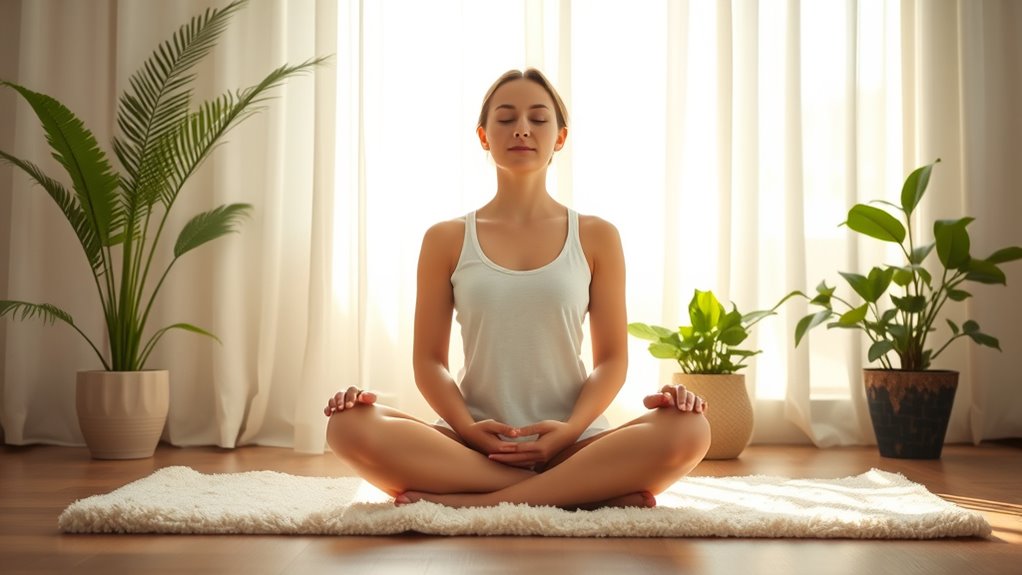

To find calm with breathwork, start by focusing on mindful breathing. Find a comfortable position, close your eyes if you like, and simply observe your breath without trying to change it. Notice the sensation of each inhale and exhale, gradually slowing your breath to deepen relaxation. This simple practice helps anchor you in the present moment, reduces stress, and activates your calming nervous system. Keep exploring, and you’ll discover even more ways to harness your breath for peace.
Key Takeaways
- Practice mindful breathing by observing natural breath flow without judgment to promote calmness.
- Use slow, deliberate inhales and complete exhales to activate relaxation responses.
- Focus on breath awareness during stressful moments to reduce anxiety and stay grounded.
- Incorporate daily breathing exercises to cultivate ongoing mental clarity and emotional balance.
- Recognize physical sensations and stay present to deepen relaxation and develop resilience over time.
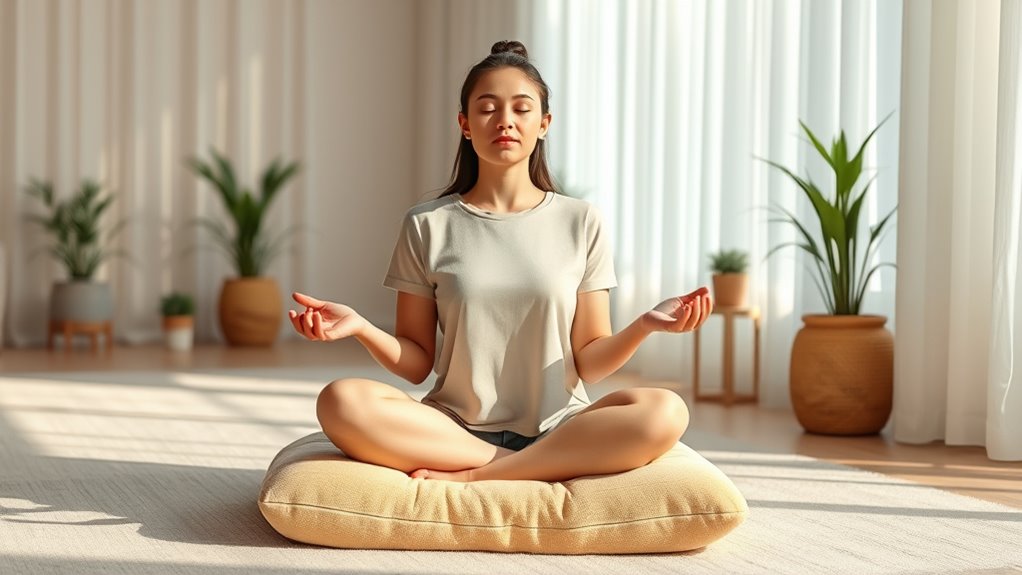
Breathwork is a powerful practice that harnesses intentional breathing techniques to improve your mental, emotional, and physical well-being. When you focus on mindful breathing, you become more aware of how you breathe and how it influences your state of mind. Breath awareness is the foundation of many breathwork exercises, helping you stay present and grounded amid daily stresses. By paying close attention to your breath, you can slow down racing thoughts and cultivate a sense of calm. It’s about observing your breath without judgment, noticing the sensations as air enters and leaves your body, and gradually developing a deeper connection to your inner experience.
Practicing mindful breathing is simple but profound. Start by finding a comfortable position, either sitting or lying down. Close your eyes if you feel comfortable doing so, and bring your attention to your breath. Don’t try to change it; just observe. Notice the rise and fall of your chest or abdomen, the temperature of the air as it moves in and out, and the rhythm of your breathing. This breath awareness helps you anchor yourself in the present moment, cutting through worries about the past or future. As you deepen your awareness, you might notice areas of tension or shallow breathing. When you do, consciously take a longer, slower inhale, filling your lungs completely, then exhale fully. This focused attention on your breath helps activate your parasympathetic nervous system, which promotes relaxation.
Incorporating mindful breathing into your daily routine can drastically reduce stress and cultivate mental clarity. For example, during moments of anxiety or overwhelm, pause and take a few slow, deliberate breaths. Focus on breath awareness, feeling each inhale and exhale as an anchor to the present. This simple practice can break the cycle of racing thoughts and restore a sense of calm. Over time, you may find that your ability to stay centered improves, even in challenging situations. Breath awareness also enhances your overall mindfulness, making you more aware of how stress manifests physically and emotionally. With consistent practice, mindful breathing becomes a tool that you carry with you, accessible anytime you need to regain composure.
Ultimately, developing breath awareness through mindful breathing isn’t about controlling your breath but about observing it with curiosity and acceptance. As you deepen your awareness, you’ll notice subtle shifts in your mental state—more clarity, less anxiety, and a greater sense of calm. This foundational practice lays the groundwork for more advanced breathwork techniques, but even on its own, it’s a powerful way to reconnect with yourself and find peace amidst life’s chaos. Engaging in regular mindfulness practices can further enhance the benefits of breath awareness and support overall well-being.
Frequently Asked Questions
Can Breathwork Replace Therapy for Anxiety?
Breathwork can’t fully replace therapy for anxiety, but it can be a helpful tool alongside it. You can use breathwork to enhance mindfulness meditation and promote stress reduction, which may ease some anxiety symptoms. However, therapy offers personalized strategies and support that breathwork alone can’t provide. Combining both approaches can be more effective in managing anxiety, giving you practical coping skills and emotional understanding.
How Often Should I Practice Breathwork Daily?
If you want to experience the benefits, practice breathwork daily for about 10-15 minutes, adjusting breath timing as needed. For example, Lisa started with 5 minutes, then increased to 15 minutes over a week, noticing her calmness improve. Consistency is key. Regular practice helps your body adapt, so aim for daily sessions and find a duration that feels manageable. This way, you build a sustainable, calming habit.
Are There Any Risks Associated With Breathwork?
Yes, there are some risks with breathwork, so safety considerations matter. You should be aware of medical contraindications, like respiratory issues or cardiovascular conditions, which might make certain techniques unsafe for you. Always start slowly, listen to your body, and consult a healthcare professional if you have concerns. Avoid intense breathwork if you feel dizzy, lightheaded, or uncomfortable, and never force your breath.
What Equipment or Space Do I Need?
Think of your breathwork space as your sanctuary—your personal island of calm. You don’t need much; simply find a quiet, comfortable spot free from distractions. For breathwork equipment, consider a yoga mat or cushion to sit on, and maybe a blanket for warmth. Keep your space tidy and inviting, ensuring it’s suitable for relaxation and focus. With just these essentials, you’re ready to breathe deeply and find tranquility.
Is Breathwork Suitable for Children or Pregnant Women?
Breathwork can be suitable for children and pregnant women when you choose child-friendly techniques and pregnancy-safe methods. For kids, keep sessions short and use playful, gentle exercises to promote relaxation. Pregnant women should focus on safe, calming breath patterns that support relaxation and stress relief. Always consult healthcare providers before starting breathwork, and make certain techniques are adapted appropriately for age and pregnancy stage to guarantee safety and comfort.
Conclusion
Now that you know the basics of breathwork, you’re equipped to start calming your mind anytime. Just a few minutes of mindful breathing can reduce stress and improve focus. Did you know that deep breathing can lower cortisol levels by up to 30%? So, next time life feels overwhelming, take a deep breath—it’s a simple, powerful tool to help you stay centered and calm. Start practicing today and feel the difference.