
Building creative confidence starts with embracing experimentation and understanding that mistakes are part of the learning process. Trust your ability to explore new ideas without fearing failure, and celebrate small wins to boost your belief in yourself. Focus on growth rather than perfection and set realistic goals to keep moving forward. As you practice and persist, your confidence will grow. Keep going, and you’ll discover ways to unleash your full creative potential.
Key Takeaways
- Embrace failures as learning opportunities to reduce fear and foster resilience.
- Set achievable goals and celebrate small wins to build trust in your creative abilities.
- Practice experimentation regularly to develop comfort with uncertainty and boost confidence.
- Replace negative self-talk with affirmations that reinforce your skills and potential.
- Focus on the creative process rather than perfection to encourage exploration and growth.
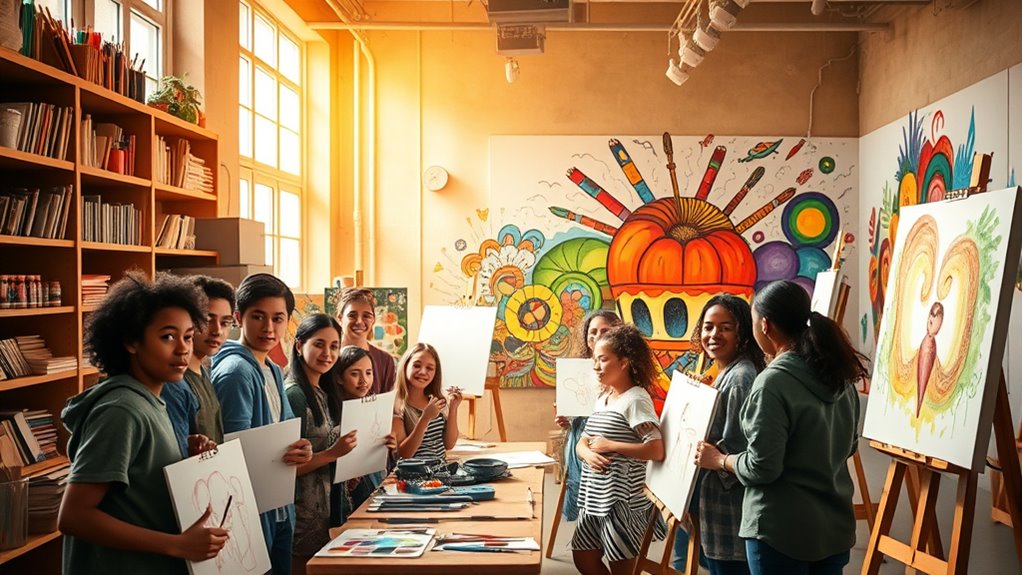
Everyone has the potential to be creative, but many people struggle with self-doubt that holds them back. It’s common to question whether your ideas are good enough or worry about failing in front of others. This self-doubt can create a barrier, making it hard to take risks or explore new avenues. The good news is, you can overcome this obstacle by actively working on your mindset. Overcoming self-doubt starts with recognizing that mistakes are part of the learning process, not signs of failure. Instead of fearing imperfection, see each attempt as a step toward growth. Reminding yourself that no one creates perfectly the first time helps you build resilience and confidence. It’s also important to challenge negative thoughts that tell you your ideas aren’t valuable. Replace those doubts with affirmations about your abilities and your unique perspective. Trusting yourself is a vital part of building creative confidence.
Encouraging experimentation is another effective way to boost your creative confidence. When you give yourself permission to try new things without the pressure of immediate success, you foster a more open and playful mindset. Start small—test out different approaches or ideas, and don’t be afraid to make mistakes along the way. Each experiment, whether it succeeds or fails, teaches you something valuable. Embrace the process instead of fixating on the outcome. This mindset shift helps you see failures as opportunities to learn, rather than as proof of your inadequacy. The more you experiment, the more comfortable you become with uncertainty, and confidence naturally follows. Remember, creativity isn’t about being perfect; it’s about exploring possibilities. By encouraging experimentation, you allow yourself to discover new skills and insights that you might never find if you stay within your comfort zone. Additionally, understanding projector bulb maintenance and other technical aspects can boost your confidence when setting up creative projects.
Building creative confidence is also about setting realistic goals and celebrating small wins. Every time you push past your doubts or try something new, acknowledge your effort. These small victories accumulate and reinforce your belief in your creative abilities. Over time, you’ll notice that your self-doubt diminishes, replaced by a sense of curiosity and enthusiasm. Keep in mind that everyone’s creative journey is unique—comparison only stifles growth. Focus on your progress, and give yourself permission to learn, fail, and try again. Developing confidence doesn’t happen overnight, but with consistent effort in overcoming self-doubt and encouraging experimentation, you’ll find yourself more willing to take risks and express your creative voice. Ultimately, your confidence grows as you trust in your capacity to create and explore, making the process both fulfilling and inspiring.
Frequently Asked Questions
How Long Does It Take to Develop Creative Confidence?
It varies, but developing creative confidence can take anywhere from a few weeks to several months. You’ll experience mindset shifts as you challenge self-doubt, and skill development happens through consistent practice. If you actively embrace new ideas and push past fears, you’ll notice progress faster. Keep in mind, persistence and openness to learning are key—over time, these efforts will strengthen your creative confidence profoundly.
Can Adults Still Learn to Be More Creative?
It’s never too late to learn to be more creative. As the saying goes, “You can’t teach an old dog new tricks,” but that’s not true! Adults can definitely develop a creative mindset and foster artistic growth. With intention and practice, you can unleash new ideas and skills. Embrace curiosity, stay open-minded, and remember that growth is always possible, no matter your age.
What Are Common Obstacles to Building Creative Confidence?
You might face obstacles like fear of failure and perfectionism, which can hold you back from embracing your creativity. These feelings make you hesitant to try new ideas, worried about making mistakes or not being perfect. Overcoming these barriers requires shifting your mindset, accepting that failure is part of growth, and letting go of perfectionism. By doing so, you’ll build confidence and open your creative potential step by step.
How Does Environment Influence Creative Confidence?
Ever notice how a cozy corner or vibrant workspace sparks your ideas? Environment influences your creative confidence through environmental cues and social support. When your surroundings encourage exploration and provide positive feedback, you feel more confident to take risks. Conversely, a cluttered or uninspiring space can stifle your creativity. By cultivating supportive environments, you boost your confidence, making it easier to embrace new ideas and express your creative potential.
Are There Specific Exercises to Boost Creativity Quickly?
You can boost your creativity quickly by trying mindfulness practices like deep breathing or meditation, which clear your mind and spark ideas. Then, use brainstorming techniques such as mind mapping or rapid idea generation to unleash your creativity. These exercises help you break mental blocks, increase confidence, and generate fresh perspectives, making it easier to approach challenges with innovative solutions. Just dedicate a few minutes to these practices, and you’ll notice a creative boost.
Conclusion
Now that you’ve begun to build your creative confidence, think of it as planting seeds in a vibrant garden. With patience and care, those tiny sprouts will grow into tall, sturdy trees, bearing beautiful ideas and bold innovations. Trust in your ability to nurture your creativity, even when storms come. Remember, every step you take is a brushstroke on your masterpiece, turning your confidence into a radiant sunrise that lights up your world with endless possibilities.