

To move from goals to systems, focus on creating routines that support consistent progress. Instead of relying solely on motivation, build habits with cues and rewards that become automatic. Continuously optimize your processes to enhance efficiency and reduce friction. By designing effective environments and routines, you’ll turn aspirations into achievable outcomes. Keep exploring, and you’ll discover how developing resilient systems can make your success sustainable and effortless over time.
Key Takeaways
- Shift focus from setting goals to designing effective routines and workflows that support consistent progress.
- Develop habits that automate key actions, reducing reliance on motivation and willpower.
- Continuously evaluate and optimize processes for maximum efficiency and effectiveness.
- Embed behaviors into daily life through cues and rewards to reinforce sustainable habits.
- Create a structured environment and system that transforms aspirations into achievable, long-term results.
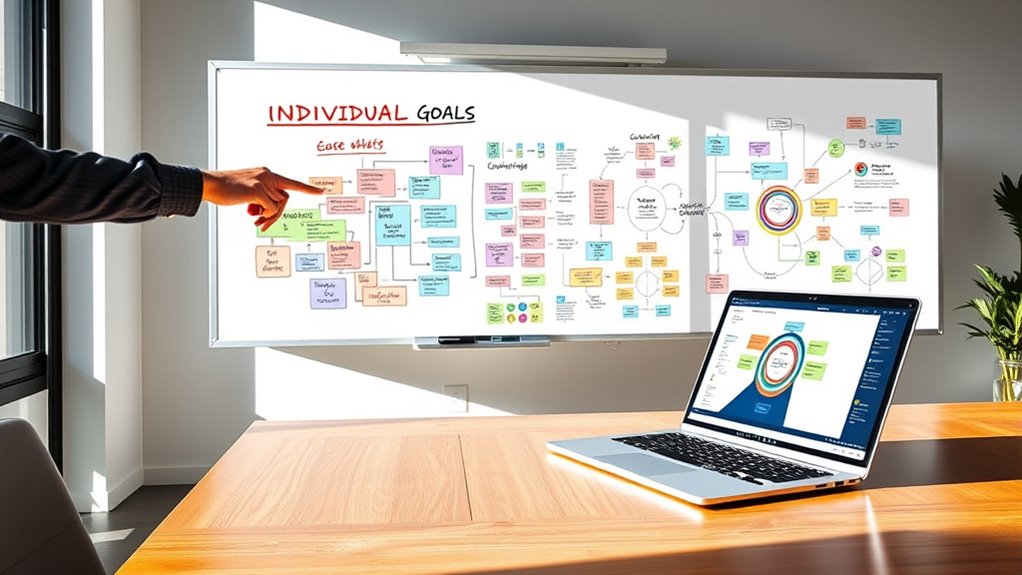
Many people focus on setting big goals, but without effective systems in place, those goals remain out of reach. To turn your ambitions into reality, you need more than just desire—you need to build reliable processes that support consistent progress. This is where habit formation and process optimization come into play. Rather than relying solely on motivation, which can fluctuate, you establish daily routines that become automatic, making success part of your natural rhythm. By focusing on small, repeatable actions, you create a foundation that gradually amplifies your efforts without overwhelming you.
Habit formation is key because it transforms deliberate actions into habits, reducing the mental effort needed to stay on track. Instead of constantly relying on willpower, you embed productive behaviors into your daily life. For example, if your goal is to improve your fitness, instead of sporadically hitting the gym, you develop a habit of doing a quick workout each morning. Over time, this consistency builds momentum and makes your goal less intimidating. The process of habit formation involves identifying cues that trigger your actions and rewarding yourself for sticking with the routine. This cycle reinforces the behavior, turning it into an automatic part of your day.
Process optimization is equally essential because it helps you refine your routines for maximum efficiency. As you practice your habits, you’ll notice areas where you can streamline or adjust to get better results with less effort. Maybe you find a more effective workout time, or perhaps you reorganize your workspace to minimize distractions. Small tweaks like these can noticeably boost your productivity and keep you motivated. It’s about continuously evaluating and improving your systems so they work seamlessly toward your goals. When you optimize your processes, you remove friction points and make success easier to achieve consistently.
Combining habit formation with process optimization creates a powerful cycle. As you develop habits, you learn what works best and can refine your approach. These improvements reinforce your routines, making them more ingrained and resilient over time. Instead of relying on sporadic motivation, you’re building a reliable system that carries you forward even when your energy dips. By focusing on these elements, you shift from just dreaming about success to actively designing the environment and routines that make it inevitable. This strategic approach ensures your goals aren’t just aspirations—they become achievable realities through well-crafted systems that support continuous improvement and sustainable growth.
Frequently Asked Questions
How Do I Identify the Right Systems for My Goals?
To identify the right systems for your goals, start by breaking your goals into specific habits. Focus on habit formation that aligns with your objectives. Then, evaluate your current systems regularly to see if they support these habits or need adjustments. Experiment with different approaches, stay flexible, and be mindful of what’s working. This way, you create effective systems that keep you progressing toward your goals.
Can Systems Be Adjusted Over Time? How?
Yes, systems can be adjusted over time. You should practice adaptive flexibility, regularly reviewing your systems to see if they still serve your goals effectively. System evolution happens when you identify areas needing improvement, then implement changes accordingly. By staying open to feedback and monitoring progress, you guarantee your systems remain aligned with your evolving needs, making your overall approach more resilient and effective.
What Are Common Mistakes When Shifting From Goals to Systems?
Did you know that 70% of people struggle with goal fixation, causing system rigidity? When shifting from goals to systems, you often make mistakes like over-focusing on specific outcomes instead of adaptable processes. This rigidity hampers progress and leads to frustration. To avoid this, make certain you design flexible systems that support continuous improvement, rather than clinging to fixed goals. Embrace adaptability to foster sustained growth and better results.
How Do I Measure Success Within a System?
You measure success within a system by setting clear performance metrics and consistently tracking your progress. Focus on specific, actionable indicators that reflect your system’s effectiveness, like output quality or efficiency. Regularly review these metrics to identify trends and areas for improvement. By maintaining ongoing progress tracking, you guarantee you’re moving toward your desired results, making adjustments as needed to optimize your system’s performance over time.
Are Systems More Effective Than Setting Traditional Goals?
Studies show that 80% of goals are abandoned within a month, making systems more effective. By focusing on habit formation and motivation strategies, you create consistent behaviors instead of chasing fleeting goals. Systems help you build momentum and adapt as needed, leading to sustained progress. Instead of setting traditional goals, invest in establishing daily routines that naturally drive you forward, making success more reliable and easier to maintain.
Conclusion
So, instead of obsessing over lofty goals that keep you awake at night, maybe focus on building systems that quietly do the work for you. After all, who needs clarity when you can endlessly chase ambitions and call it progress? Remember, it’s easier to tweak a system than to constantly rewrite your goals. Embrace the chaos, tweak the process, and maybe, just maybe, you’ll stumble into success—if luck’s feeling generous today.