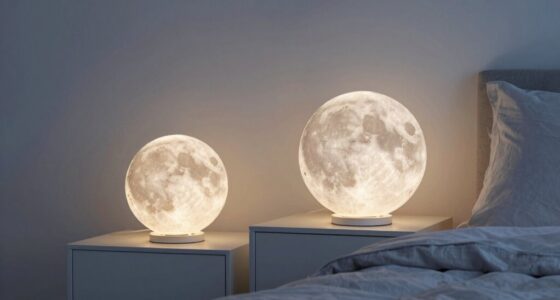
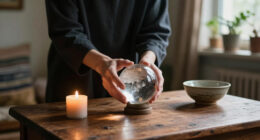
To use light, sound, and scent intentionally, start by adjusting lighting to match your activity—use natural light near windows or layered lighting for flexibility. Control sound with noise-absorbing elements or background noise that boosts concentration or relaxation. Incorporate scents aligned with your mood, like calming lavender or energizing citrus. Combining these sensory tools thoughtfully can markedly influence your well-being and focus—exploring more ways to personalize your environment helps optimize your space even further.

Turn your quiet moments into listening time
- Thousands of audiobooks, podcasts and originals
- Listen on your phone, tablet or Echo — also offline
- Cancel anytime
Key Takeaways
- Layer ambient and task lighting to control mood and functionality based on activity needs.
- Use sound-absorbing materials and background noise to create a calm or alert environment.
- Incorporate scents aligned with desired emotional states, such as lavender for relaxation or citrus for energy.
- Adjust light brightness and color temperature to influence emotional and mental well-being intentionally.
- Personalize sensory elements to enhance comfort, focus, or relaxation tailored to individual responses.

Have you ever wondered how light, sound, and scent can transform a space or influence your mood? These sensory elements aren’t just decorative; they’re powerful tools rooted in environmental psychology and sensory integration. When you understand how to manipulate them intentionally, you can craft environments that foster calm, focus, or energy, depending on what you need.
Environmental psychology explores how your surroundings affect your mental state and behavior. By applying its principles, you can design spaces that promote well-being. For example, natural light boosts your mood and productivity, so positioning work areas near windows or using mimicking daylight bulbs can make a difference. Conversely, harsh or overly bright lighting can cause discomfort and stress. You can create a balanced atmosphere by layering different light sources—soft ambient lighting combined with task lighting—allowing you to control the environment based on your activity and mood.
Sound plays a similarly crucial role. Noise levels and sound quality influence how relaxed or alert you feel. If you’re seeking tranquility, adding sound-absorbing elements like rugs, curtains, or acoustic panels can reduce distracting echoes and noise pollution. Alternatively, background sounds like white noise, nature sounds, or soft music can drown out chaos and help you concentrate or unwind. Understanding sensory integration means recognizing how different sounds interact with your other senses, so curating a harmonious auditory environment can improve focus and emotional health. Additionally, sound masking techniques can be used to further optimize auditory comfort in noisy settings. Incorporating personalized sound preferences can also enhance your overall sensory experience.
Scent is often overlooked but can profoundly impact your mood and perception of space. Certain fragrances evoke specific emotions—lavender for relaxation, citrus for energizing, or peppermint for alertness. Incorporating scent intentionally through candles, diffusers, or fresh plants can reinforce the atmosphere you aim to create. Be mindful, though, as strong or conflicting scents can cause discomfort or headaches. When you align scent with your desired emotional state, it enhances the overall sensory experience and helps anchor positive feelings in your environment.
Additionally, understanding the science behind sensory perception can help you better tailor these elements to suit your personal preferences and needs. Combining these elements strategically requires awareness of your personal responses. Pay attention to how different lighting, sounds, and scents make you feel. Adjust them accordingly to harness their full potential for sensory integration. When used intentionally, light, sound, and scent don’t just decorate your space—they serve as active tools to shape your environment into a refuge of calm, focus, or vitality. By understanding the science behind environmental psychology and sensory integration, you can craft spaces that truly support your well-being and productivity.
adjustable LED task and ambient lighting
As an affiliate, we earn on qualifying purchases.
As an affiliate, we earn on qualifying purchases.
Frequently Asked Questions
How Do Different Colors of Light Affect Mood and Productivity?
Different colors of light influence your mood and productivity through color psychology. Warm tones like yellow and orange boost energy and creativity, making them ideal for workspaces. Cool tones such as blue promote calmness and focus, aiding mood regulation during stressful times. Green offers balance and refreshes your mind, while red energizes but can cause agitation if overused. By choosing specific light colors, you can optimize your environment for better mood and productivity.
What Are the Best Sounds for Relaxation Versus Focus?
You’ll find that calming background music or gentle ambient noise works best for relaxation, easing your mind and reducing stress. For focus, opt for subtle, consistent sounds—like white noise or soft instrumental tracks—that block distractions without pulling your attention away. The right background music or ambient noise creates a mood shift, guiding you seamlessly from relaxation to intense concentration, keeping you engaged and productive.
How Can Scent Be Used to Improve Sleep Quality?
You can improve sleep quality by using aromatherapy techniques with sleep-inducing scents like lavender, chamomile, or cedarwood. Diffuse these scents in your bedroom or apply a few drops to your pillow or bedding. These scents help relax your mind and body, making it easier to fall asleep and stay asleep. Consistent use of these aromatherapy techniques creates a calming environment that signals your brain it’s time to rest.
Are There Any Safety Concerns With Using Certain Scents or Lighting?
Using scents or lighting can be as thrilling as a roller coaster, but safety matters. You should be cautious if you’re prone to chemical sensitivities or allergic reactions, as certain scents or bright lights might trigger symptoms. Always test new scents in small doses and guarantee proper ventilation. For lighting, avoid overly intense or flickering lights that could cause discomfort or health issues. Staying informed helps you enjoy your sensory environment safely.
How Do Cultural Differences Influence Scent and Sound Preferences?
Cultural differences profoundly shape your scent and sound preferences through cultural symbolism and sensory associations. You might find certain scents, like jasmine or sandalwood, calming because they hold positive meanings in some cultures. Conversely, sounds or scents linked to particular traditions evoke specific emotions. By understanding these cultural nuances, you can intentionally select lighting, sound, and scent that resonate deeply, creating a more meaningful and personalized sensory environment.
Conclusion
By intentionally weaving light, sound, and scent into your space, you become the artist of your environment, painting moods and memories with each carefully chosen element. Think of it as tending a garden—each detail is a delicate flower that blooms to create a sanctuary tailored just for you. When you master this harmony, your surroundings will transform into a symphony of sensations, nurturing your well-being and turning everyday moments into a beautiful, orchestrated masterpiece.
Fall Picks
fall essentials
As an affiliate, we earn on qualifying purchases.