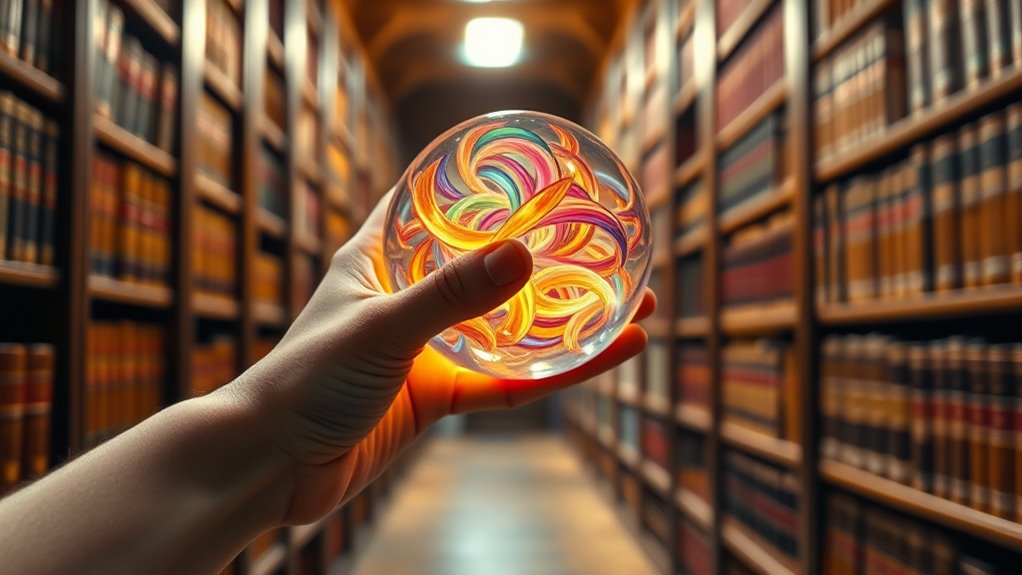

Memory techniques with visualization involve using mental images combined with mnemonic devices to boost your recall. You break information into chunks and create vivid, often humorous images to make ideas memorable. Techniques like the method of loci, where you picture items in familiar places, help reinforce your memory. With regular practice, you’ll find it easier to remember lists and complex concepts—continue exploring to uncover even more powerful strategies.
Key Takeaways
- Combine mnemonic devices with vivid mental imagery to enhance memory encoding and retrieval.
- Create exaggerated, colorful, or humorous images to make information more memorable.
- Use the method of loci by visualizing information within familiar physical spaces for better recall.
- Break complex data into chunks and assign each to distinct, memorable mental images.
- Regularly practice visualization techniques to strengthen overall memory capacity and retrieval ease.

Have you ever wondered how some people remember vast amounts of information effortlessly? The secret often lies in their use of memory techniques with visualization. One powerful method involves mnemonic devices combined with mental imagery, which can transform abstract data into vivid, memorable images. Mnemonic devices are tools that help you encode information in a way that’s easier to recall. When you pair these with mental imagery, you create a mental picture that sticks in your mind, making retrieval much simpler. For example, if you need to remember a list of items, you might visualize each one in a unique, exaggerated way. This approach taps into your brain’s natural affinity for images, making the information more engaging and easier to access later.
To start using this technique, think about the information you want to memorize. Break it down into chunks or key points. Then, construct a mental image for each piece. The more bizarre, colorful, or humorous your images are, the better they’ll stick. For instance, if you need to remember to buy eggs, bread, and milk, you might imagine a giant egg wearing a crown, standing on a loaf of bread playing a guitar, with a milk carton riding a skateboard nearby. These exaggerated, funny images create strong associations that your brain finds hard to forget. Mnemonic devices act as the framework for these images, often involving acronyms, rhymes, or vivid stories. When you combine these devices with mental imagery, you leverage your brain’s visual processing power, making even complex or mundane information memorable.
Another tip is to visualize the information in a familiar location, like your house or a route you walk often. Place each item or concept in a specific spot within this mental space. As you mentally walk through this location, you’ll “see” each image in its designated place, reinforcing your memory. This method, called the method of loci, works exceptionally well because it uses spatial memory, which is very strong in humans. As you practice, you’ll notice your ability to recall details improves markedly. Additionally, studying these techniques regularly can significantly enhance your overall memory capacity, especially when combined with other effective learning strategies. The key is consistency—regularly creating and reviewing these mental images cements the information in your mind. Over time, you’ll find that memory becomes more natural and effortless, all thanks to the power of visualization paired with mnemonic devices. With practice, you’ll start to see how easily you can recall everything from lists to complex concepts just by visualizing the images you’ve created.

You Can Still Improve Your Memory at 50, 60, 70 (and Beyond): Proven Techniques to Sharpen Recall, Boost Focus, and Build a Better Memory at Any Age (The "Age-Proof Yourself" Series)
As an affiliate, we earn on qualifying purchases.
As an affiliate, we earn on qualifying purchases.
Frequently Asked Questions
Can Visualization Improve Long-Term Memory Retention?
Yes, visualization can improve your long-term memory retention. By creating vivid mental imagery, you engage your brain more deeply, making memories stick better. When you use cognitive rehearsal through visualization, you reinforce information actively, which helps transfer it to long-term memory. This technique makes learning more effective, especially when you picture concepts clearly and repeatedly, boosting your ability to recall details over extended periods.
What Are Common Mistakes When Using Visualization Techniques?
Like a spider caught in its web, you might stumble into visualization pitfalls if you’re not careful. Common errors include creating vague images, overloading your mind, or not engaging enough sensory details. These visualization pitfalls hinder memory retention. To avoid these, stay focused, keep images clear, and involve all senses. When you fine-tune your approach, you’ll weave stronger mental tapestries that stick, much like a master artist perfects their craft.
How Does Visualization Compare to Other Memory Strategies?
Visualization is often more engaging than mnemonic devices or mind mapping because it creates vivid mental images that enhance memory. Unlike mnemonic devices, which rely on shortcuts, visualization helps you form strong, detailed associations. Mind mapping organizes information visually but may lack the emotional impact of imagery. Combining visualization with these strategies can boost your recall, making learning more effective and enjoyable.
Is Visualization Effective for All Types of Learners?
Visualization can be highly effective, but it has limitations depending on your learner preferences. Some people find it easier to remember information through visual images, while others may struggle with this approach. It’s not a universal solution, so understanding your own learning style is key. If you’re a visual learner, visualization works well; if not, exploring other strategies might serve you better.
How Often Should I Practice Visualization for Best Results?
You should practice visualization regularly, ideally daily, to see the best results. Consistent practice helps strengthen your mental imagery exercises and makes visualization more effective over time. Aim for at least 10-15 minutes each day, and stay committed to your routine. The more consistently you engage in visualization, the easier it becomes to recall information and improve your overall memory skills.

Nurse Readiness Academy Nursing Mnemonics Flashcards: 101+ Illustrated Flashcards for Nursing Students with Proven Memory Devices to Crush Nursing School and Ace The Next Gen NCLEX
STOP INFORMATION OVERLOAD – Say goodbye to overwhelming textbooks. Our flashcards condense essential nursing information into bite-sized, easy-to-digest…
As an affiliate, we earn on qualifying purchases.
As an affiliate, we earn on qualifying purchases.
Conclusion
Using visualization to enhance your memory can dramatically boost your recall abilities. By creating vivid mental images, you engage multiple senses, making information stick better. Did you know that visual learners retain up to 65% more information when they use imagery techniques? So, next time you need to memorize something, picture it clearly in your mind. With consistent practice, you’ll find yourself remembering details more effortlessly and confidently.
The 10-Minute Mind Palace: A Simple System to Remember Anything, Boost Your Productivity, and Unlock Your Brain's Full Potential
As an affiliate, we earn on qualifying purchases.
As an affiliate, we earn on qualifying purchases.

Visual Memory – Eye Exercises Kit for Children and Adults – Improve Focus, Strengthen Vision, Optometrist-Approved, Vision Therapy, 100% Safe: exercises (Visual Analysis)
As an affiliate, we earn on qualifying purchases.
As an affiliate, we earn on qualifying purchases.