
TL;DR
Tarot, originally a card game, has evolved into a popular tool for divination. This article traces its artistic history, examining how its imagery and symbolism have shaped its spiritual use.
Tarot cards, once primarily used as a game in 15th-century Europe, have increasingly become associated with divination and spiritual practices. Recent studies and exhibitions underscore this transformation, emphasizing the artistic and symbolic evolution that has made tarot a popular tool for personal insight today.
Historically, tarot originated in the mid-15th century as a card game known as ‘tarocchi’ in Italy and France. Its early decks featured elaborate artwork, but their primary purpose was entertainment rather than spiritual or mystical use, according to art historians. Over centuries, especially in the 18th and 19th centuries, tarot decks began to incorporate mystical symbolism, influenced by occult movements and esoteric traditions. This shift was reinforced by figures like Antoine Court de Gébelin and Éliphas Lévi, who linked tarot imagery to ancient Egyptian and mystical themes, although these claims are debated among scholars.
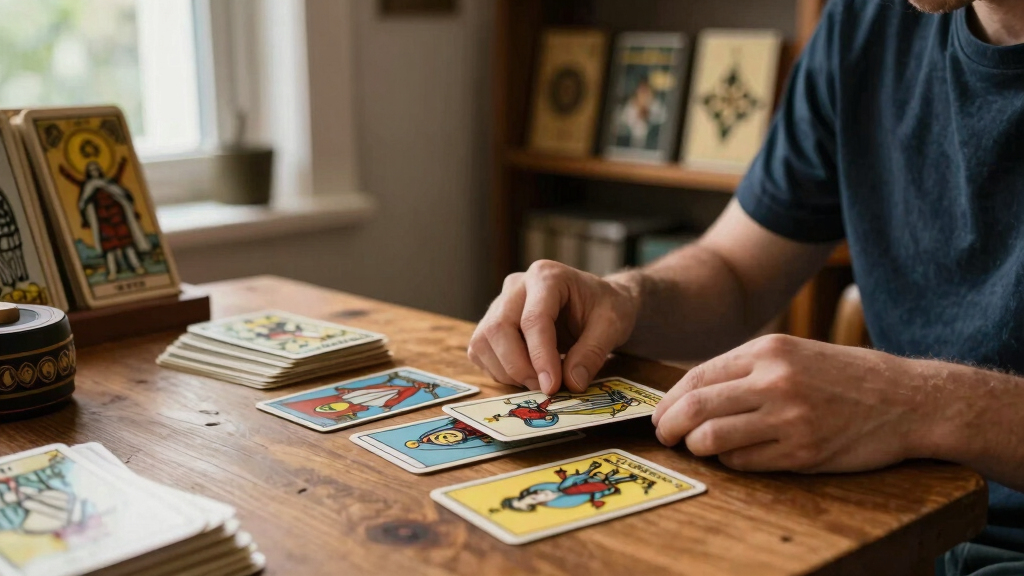
In recent decades, artists such as Pamela Colman Smith and others have designed tarot decks emphasizing rich symbolism and artistic innovation. This artistic development has helped elevate tarot from a mere game to a visual language used for divination, self-reflection, and spiritual guidance. Museums and exhibitions now showcase tarot as an important artifact of cultural and artistic history, reflecting its complex evolution.
Why Tarot’s Artistic Shift Matters to Modern Spirituality
The transformation of tarot from a card game to a divination tool highlights its role as a cultural artifact that blends art, symbolism, and spirituality. For many, tarot offers a visual language for exploring personal questions and spiritual growth. Its artistic evolution has also influenced contemporary art and popular culture, making it a bridge between historical tradition and modern spirituality. Understanding this history enriches the appreciation of tarot’s multifaceted role today, but also raises questions about cultural appropriation and the commercialization of esoteric symbols, which are still debated among scholars and practitioners.

KLEDERY Tarot Cards for Beginners, Classic Tarot Deck with Meanings, Durable Cards with Guide Book, Black
- Based on Classic Waite Tarot: Inspired by historic 1910 deck with symbolism
- Includes Card Meanings: Upright and reversed interpretations with zodiac and symbols
- Educational Reference: Features numerology and yes/no/maybe indicators
As an affiliate, we earn on qualifying purchases.
As an affiliate, we earn on qualifying purchases.
Historical Milestones in Tarot’s Artistic and Spiritual Transformation
Tarot’s origins trace back to the 15th-century European courts, where decks like the Visconti-Sforza were hand-painted works of art used for playing games. The decks’ intricate imagery reflected the artistic styles of their time. By the 18th century, tarot decks began to incorporate mystical themes, influenced by the rise of occultism and secret societies. The publication of the first tarot guidebooks and the association with mystical traditions in the 19th century marked a turning point, solidifying tarot’s reputation as a tool for divination. Contemporary decks, such as the Rider-Waite-Smith, further emphasized symbolic imagery, making tarot accessible for spiritual seekers and artists alike.
Recent exhibitions and scholarly works have focused on how tarot’s visual language reflects broader cultural and artistic trends, emphasizing its dual role as both a spiritual tool and an artistic expression.
“Tarot’s evolution from a simple card game to a complex visual language mirrors broader cultural shifts, blending art, spirituality, and mysticism.”
— Dr. Maria Lopez, art historian specializing in esoteric art
Unresolved Questions About Tarot’s Cultural Origins
While scholars agree on tarot’s origins as a card game and its later mystical associations, the extent to which ancient Egyptian or other mystical traditions directly influenced tarot remains debated. Many claims linking tarot to ancient Egypt or other civilizations are based on esoteric theories rather than definitive historical evidence. Additionally, the precise timeline of when tarot shifted from entertainment to spirituality is still under scholarly investigation, and some argue that this transition was gradual and complex.
Future Directions in Tarot’s Artistic and Cultural Study
Ongoing research aims to further clarify tarot’s historical origins and artistic development, with new exhibitions and academic publications planned. Additionally, contemporary artists and spiritual practitioners are experimenting with new tarot designs and uses, which could influence its cultural perception. Scholars expect that future studies will continue to explore the intersection of art, symbolism, and spirituality in tarot, helping to deepen understanding of its role in modern culture.
Key Questions
How did tarot evolve from a game to a spiritual tool?
Initially used as a card game in 15th-century Europe, tarot decks gradually incorporated mystical symbolism in the 18th and 19th centuries, influenced by occult movements. This artistic and symbolic shift helped transform tarot into a tool for divination and spiritual insight.
Are all tarot decks based on the same symbolism?
No, many tarot decks are created with different artistic styles and symbolic interpretations. While traditional decks like the Rider-Waite-Smith follow specific imagery, contemporary decks often reflect diverse artistic visions and cultural influences.
Is the connection between tarot and ancient Egypt proven?
No, many claims linking tarot to ancient Egypt are speculative and lack definitive archaeological evidence. These theories are popular in esoteric circles but remain debated among scholars.
What role does art play in modern tarot practices?
Art enhances the visual storytelling of tarot decks, making them more accessible and meaningful for users. Artistic innovation continues to influence how tarot is used for spiritual reflection and personal growth.
Source: rss