
The placebo effect shows how your beliefs and expectations can produce real physical and mental benefits, even when no active treatment is given. When you expect relief or healing, your brain releases chemicals like endorphins and dopamine that act as natural painkillers. Trust in a treatment stimulates your body’s healing processes and can lead to tangible health improvements. If you want to understand how your mind influences your health, keep exploring this fascinating connection.
Key Takeaways
- The placebo effect occurs when belief in a treatment’s efficacy triggers real physiological responses.
- Expectation and positive mindset can activate brain chemicals like endorphins, leading to pain relief and improved health.
- Trust and confidence in treatment enhance the body’s natural healing processes through psychological influence.
- Scientific studies show that belief alone can produce health benefits comparable to actual medications in some cases.
- The placebo effect exemplifies how mental states and beliefs directly impact physical health outcomes.
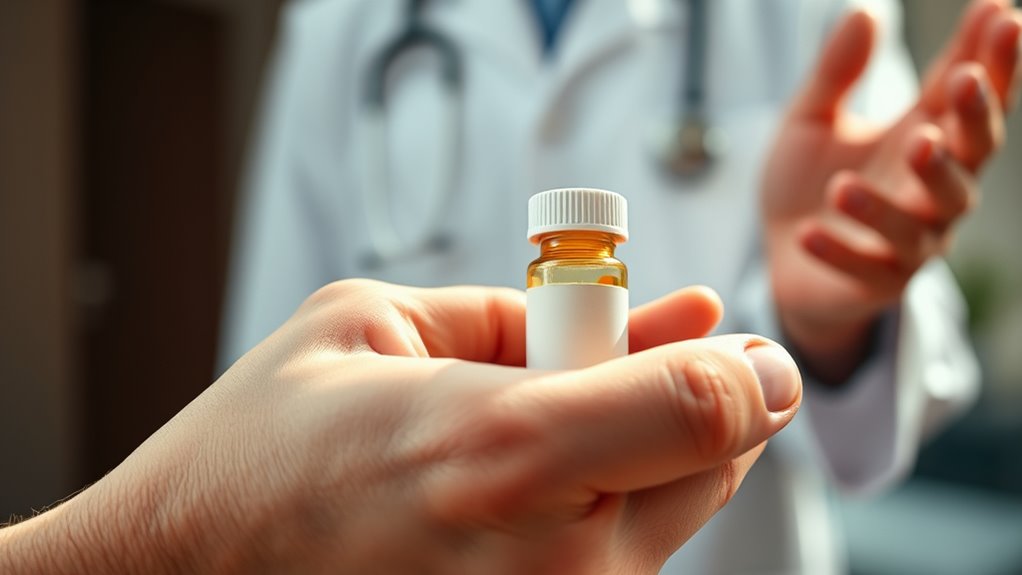
Have you ever experienced relief after taking a sugar pill or believing a treatment would work? That’s the power of the placebo effect in action. It’s fascinating how your mind over matter can influence your body’s response, especially when expectation and healing come into play. When you truly believe that a treatment, even if inert, will help you, your brain can trigger real physiological changes that contribute to feeling better. This isn’t just in your head; it’s a genuine interaction between your mental state and physical health.
Your expectations shape how your body responds to treatments. When you think you’re receiving medicine that will alleviate symptoms, your brain releases chemicals like endorphins and dopamine—natural painkillers that can reduce discomfort and improve mood. These responses illustrate how the mind over matter can lead to tangible health benefits, even without active ingredients. The power of belief can activate the same neural pathways involved in actual healing, making your expectations a key element in recovery.
Your belief in treatment releases natural painkillers, promoting healing even without active ingredients.
Furthermore, the placebo effect underscores the importance of psychological factors in healing. If you approach a treatment with confidence and positivity, you’re more likely to experience beneficial outcomes. This effect highlights how your mindset influences your physical health, and it’s why healthcare providers sometimes harness the power of expectation to enhance treatment efficacy. When you trust in the process, your brain’s anticipatory responses can bolster your body’s natural healing mechanisms.
The mind’s role in healing isn’t just about wishful thinking; it’s backed by scientific research. Studies show that patients who believe they’re receiving real medication often show improvements comparable to those on actual drugs, especially for conditions like pain and depression. This illustrates that expectation plays a crucial role in the healing process. Your mental attitude can amplify treatment effects, making the difference between feeling better or not.
In essence, the placebo effect reveals that your beliefs are more powerful than they seem. Your mind can influence physical health through the expectations you hold. When you approach treatment with a positive outlook and trust in the process, you’re activating your body’s natural capacity to heal. It’s a reminder that sometimes, healing isn’t just about what’s inside a pill, but about what’s inside your mind—your expectation and belief can truly make a difference.
Additionally, somatic therapy’s focus on mind-body connection demonstrates how understanding and harnessing this relationship can support healing processes like somatic awareness.
Frequently Asked Questions
Can the Placebo Effect Work on Animals?
The placebo effect doesn’t work on animals in the traditional sense because they lack the same level of conscious belief as humans. However, animal cognition can influence their responses to treatments, often through conditioning or environmental factors. Ethical considerations also come into play when designing studies, ensuring animals aren’t misled or harmed. While animals may show improvement, it’s typically due to factors other than a true placebo effect driven by belief.
How Long Does the Placebo Effect Typically Last?
Like the fleeting shadows in a Greek myth, the placebo effect’s duration varies widely. It can last from a few hours to several weeks, depending on factors influencing the individual’s expectations, the treatment context, and the condition being treated. Your mindset, the consistency of the treatment, and the severity of symptoms all influence how long this effect persists, making its duration highly unpredictable and personalized.
Are There Risks Associated With Placebo Treatments?
Yes, there are risks with placebo treatments, especially around ethical considerations and patient autonomy. You might experience no real benefit, which could delay effective treatment, or face emotional harm if you feel deceived. Healthcare providers must balance honesty with caring, ensuring your autonomy is respected while avoiding unnecessary risks. Always discuss openly with your doctor about treatment options to make informed decisions that prioritize your well-being.
Can Placebos Replace Actual Medical Treatments?
You can’t rely on placebos to replace real medical treatments because they’re no match for genuine cures. Relying solely on psychological influence risks serious health consequences and crosses ethical lines, as it can deceive and harm patients. While placebos can enhance treatment outcomes through mind power, they aren’t a substitute for proven medical interventions. Always seek proper healthcare and avoid placing your trust in unproven placebo solutions.
Is the Placebo Effect Stronger in Certain Age Groups?
The placebo effect tends to be stronger in younger and older age groups due to age-related responsiveness and developmental differences. As you age, your brain’s ability to respond to expectations varies, making certain age groups more susceptible. Children and seniors often show heightened responses because their brains are more plastic or sensitive. These differences highlight how developmental changes influence the magnitude of placebo effects across various age ranges.
Conclusion
Your belief is the silent sculptor shaping your reality, turning shadows into substance. The placebo effect proves that your mind holds the brush to paint health’s masterpiece, even when the canvas is empty. Trusting in the unseen can ignite a fire within, transforming doubt into hope. Remember, your conviction is the seed that blooms into healing, proving that sometimes, the most powerful medicine is the faith you dare to hold.