Your shared environment plays a key role in shaping your beliefs, behaviors, and opportunities. Positive community support, good schools, and safe spaces can boost your confidence and skills, while neglect or violence can limit your growth. These surroundings influence your motivation and self-esteem, often acting as barriers or bridges to success. By understanding how your environment affects you, you can find ways to improve and adapt. Keep exploring to discover how you can positively influence your world.

Get books, candles and calm essentials delivered free — and shop member deals
- Fast, free delivery on millions of items
- Access to Prime Big Deal Days deals on October 6–7
- Prime Video, Amazon Music and more included
Key Takeaways
- Shared environments influence beliefs, behaviors, and self-esteem, impacting personal development and aspirations.
- Community values and support systems foster resilience, motivation, and access to opportunities.
- Physical surroundings, including safety and resources, either facilitate or hinder growth and exploration.
- Negative environments can create barriers, while positive ones promote empowerment and skill-building.
- Active community engagement can modify environmental factors, leading to improved individual outcomes.
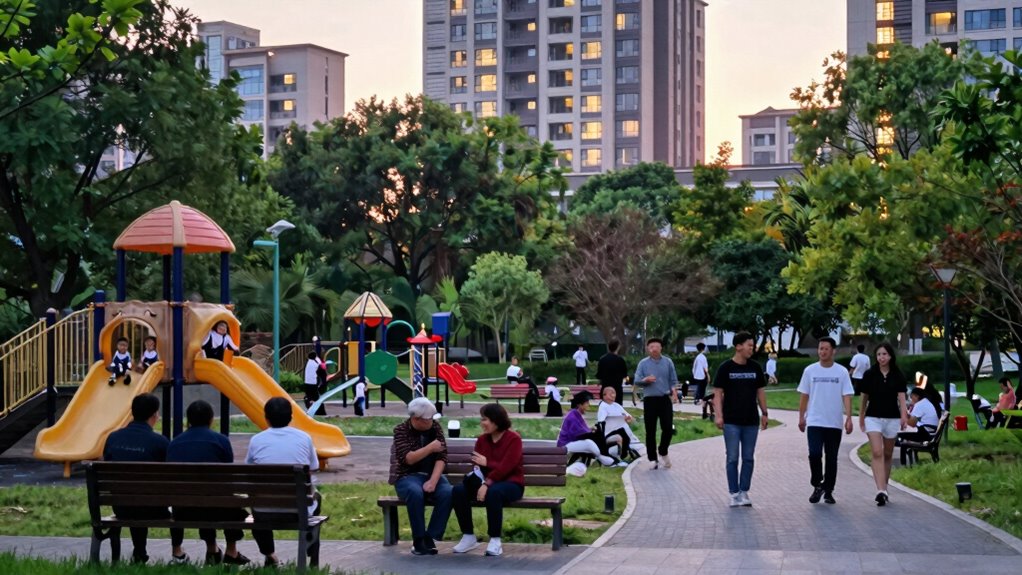
Have you ever wondered how the environments we share influence the outcomes we achieve? It’s a question that taps into the core of human development and success. The environments around you—your community, your surroundings, and your social networks—play an essential role in shaping who you become. When you’re immersed in a community that values education, hard work, and collaboration, those values become part of your mindset. Conversely, if your environment is marked by neglect or limited opportunities, your potential can be constrained. Community influence is powerful because it continuously influences your beliefs, behaviors, and even your aspirations.
Shared environments shape our beliefs, behaviors, and potential, influencing who we become and what we can achieve.
Environmental factors extend beyond just social influences. They include physical elements like the safety of your neighborhood, access to resources, quality of local schools, and availability of health services. These factors create a backdrop that either facilitates or hinders your personal growth. For example, living in an area with safe parks and libraries encourages you to explore new interests and learn. On the other hand, if your environment exposes you to violence or pollution, your health and well-being may suffer, which can derail your chances of success. You might not always see these factors directly, but they shape your daily experiences and, ultimately, your outcomes. Recognizing the importance of environmental conditions can help communities develop targeted strategies for improvement, especially when considering how infrastructure influences access to essential services.
Your community can serve as a source of support or a barrier, depending on its influence. When community influence is positive, it provides mentorship, encouragement, and opportunities that propel you forward. You may find role models in your neighborhood who inspire you to aim higher or access programs that develop your skills. Such environments foster resilience and motivation. But if the community influence is negative—say, rife with crime or neglect—you might find yourself caught in a cycle of limited prospects. The environment you’re part of molds your habits, attitudes, and even your self-esteem. Recognizing how shared environments shape individual outcomes can inspire efforts to improve and uplift these spaces. Additionally, incorporating community development strategies can help transform these environments into sources of strength and opportunity.
It’s important to recognize that environmental factors are not fixed; they can change and evolve. By actively engaging with your community and advocating for improvements, you can alter the environment around you. Building connections, participating in local initiatives, or pursuing education can help reshape the influence your surroundings have on you. Additionally, understanding the importance of projector technology in home entertainment shows how tools and innovations can enhance your experiences and opportunities. Remember, your outcomes are not solely determined by personal effort but are deeply intertwined with the environments you navigate daily. Understanding this connection empowers you to seek or create environments that foster growth and success, demonstrating just how much shared environments shape your individual journey.
As an affiliate, we earn on qualifying purchases.
Frequently Asked Questions
How Do Shared Environments Influence Long-Term Personality Development?
Shared environments influence your long-term personality development through environmental stability and cultural influences. When your environment remains stable, it provides a consistent foundation for your behaviors and beliefs to grow. Cultural influences shape your values, social norms, and identity, molding your personality over time. You adapt to these shared surroundings, which can reinforce certain traits and behaviors, ultimately shaping who you become in the long run.
Can Shared Environments Mitigate Genetic Disadvantages?
Yes, shared environments can mitigate genetic disadvantages through genetic buffering and environmental compensation. By providing supportive, enriching surroundings, you can help offset certain genetic vulnerabilities, enhancing resilience and development. For example, a nurturing family or community can foster skills and confidence, reducing the impact of genetic disadvantages. This environment promotes learning and adaptability, demonstrating how shared settings actively contribute to overcoming genetic limitations and shaping positive outcomes.
What Role Do Peer Groups Play in Shared Environment Effects?
Peer groups profoundly influence your development through peer influence and group dynamics. They shape your attitudes, behaviors, and beliefs by providing social norms and shared experiences. When you’re part of a positive group, you’re more likely to adopt healthy habits and succeed. Conversely, negative peer influence can lead you astray. Your interactions within these groups help mold your personality, skills, and decision-making, highlighting how shared environments impact individual outcomes.
How Do Socioeconomic Factors Within Shared Environments Impact Outcomes?
Socioeconomic factors within shared environments profoundly impact your outcomes. Economic disparities can limit access to quality education, healthcare, and extracurricular activities, affecting your development and opportunities. Meanwhile, community resources like libraries, youth programs, and transportation influence your ability to succeed. When these factors are uneven, they create advantages or barriers, shaping your future prospects. Recognizing these influences helps you understand how environment molds individual paths.
Are There Critical Periods When Shared Environments Have the Most Influence?
You’ll find that there are critical windows during developmental phases when shared environments have the most influence. These critical windows, especially early childhood, are times when experiences and surroundings shape your brain and behavior profoundly. During these periods, your environment’s impact is heightened, meaning positive or negative influences can leave lasting effects. Recognizing these critical windows helps understand how shared environments mold your outcomes over time.
Conclusion
Think of shared environments like a garden where each plant influences the others; your surroundings can nurture growth or hinder it. For instance, a study shows children in supportive neighborhoods tend to excel academically, much like a thriving garden. Remember, your environment shapes your path—it’s the soil that determines how tall you’ll grow. By cultivating positive shared spaces, you set the stage for brighter individual outcomes, just as a gardener nurtures a flourishing landscape.
Halloween Picks
halloween
As an affiliate, we earn on qualifying purchases.